Canal Boating in the UK: A Beginner’s Guide to Narrowboat Holidays

Aside from the clear benefits, such as lower carbon emissions, greater respect for local communities, and a lighter footprint on the environment, what I love most about the slow travel movement is how it brings back experiences from the past that had almost been forgotten.
Canal boating in the UK is one of these. It invites us to travel at a gentle pace, to be mindful, and to trace centuries of history from the water.
This summer, we were invited by Drifters Waterways Holidays to spend four days navigating the Shropshire Union Canal towards the Welsh borders.
What we expected to be an experience that was equal parts daunting and relaxing turned out to be a lesson in learning, working together, slowing down, and stepping back in time.
On our trip, we discovered just how different life feels at four miles an hour, and in this guide, we’ll share both our experience and everything you need to know to plan your own.
This is our guide to canal boating in the UK, part history, part personal journey, and part practical advice to help you get started.
A Short History of the UK’s Canals
While the Chinese are credited as the earliest inventors of inland waterways, England’s historic canals date back to the Roman era.
Around AD 50, the first canals of England and Wales were constructed to link Lincoln with the River Trent, alongside the nearby Car Dyke, which stretched southwards towards Cambridge.
Further waterways appeared in the medieval and post-medieval periods, but the real turning point in canal boating UK history came during the Industrial Revolution in the second half of the 18th century, when canals transformed into vital trade routes powering industry and connecting cities.

By the 19th century, canals stretched across much of England and Wales, carrying coal, raw materials, and manufactured goods. Entire communities grew around the waterways, with canal-side pubs, warehouses, and cottages still standing today as reminders of this era.
Although railways eventually overtook canals as the main arteries of transport, these waterways never disappeared. Instead, they evolved into the leisure routes we know today, offering a slower and more mindful way to explore the countryside.

Our Canal Boating Experience
We opted for a brief three-night stay for our first experience of canal boating in the UK. We wanted to be on the boat long enough to settle in a bit, but not too long in case we weren’t happy or felt too claustrophobic or stuck on board.
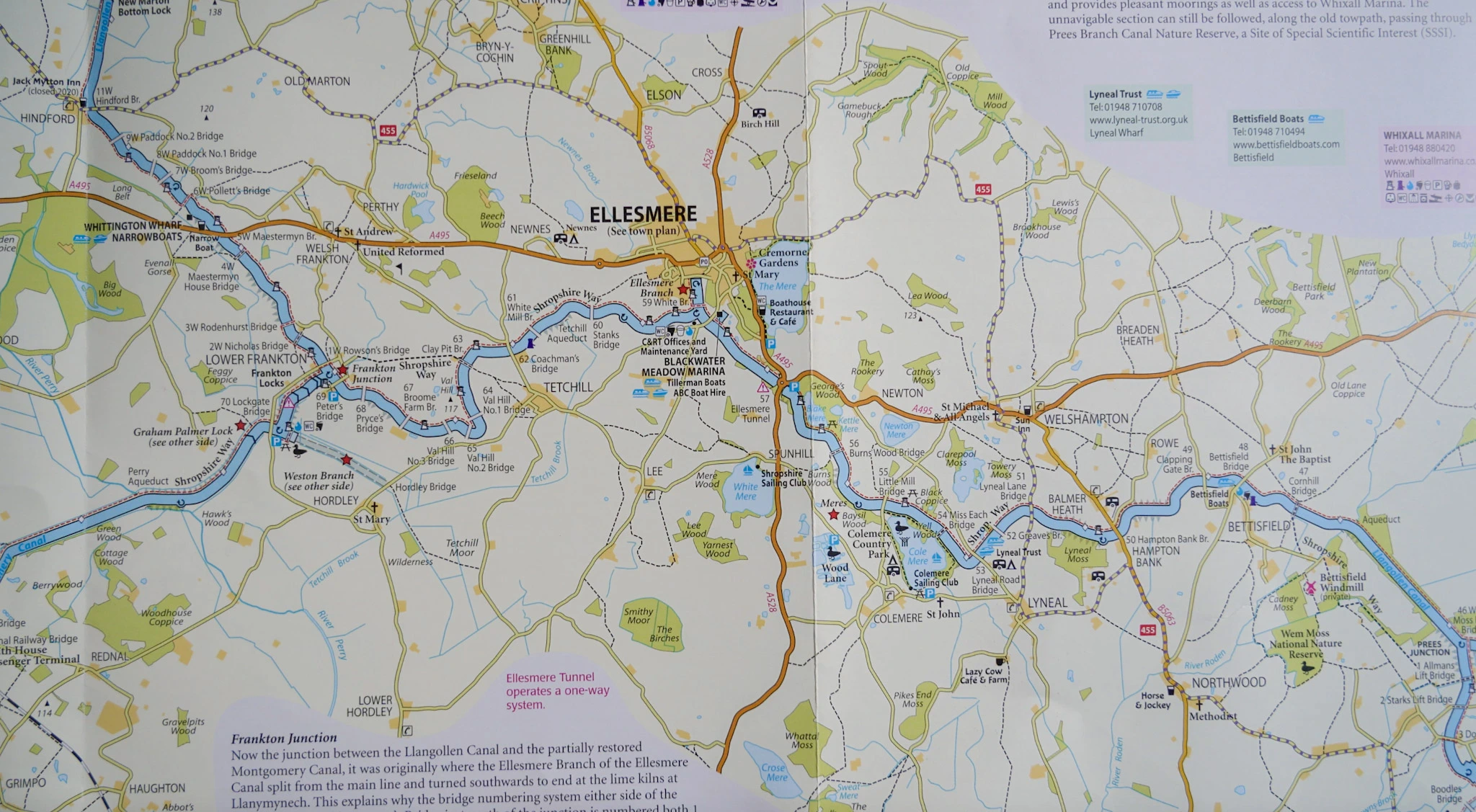
Since we were staying in Manchester and the north-west of England for most of our time in the UK this trip, we wanted to stay local and landed on ABC Boat Hire from Wrenbury, a small village just a stone’s throw away from the charming Roman market town of Nantwich, which was really lovely.
From Wrenbury, we set off along the Llangollen Canal, a route that eventually winds its way into Wales. The village itself sits just 15 minutes from the Welsh border by car, making it a perfect starting point for a cross-country journey.
While many canal boaters set out with a fixed destination in mind, we decided to take a more relaxed approach, letting each day unfold as it came.
Reaching Wales would depend on how quickly we got the hang of the boat and locks, and how much downtime we were willing to trade for distance.
Setting Off From ABC Boat Hire Wrenbury
After signing papers and a brief lesson on how to operate the boat, locks, and canal, it was time to head to our boat and learn how to navigate in more depth.
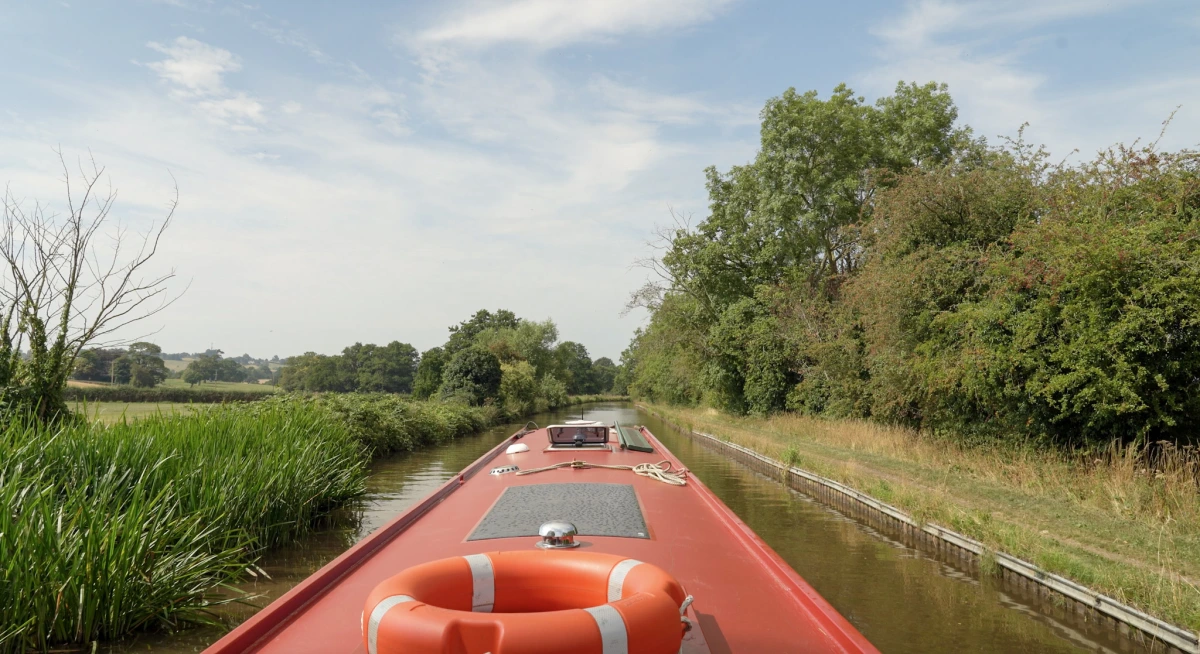
We would be cruising the Llangollen Canal in Navas Wren, a 47-foot, four-berth narrowboat. While we initially preferred to rent a bigger boat with more room to spread out in since we both work remotely, we later realised how happy we were to have been matched with a smaller one.
To be honest, we were pretty overwhelmed by all the information at first and couldn’t believe that after just an hour, we’d be sent out to manage on our own for the next four days.
It was time to move in, and it was actually quite spacious inside Navas Wren. There was enough space for our groceries for the next four days, our massive suitcase with two weeks of luggage fit neatly in one of the closets, and the bed was surprisingly spacious and homely.
Before setting off, you need to choose a lockmaster and captain within your group to exclusively do your chosen role for the entirety of your journey. Maria is usually the driver in our relationship, so I chose her as the captain, and I would be the lockmaster.
After about ten minutes on the canal with Maria navigating as captain and ABC’s engineer on the boat with us, it was time for us to be left to our own devices. We were both nervous and excited, and the humid English summer sun only increased the nerves.

Learning to Navigate: Locks, Bridges, and Patience
While Maria was thrown in at the deep end (hopefully not literally), I had some time to get my bearings before arriving at the first lock. Apparently, we chose a location with quite a few locks before the Welsh border.
We didn’t have any bridges we needed to open, except for one on our last night, which was hand-winding, but navigating such a long vehicle on the water in narrow paths with other boat traffic was just about as difficult as you’d imagine.
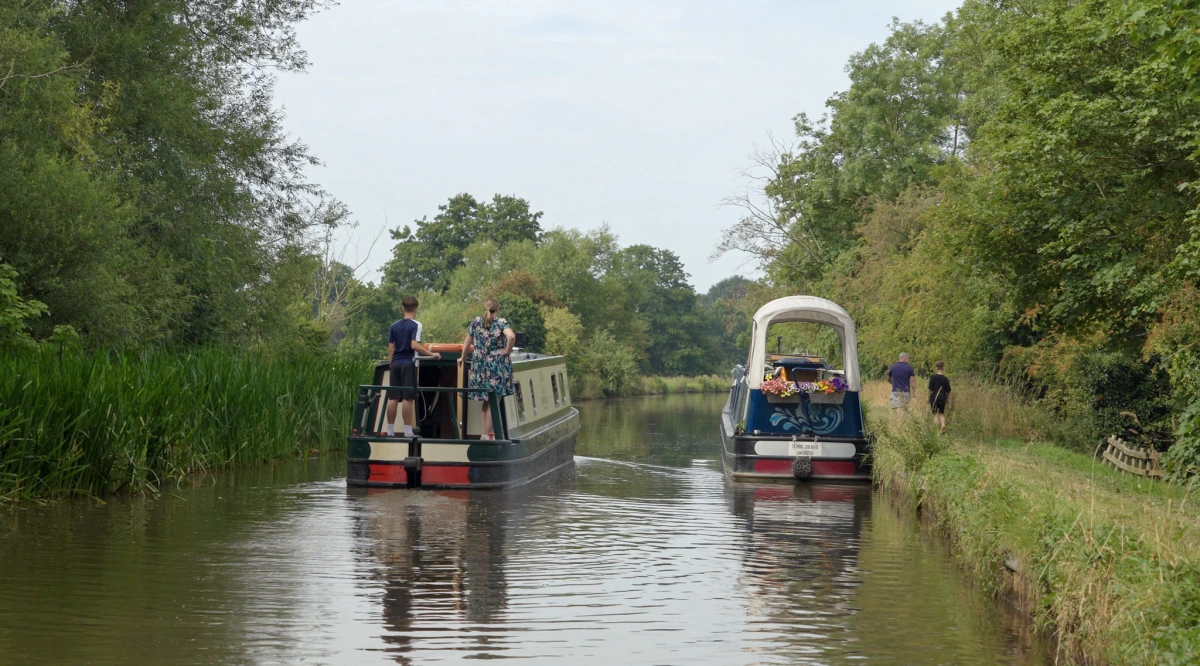
It was also overwhelming as we didn’t want to bump into other boats, but thankfully, the canal community was so helpful and supportive, whether from other renters or experienced boaters who live on their own boats.
Maria ended up getting the hang of it pretty quickly, and things were much smoother sailing by the time we reached the first lock.
We decided on our first day that we likely wouldn’t reach Wales or the Welsh border, and we preferred to take our time as much as possible and really enjoy the slow journey, rather than rushing to get to an endpoint.


Locks
When we had our orientation and were shown on a model lock how to navigate the system, I thought, how hard could this actually be? I’d passed many canals in the UK throughout my life and had seen plenty of locks being used, often with locals helping out.
I became overwhelmed quite quickly when we reached the first lock, and was extra nervous after learning that the wrong move can make the boat tip forward or backward.
Our first lock was right before where we were planning on mooring up for the night, as we had a dinner reservation at the Swan in Marbury for that evening.
I had my windlass ready (the mechanism to wind the locks open and closed) and once the boat was in, I was completely confused and unsure of what to do!

There are two main phases when moving through a lock:
- First, you open the gates to let the boat in, then close them behind you. Using the paddles on the gates, you either let water in to lift the boat or let it out to lower it, depending on the direction you’re travelling.
- Once the water level matches, the next stretch of canal, you open the far gates and carefully motor out. It’s a simple system once you get the hang of it, but it feels like operating a piece of living history.
Operating a lock on your own can be quite a workout. You’re constantly moving back and forth between the gates, winding paddles, and pushing heavy wooden beams.
If others are waiting in the queue, it’s common practice to lend a hand. Most people help each other through, which not only makes things quicker but also adds to the sense of community that defines canal life.
Thankfully, there was a family behind us in the queue for the lock, and the two young sons were quite eager and excited to help me navigate the lock! It was their first day as well, and they really seemed to take to narrow boating!
The next morning, we had about 5 locks, including the infamous Grindley Brook Staircase Locks, with three consecutive locks one after the other. I was determined to have my lock master skill down before reaching it! For the first two locks in the morning, I was also helped by other boaters, and then I was pretty confident I was on my way to becoming a true lock master!
Something that I’ll really keep with me from this trip is the people we met and how kind and helpful just about everyone we encountered was. Narrow boating takes focus and presence, and it almost felt like a bygone time, talking to others and having genuine conversations with the people we passed by on our journey.
Once we reached the Grindley Brook Staircase Locks, I was confident I could tackle the staircase, but I was a little apprehensive since we arrived after the regular volunteers had left. Many staircases have volunteers to help you navigate and make the process much speedier!
The volunteers along the canals are an integral part of the canals. As part of the brilliant charity, The Canal & River Trust, they dedicate their time to keeping Britain’s historic waterways running smoothly, from helping boaters at locks to caring for the towpaths and wildlife habitats that line them.
You can learn more about their work here.
I managed to do the staircase rather quickly, but boy, was I worn out! I didn’t expect such a full-body workout while narrow boating!
Life on Board
Mornings and Evenings
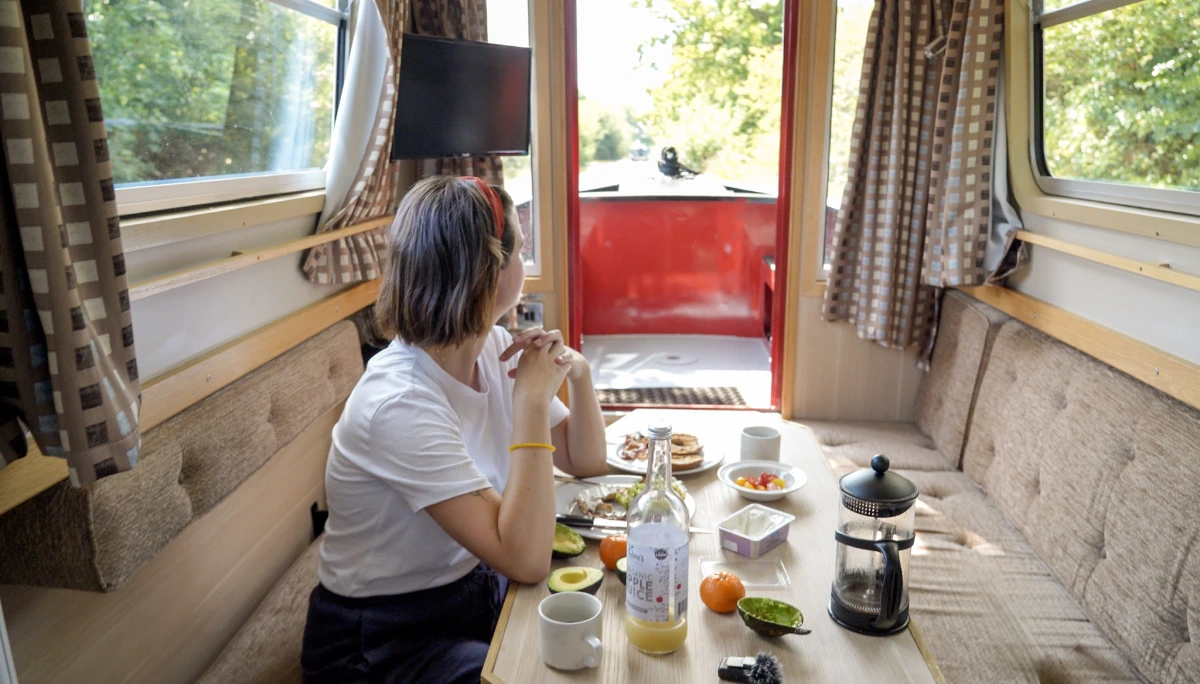
One of my favourite parts of boat life was the slow mornings and quiet evenings on the water. Before setting off each day, we’d wake to the gentle bob of the boat as others passed, a peaceful rhythm that felt worlds away from ordinary life.
There was something special about waking up surrounded by nature, tucked into corners of the Shropshire countryside with little sign of roads or buildings, just greenery and the occasional passing boater.
Evenings were just as lovely. We usually moored before sunset, went for a walk along the towpath, then settled in with a home-cooked meal and a glass of wine as the sky turned gold. There was enough space to unwind, and we especially loved sitting on the stern, greeting other boaters as they cruised by.

On the Go
While most of the journey was enjoyable, the actual time spent moving along the canal was more demanding than I expected. I think I had built up a slightly romantic image in my head of what canal boating would be like. I pictured us slowly drifting along, reading or playing cards with a cup of tea in hand, watching the countryside pass by.
In reality, there was very little downtime once we were on the move.
With just the two of us, it was very much an all-hands-on-deck experience. Maria had to stay fully focused on steering, especially through narrow sections or when other boats were coming our way, while I handled the locks, ropes, and gates. We rarely sat still during the day, and by the time we stopped each evening, we were both completely exhausted. The summer heat made it even tougher.
Even with the constant work, it was still a satisfying kind of tiredness — the kind that comes from learning something new and doing it together. I think a few more people on board would make it even better, allowing everyone to take turns and actually enjoy the journey at a slower pace.

Community on the Water
One of the most memorable parts of our trip was the sense of community. We had read that boaters were friendly, especially toward first-timers, but we were still amazed by how genuinely kind and helpful everyone was. From full-time liveaboards to other newcomers like us, there was always someone ready to lend a hand.
Pretty much any problem we faced was solved with the help of a passerby, and we met so many lovely people along the way. The conversations we had felt real and unhurried, a refreshing change from modern city life, where it is so easy to rush past others without ever connecting.


Why Try a Canal Boat Holiday?
Canal boating is one of the most peaceful ways to explore the British countryside. Travelling at around four miles an hour, you see the landscape slowly unfold through farmland, towpaths, and quiet villages that most travellers never reach.
It is also a journey through history. The canals were once the main transport routes of the Industrial Revolution. Today, they have become calm, scenic waterways filled with wildlife and heritage.
Unlike a road trip, the journey itself is the highlight. Steering through locks, gliding under bridges, and mooring up wherever you like adds a hands-on rhythm to the experience that feels simple and rewarding.
A Practical Guide to Canal Boating in the UK
If you’ve never been on a canal boat before, it’s easier than you might expect. Most hire companies offer a short handover before departure covering steering, mooring, and lock operation.
You don’t need a licence to hire a boat, just a bit of patience and teamwork.
Costs
A week’s hire typically ranges from £800 to £1,500, depending on the boat size, region, and season. This usually includes fuel and basic equipment.
You’ll typically pay a fuel deposit equal to the duration of your journey, and will have whatever’s left over reimbursed upon return.
What to Bring
Soft bags instead of hard suitcases, as storage space is limited
Gloves for handling ropes and locks, my hands were quite callused from the locks and windlass, as well as rather greasy from the greased locks!
Additional Tips
Plan for around four to six hours of cruising a day for a relaxed pace
Moor before sunset so you can explore on foot or enjoy dinner onboard
In summer, pre-book moorings in popular spots as they can fill up quickly
When and Where to Go Canal Boating
When to Go Canal Boating
The main hiring season runs from early spring through to autumn. Quieter times include March–April and September–October when the weather is still decent but the crowds are thinner. Winter hire is possible in some locations, but fewer services may run.
If we were to go boating again, I would love to do an autumn adventure through Wales!
Where to Go Canal Boating
England
The Llangollen, Shropshire Union, Oxford, and Kennet and Avon canals are great for first-timers, offering a mix of countryside, market towns, and historic bridges.
Wales
The Monmouthshire and Brecon Canal runs through the Brecon Beacons with mountain views and gentle cruising.
Scotland
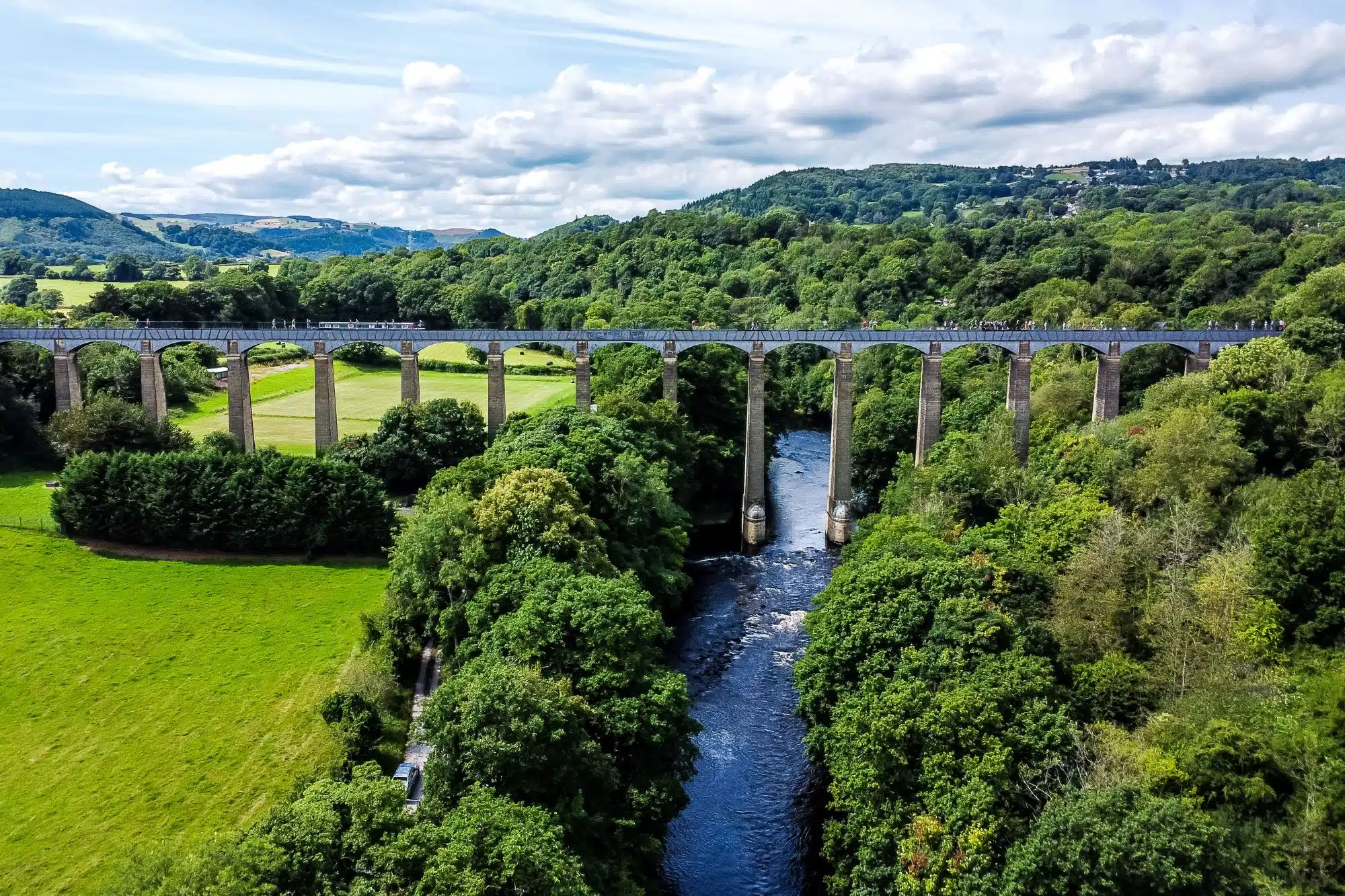
The Forth and Clyde and Union Canals connect Glasgow and Edinburgh, linked by the impressive Falkirk Wheel. These routes offer a blend of urban and rural scenery with fewer crowds than southern England.
Choose your route based on what you want: rural and quiet, or a mix of countryside and city stops. Scotland’s lowland canals lean toward countryside plus visitor city access; England & Wales offer many more route lengths and combinations.
Is canal boating worth it?
Canal boating in the UK is more than a holiday. It is a glimpse into a slower way of life that has largely disappeared.
Travelling at around four miles an hour gives you time to notice the details that are usually missed, like the sound of the water against the hull, a heron waiting by the reeds, or the quiet rhythm of the locks opening and closing.
It is not without effort. Steering, mooring, and handling locks all take teamwork and focus, but that is part of what makes the experience so rewarding. There is a real sense of satisfaction that comes from learning as you go and from being part of a small but genuine community on the water.
For us, it was a reminder of what slow travel really means: connection, patience, and presence. Whether you are planning your first canal boat holiday as a family trip, a short weekend escape, or a longer journey, time feels different on the water. And that is exactly what makes it special.

Our holiday was booked through Drifters and our boat was provided by ABC Boat Hire at Wrenbury Marina.
Drifters Waterway Holidays offers over 500 canal boats for hire from 40 bases across England, Scotland and Wales.
To book your next canal boating holiday, visit https://www.drifters.co.uk/