How to Spend a Lovely Day in Alsace from Basel (DIY Itinerary + Best Tours)
This article includes affiliate links. If you choose to book through them, you’re directly supporting the free content we create, and we’re so grateful for your support.
During our time in Basel, we wanted to take advantage of its unique location on the border of France and Germany, enjoying day trips from Basel. While we didn’t make it to Germany this time (the Black Forest is still on our list!), we decided to spend a day exploring the French region of Alsace.
I had always heard of its capital, Strasbourg, and the storybook city of Colmar, often called France’s “Capital of Christmas,” but we quickly realised there is much more to Alsace than these two famous stops.
In this guide, I’ll share a bit of Alsace’s history, what makes the region unique, and why it deserves a visit. Then we’ll go through how to plan the perfect day trip from Basel, including our recommended route and the best guided tours if you prefer an organised visit.
Where is Alsace?
So where is Alsace, exactly?
A historic region in northeastern France, Alsace has been part of the Grand Est administrative region since 2016. As France’s easternmost region, it borders Switzerland to the south and Germany directly to the east, separated only by the Rhine River.
Geographically, Alsace is defined by two contrasting landscapes: the Rhine Plain, known for its fertile vineyards and charming villages, and the Vosges Mountains, which rise along its western edge.
This mix of lowland plains and forested hills creates one of France’s most scenic regions, making it a perfect destination for day trips from Basel or Strasbourg.
Why Visit Alsace?
A lot of people wonder, is Alsace worth visiting? Alsace is sometimes overlooked in favour of Provence or Paris, but it’s one of France’s most rewarding regions to explore and deserves a spot on any itinerary for many reasons.
Borderland character
Alsace blends French and German influences in its architecture, food, and traditions, creating a culture that feels distinct from anywhere else in France.
Scenic landscapes
Between the Rhine River and the Vosges Mountains, the region offers vineyards, forested hills, and historic villages within short distances of each other.
Wine heritage
Home to the Alsace Wine Route, one of Europe’s most picturesque drives, connecting more than 70 wine-producing villages known for Riesling and Gewürztraminer.
Fairytale towns
Colmar, Eguisheim, Riquewihr, and Kaysersberg feature half-timbered houses, flower-lined canals, and medieval streets that feel timeless. These towns are said to have inspired the setting for Beauty and the Beast, with half-timbered houses and cobbled streets.
Cuisine
A strong regional identity shaped by hearty dishes like tarte flambée, baeckeoffe, and choucroute garnie, often paired with local wines or beers.
Accessibility
Easy to explore from Basel or Strasbourg, making it ideal for day trips or short stays across the border.
Getting from Basel to Alsace
By Train
From Basel to Strasbourg, the journey takes around 1 hour and 20 minutes by direct train from Basel SBB, the city’s central train station.
Tickets cost around €30, with trains running roughly every 30 minutes. Occasionally, there are promotional fares available, bringing prices down to as little as €11 one way.
If you’re planning to visit Colmar from Basel, the trip is even quicker—just 45 minutes direct from Basel SBB.
Trains depart every half hour on the same line to Strasbourg, and one-way tickets cost around €17.50, with discounted fares starting from €6 during promotions.
That said, this one day in Alsace itinerary doesn’t include Strasbourg, as I chose to focus on the smaller towns instead and how we spent our day.
Starting your day in Colmar is a great option, as it’s well-connected and makes an ideal first stop before exploring the surrounding villages.
By Car
Driving from Basel to Alsace is one of the easiest and most flexible ways to explore the region. From Basel city centre, it takes roughly 45 minutes to reach Colmar and about 1 hour and 20 minutes to reach Strasbourg, depending on traffic and your route. The most direct drive follows the A35 motorway, which runs north through Alsace, connecting many of the region’s main towns and villages.
Dare I say how incredibly beautiful the majority of this drive is? Entering Alsace really does feel like it’s out of a fairytale!
You’ll cross an internal border between Switzerland and France, but since both countries are part of the Schengen Area, border controls are usually minimal.
When we drove across, we weren’t stopped for any checks, though this can vary depending on the day and time. It’s always a good idea to carry your passport or ID just in case.
Having a car gives you the freedom to visit smaller Alsatian villages like Eguisheim, Kaysersberg, and Riquewihr at your own pace, many of which are difficult to reach by train or bus.
By Bus
If you prefer to travel by bus, FlixBus operates direct and frequent routes from Basel to both Strasbourg and Colmar.
The journey to Strasbourg takes about2 hours and 30 minutes and costs around €14, while the trip to Colmar takes roughly 1 hour and 30 minutes with tickets starting at €9.
Both options are convenient, but the train is faster overall, while the bus can be a more affordable alternative without losing too much time, especially if you book in advance.
Getting Around Alsace
Getting around Alsace is fairly easy, but the best option depends on how much of the region you want to see.
The main cities such as Strasbourg, Colmar, and Mulhouse are well-connected by the regional TER trains, with frequent and reliable services that make day trips between them straightforward.
Local buses and trams also operate within these cities, and regional coaches can reach many surrounding towns.
If you want to explore beyond the main hubs, particularly the smaller Alsace Wine Route villages like Eguisheim, Riquewihr, Ribeauvillé, or Kaysersberg, having a car offers the most flexibility.
While many of these villages can be reached by a combination of train and local bus, connections can be infrequent, especially on weekends or public holidays.
With a car, you can travel at your own pace, stop at viewpoints, and visit several villages in one day.
Alsace is also one of France’s most bike-friendly regions, with over 2,500 kilometres of cycling routes including sections of EuroVelo 5, 6, and 15. Cycling is a popular way to experience the landscape up close, and many train routes allow bikes on board, making it easy to combine both travel modes.
In the warmer months, it would be perfect to take the train into either Colmar or Strasbourg and cycle along the Alsace wine route through the vineyards!
How to spend the Perfect Day in Alsace, France
Alsace has an incredible amount to experience, and there really is something for everyone here. This one day in Alsace itinerary brings together a bit of everything I love about the region, from its history and nature to local bites and wine tasting.
While this itinerary is best explored by car, it’s also doable by public transport using a mix of local trains and taxis between towns.
Morning – Haut-Koenigsbourg Castle
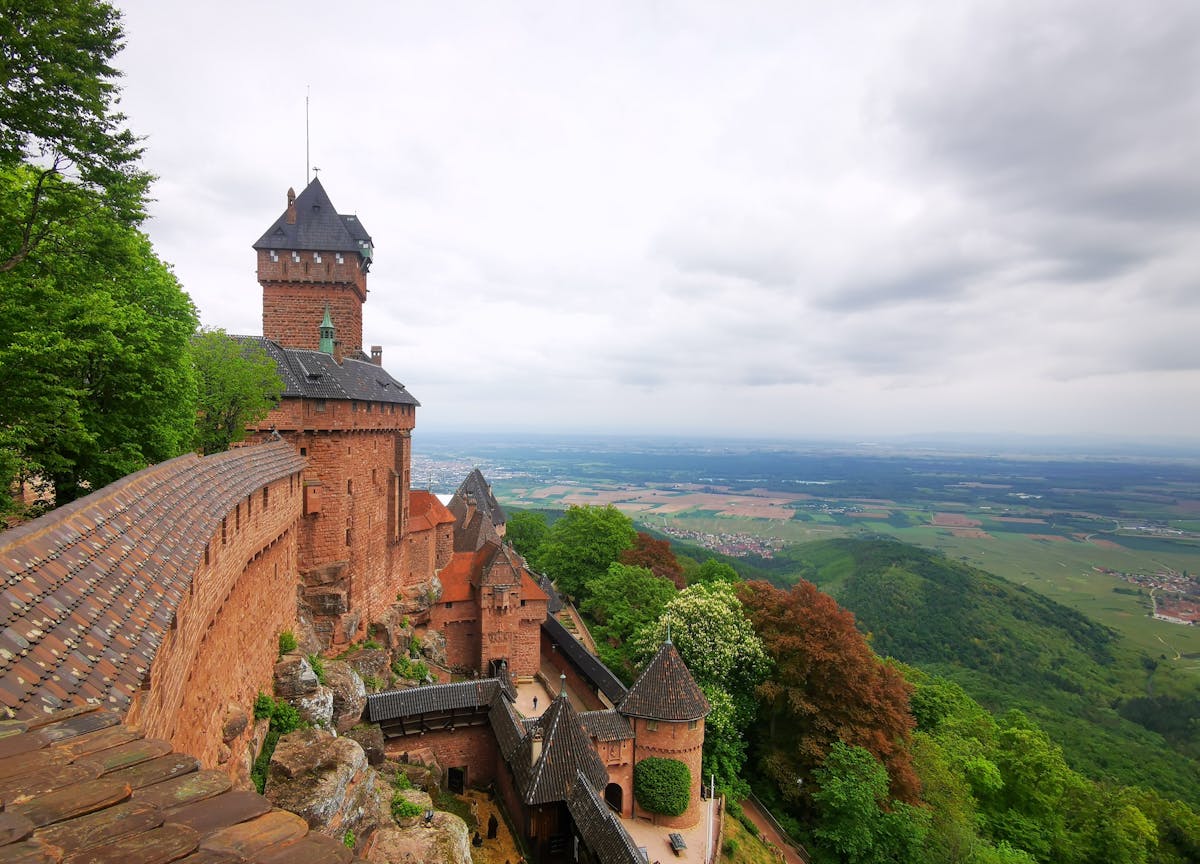
Rising 757 metres above the Alsace Plain, Haut-Koenigsbourg Castle (or Château du Haut-Koenigsbourg) dominates the landscape and offers some of the best panoramic views in the region.
Built in the 12th century, the fortress once belonged to the Hohenstaufen family before being destroyed during the Thirty Years’ War. It was later reconstructed in the early 1900s under Kaiser Wilhelm II, who aimed to restore it to its former medieval grandeur.
Today, it’s the only fully restored medieval castle in Alsace, complete with drawbridges, towers, and sweeping views across vineyards and the Vosges Mountains.
Inside, you can explore its armoury, furnished rooms, and grand banquet halls, which give an authentic glimpse into feudal life.
Located in the commune of Orschwiller, the castle is one of the most visited landmarks in Alsace, so arriving early is key to avoiding crowds and securing parking.
If you’re visiting during high season, aim to get there soon after opening time for a quieter experience and clear morning light for photos.

Know Before You Go
- The castle is open every day, all year round, except on 1 January, 25 and 26 December.
- Tickets cost €12 for adults, €8 for children 6-17, free for children under 6, and there are also reduced ticket options, along with family tickets to save money.
- You can book your tickets online here, or in person at the ticket office on the ground level.
💡Tip: If you’re driving from Basel, you’ll likely pass through the utterly charming wine village of Saint-Hippolyte on your way up. It’s worth pulling over for a short walk and a cappuccino and croissant at Au Virage des Pains, a local favourite bakery. From there, it’s about a 10-minute drive to the castle entrance.
I absolutely loved our visit to Haut-Koenigsbourg Castle. The architecture and restoration are remarkable, and the upper garden is a delight to wander through. From the top floors, the panoramic views stretching across Alsace and into Germany are truly breathtaking.
Afternoon – Ribeauville & Alsace Wine Route
For your afternoon in Alsace, there are two standout options depending on your interests and pace. If you’re up for a full day, you can easily combine both.
To experience the charm of Alsace’s villages more in depth, spend the afternoon in Ribeauvillé.
Alternatively, if you’re visiting during the warmer months, cycling or driving along a stretch of the Alsace Wine Route is a brilliant way to take in the region’s landscapes.
Ribeauvillé
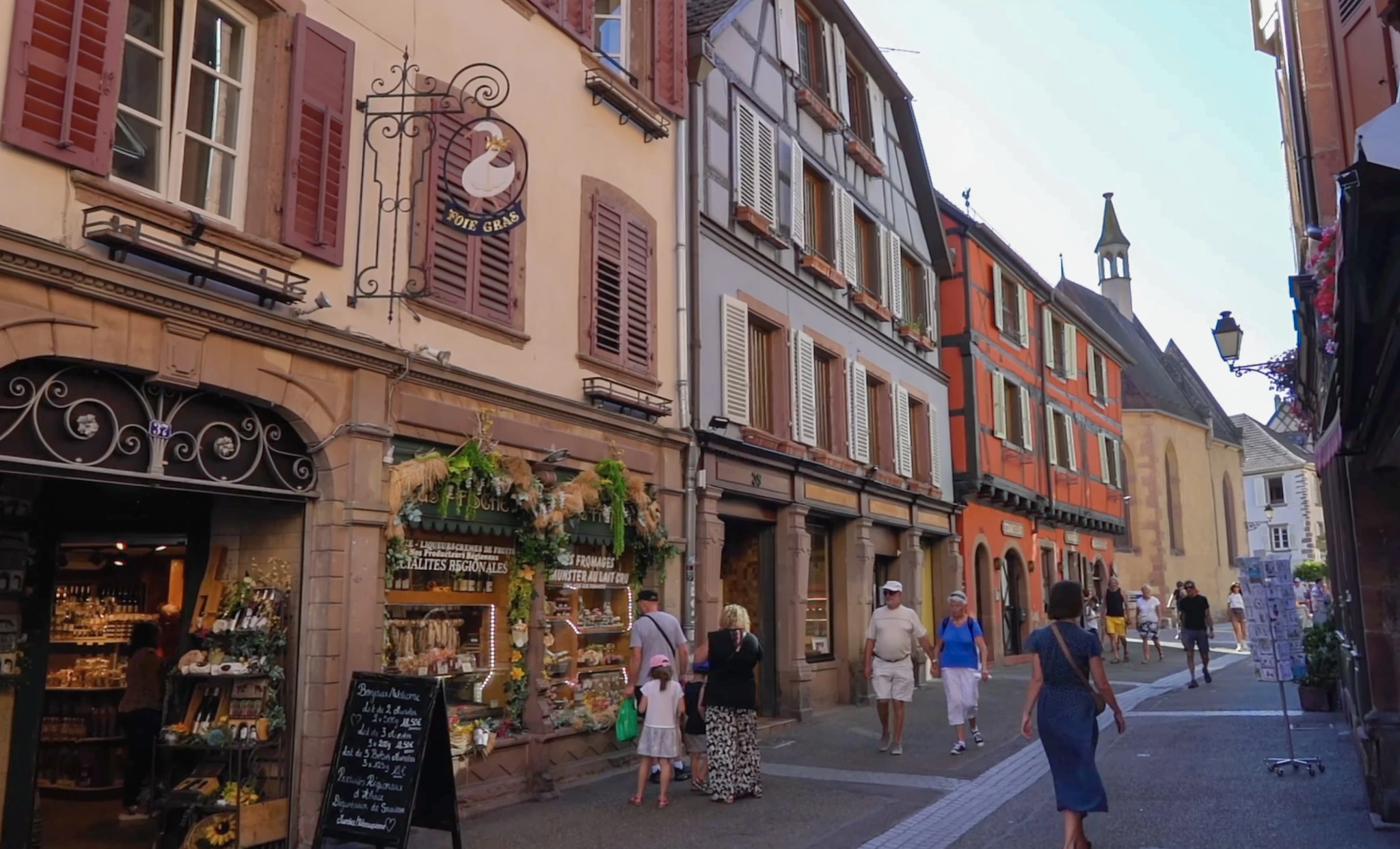
Halfway between Strasbourg and Mulhouse, Ribeauvillé is one of the oldest medieval towns in Alsace, and it is easily one of the most beautiful and charming.
With just 5,000 inhabitants, Ribeauvillé truly feels like you’ve stepped back in time, with picturesque cobblestoned narrow streets, colourful timbered homes, and 15th-18th century buildings.
Things to do in Ribeauvillé
Stroll the Grand’Rue
Ribeauvillé’s main street, the Grand’Rue, winds through the heart of the village and is lined with colourful half-timbered houses, local boutiques, and wine shops. Take your time wandering through, it’s one of the most picturesque streets in Alsace and a great place to soak up the medieval charm.
Wine tasting at Café de la Poste
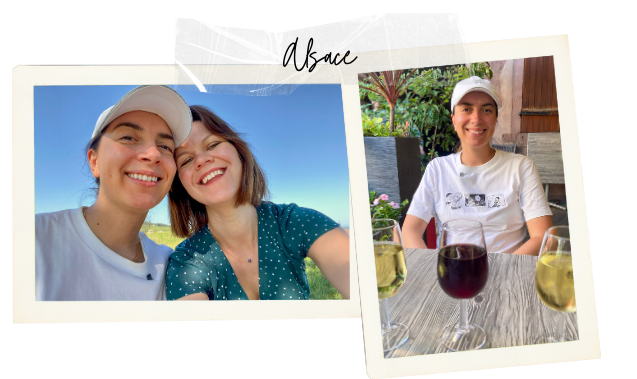
While reviews for the food and service are mixed, we had an excellent experience here when it came to wine. The selection of Alsatian wines was superb, and the prices were surprisingly low for the quality. It’s a great spot to sit outside, order a glass (or two), and watch village life pass by.
The Town Hall Square
The central square, Place de l’Hôtel de Ville, is a lovely stop for photos and a short rest. Surrounded by traditional buildings, it’s home to the Renaissance-style Town Hall and often features small local events or markets throughout the year.
Three Castles Hike
If you have the time and energy, the Three Castles Hike offers panoramic views of Ribeauvillé and the surrounding vineyards. The route connects the ruins of Saint-Ulrich, Girsberg, and Haut-Ribeaupierre Castles, all perched above the town. It’s a scenic and rewarding way to experience Alsace’s landscape beyond the village streets. Check out the full route here.
💡 Tip: For lunch in Ribeauvillé, book a table at Au Cheval Noir, a traditional Alsatian restaurant on the edge of the town center that’s a long-standing favourite among locals. The coq au Riesling and the cordon bleu are both excellent choices and pair perfectly with a glass of regional wine.
Alsace Wine Route
Spend your afternoon on the Wine Route through the vineyards north of Ribeauvillé. Begin with a gentle cycle (or a relaxed drive) and let the vine-lined lanes lead you from village to village.
One excellent stop is Cave de Ribeauvillé (2 Route de Colmar, Ribeauvillé). Founded in 1895, it is the oldest wine-co-operative in the region and offers tastings of more than 70 wines drawn from seven Grand Cru plots.
Another standout is Maison F.E. Trimbach, a family winery established in 1626 whose vineyards lie on the famed “Ribeauvillé fault” terrors, producing dry Rieslings with serious character.
And for an organic, contemporary feel, try Domaine Bott Frères, which moved into organic certification in 2022 and offers a welcoming tasting experience just outside the historical centre.
Whether you cycle between the vineyards with a picnic stop along the way or drive from one wine village to the next, this afternoon offers an authentic glimpse of Alsace. Gentle slopes, quiet roads, and vineyard views create the perfect backdrop to experience the region’s winemaking culture up close.
Tip: If you decide to rent a bike, check out Ribo’Cycles in Ribeauvillé. They offer both regular and e-bikes, making it easy to explore the surrounding vineyards at your own pace.

Read Next: 7 Handpicked Basel Hotels We’d Book in 2025
Evening – Colmar
Located just about 15 km (around 15-20-minutes by car) from Ribeauvillé, Colmar is an ideal spot to wind down your day in Alsace with charm and a relaxed pace.
Aside from Strasbourg, Colmar is one of the most visited towns in Alsace, and with good reason. Colmar truly feels like something right out of a classic fairytale.
This historic town blends French and German heritage, and as the light softens in the evening its canals, colourful façades and medieval lanes come alive in a peaceful kind of way.
Things to do in Colmar
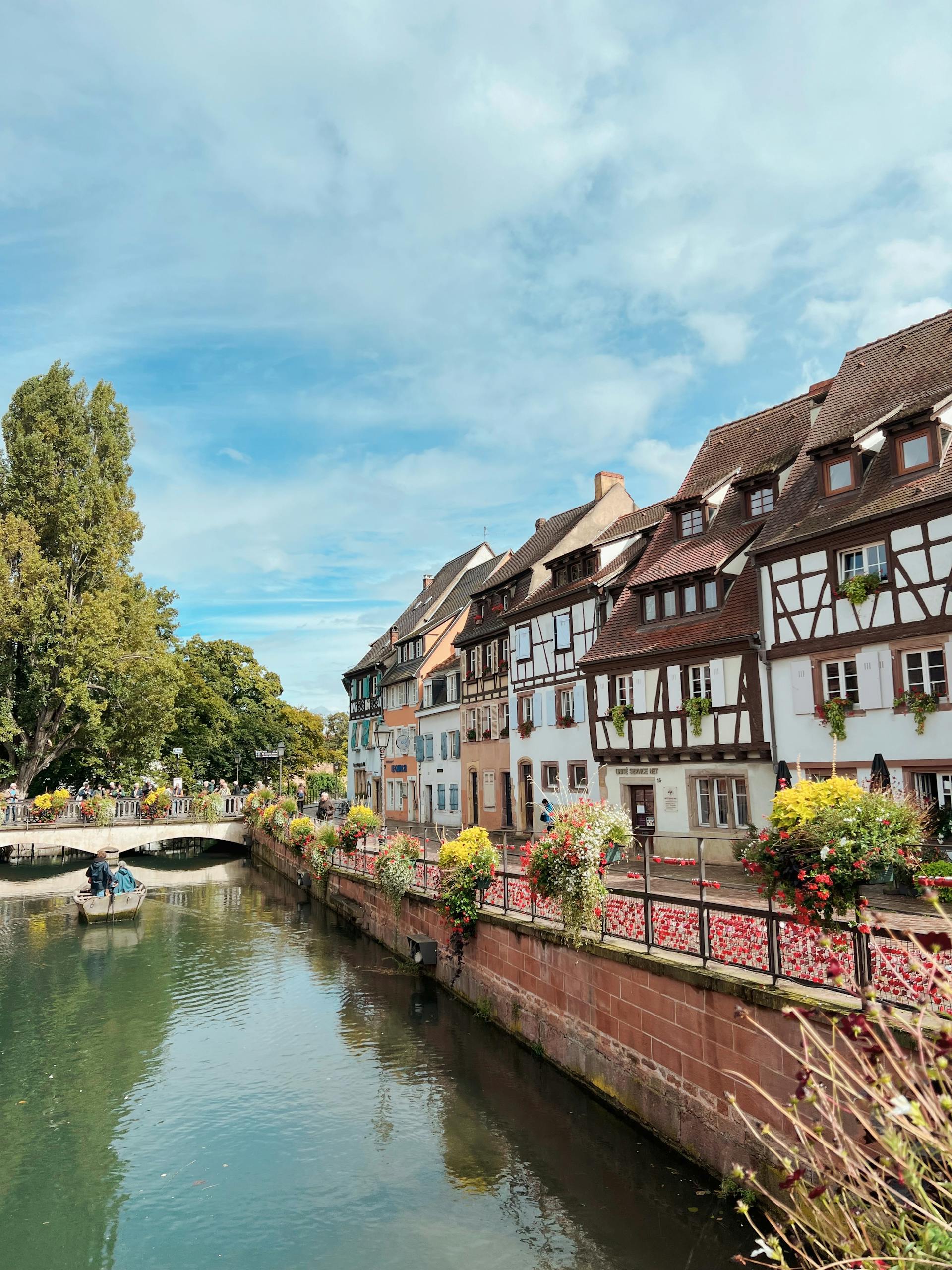
Wander through La Petite Venise: Start your stroll in the old town by exploring the canal-lined quarter known as “Little Venice”, where the reflections of half-timbered houses in the water create postcard views.
Visit the Collegiate Church of Saint-Martin: Often called Colmar’s cathedral, this 13th-century Gothic church stands at the heart of the old town. Step inside to admire its stained-glass windows and vaulted ceilings, or enjoy the view from the surrounding square.
Quai de la Poissonnerie: Once home to Colmar’s medieval fish market, this scenic street runs alongside the Lauch River and is one of the most picturesque parts of the old town. The pastel façades, flower boxes, and waterfront cafés make it an ideal place for an early evening stroll or a quiet photo stop.
Arrive a few hours before sunset: Coming early means you’ll have time to settle in, explore the streets without the rush, and choose a great spot for dinner as the sun begins to dip.
Unterlinden Museum: If you arrive earlier in the afternoon, make time for the Unterlinden Museum, one of Alsace’s cultural highlights. Housed in a former 13th-century convent, it’s home to the famous Isenheim Altarpiece along with collections spanning archaeology, fine arts, and regional history. It’s worth visiting before your evening walk through the old town.
Boat Ride on the Lauch River: One of the best ways to see Colmar is from the water. Take a short flat-bottom boat ride through La Petite Venise for a peaceful view of the town’s canals and pastel houses. The company Sweet Narcisse runs these 25–30 minute rides, departing regularly near the Rue de la Poissonnerie bridge.
For dinner in Colmar, make sure to try a Tarte Flambée at Restaurant La Soï – we were blown away!
Boats from Sweet Narcisse operate from 10:00 am to 11:45 am and 1:30 pm to 6:00 pm, with departures roughly every 10 minutes. Hours are reduced in January, February, and November, so it’s worth checking ahead if you’re visiting off-season. Tickets cost €9 for adults and €4 for children aged 4–10, while children under 3 ride free.


Organised Tours
If you prefer to have the planning, transportation, and guesswork taken away for your day trip to Alsace, consider an organised tour.
This tour is a great option, following nearly the same route as the DIY itinerary but in reverse. You’ll start the day in Colmar, continue to Haut-Kœnigsbourg Castle, and finish in Ribeauvillé.
The tour departs from Basel in the morning and includes comfortable coach transport as well as entry to Haut-Kœnigsbourg Castle.
Have you been to Alsace? What’s your favourite town in this wonderful region? We’re going back for Christmas this year and i’m so excited to experience it in the cosy season!