Weekend in Basel, Switzerland: The Perfect 2 Day Itinerary
This article includes affiliate links. If you choose to book through them, you’re directly supporting the free content we create, and we’re so grateful for your support.
Basel is one of the most underrated cities in Switzerland, and I did not expect to like it as much as I did.
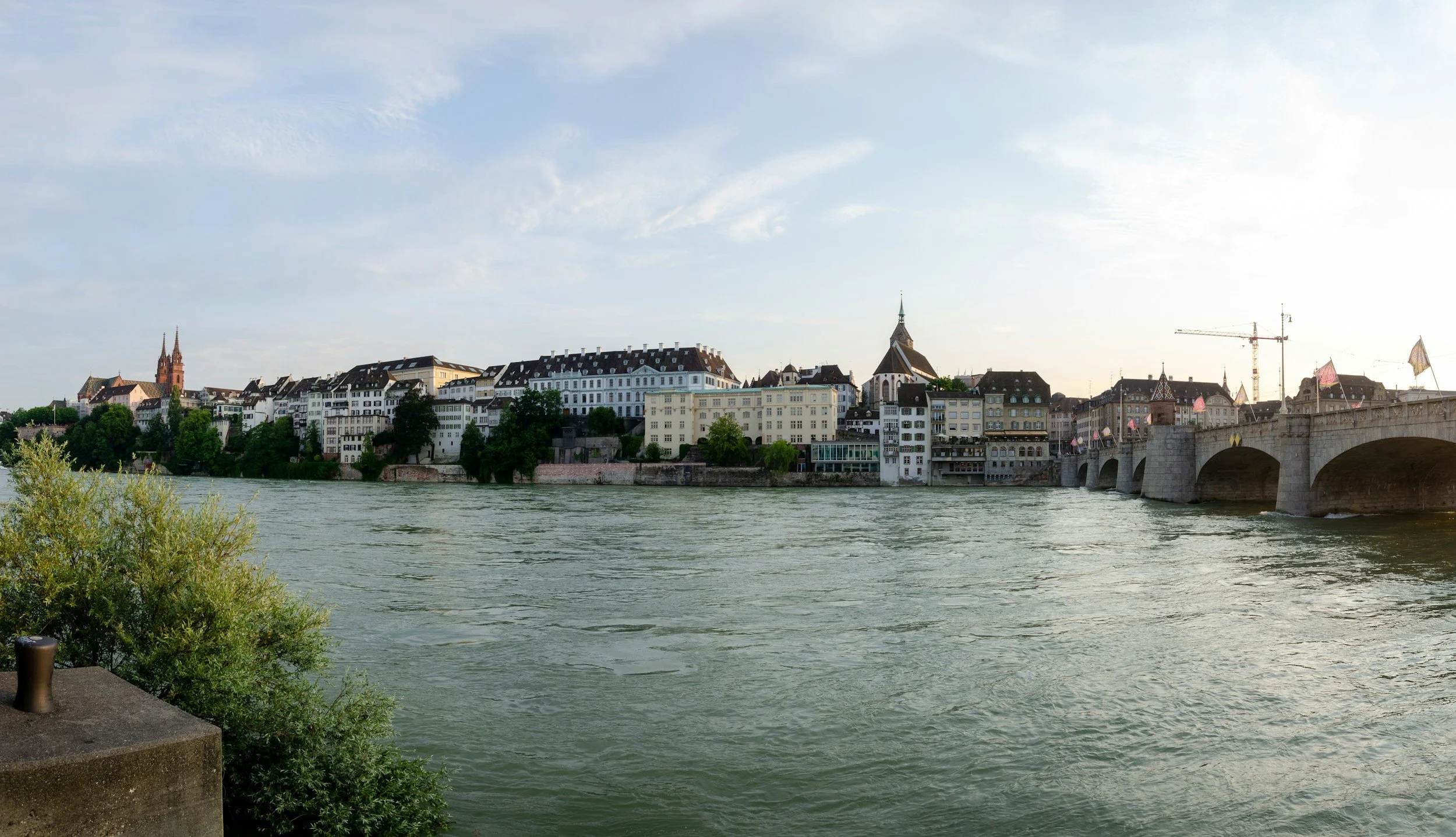
Set at the point where France, Germany, and Switzerland meet, the city blends medieval streets, serious art, and relaxed Rhine-side neighborhoods in a way that feels natural rather than curated. It is cultured without feeling formal and creative without trying to impress you.
If you are planning time in Basel and want something beyond alpine villages and luxury resorts, this is what is actually worth doing. I explored the city slowly, on foot, along the river, through its museums, and into its local neighborhoods, and these are the places and experiences that stood out.
Looking for where to stay during your trip to Basel?
If you’re short on time and want a design-forward stay in a central location, my top choice is the Boutique & Design Hotel Volkshaus Basel!
Basel
Over the past few years, Basel has quietly grown into one of Europe’s most creative small cities. New art spaces, riverside cafés, and thoughtful design hotels sit alongside its historic Old Town and centuries-old institutions.
As the home of Art Basel, the city has long been a hub for artistic innovation, but it never feels overwhelming or overly polished. Medieval architecture and contemporary design coexist naturally here, giving Basel a sense of balance that’s hard to find elsewhere.
Add in a sophisticated food scene, world-class museums, and a distinctly international feel, and Basel becomes far more than a stopover — it’s a destination best explored at a slower pace.
When to Visit Basel
Basel is a year-round city, but each season offers a slightly different experience.
Spring and Summer
Late spring through summer is an excellent time to visit. The city comes alive with outdoor events, river swimming, and long evenings spent along the Rhine.
- Major events include Art Basel, the Basel Jazz Festival, and FLOSS Festival
- Warm but comfortable temperatures
- Lively atmosphere without feeling overcrowded
One of our favourite parts of our summer visit was floating down the Rhine — a unique local tradition and a genuinely unforgettable experience.
Fall and Winter
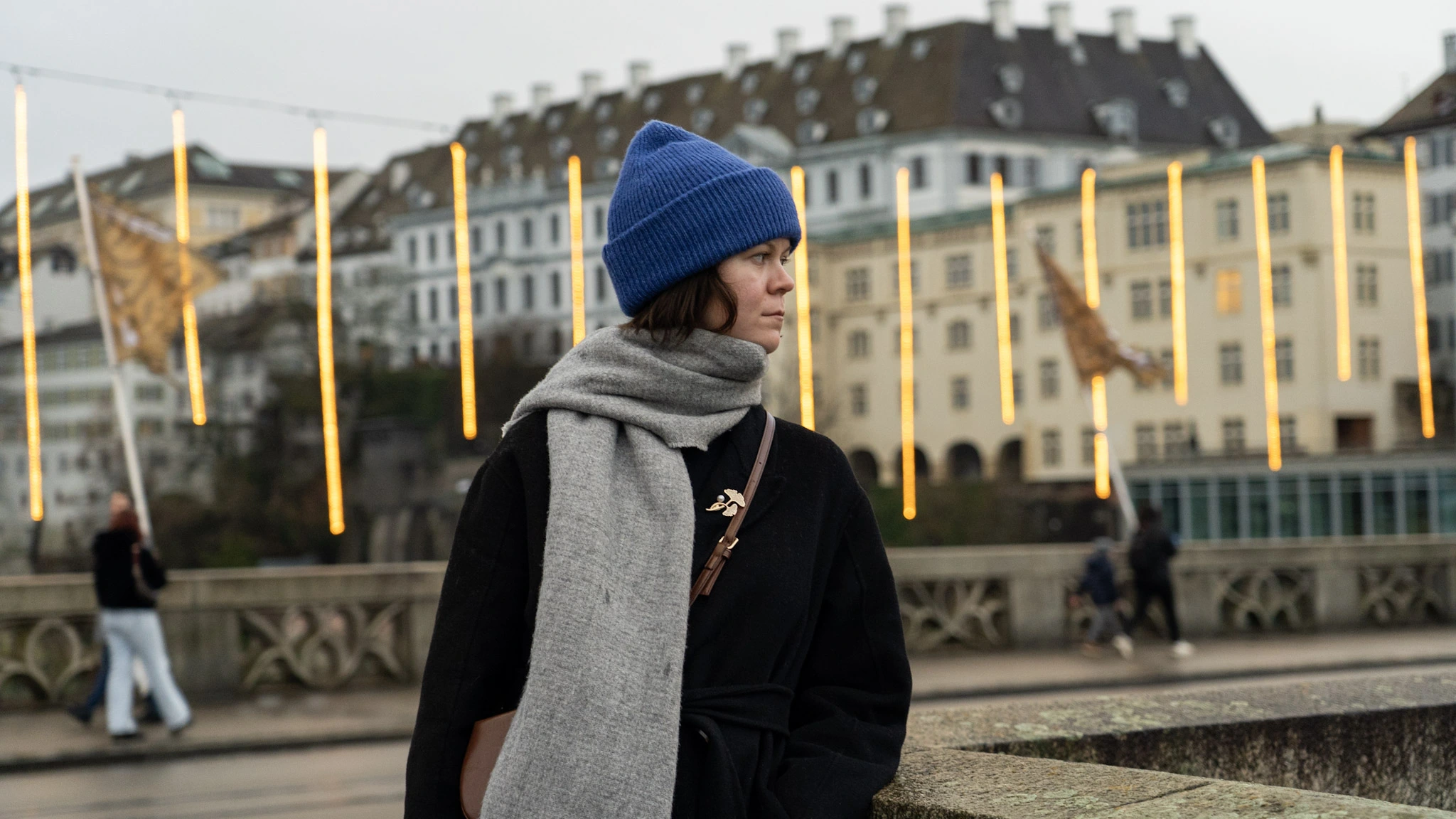
Winter in Basel is quieter and more atmospheric. The city feels slower, more local, and easier to explore without crowds.
- Festive Christmas markets in December
- Excellent time for museums and cultural venues
- Easy access to nearby ski resorts
- Crisp but manageable temperatures
Cafés and restaurants become cosy refuges, making winter a great choice for those who enjoy cultural travel with fewer distractions.
How to Get to and Around Basel
By Plane
EuroAirport Basel Mulhouse Freiburg serves Basel, but it is physically located in France. This can sound confusing at first, but in practice it is very straightforward.
The airport has two exits, one leading into France and one into Switzerland. If you are staying in Basel, you will want the Swiss exit. From there, public buses connect the airport to the city centre in around 20 minutes. Tickets are easy to buy, and the route is well signposted.
By Train
Basel is an excellent rail hub, and arriving by train is often the most seamless option.
Basel SBB sits right on the edge of the city centre and connects Basel with major European cities.
Typical journey times include:
- Zurich in around 45 minutes
- Paris in about 3 hours
- Frankfurt in roughly 3.5 hours
If you are travelling through Switzerland or combining Basel with France or Germany, the train is hard to beat for both speed and comfort.
By Car
Basel sits in the tri-border region known as the Dreiländereck, where Switzerland, France, and Germany meet. This makes it easy to reach by car from multiple directions.
That said, once you are in the city, a car is more hassle than help. Parking exists, but Basel is compact and well-connected by public transport. I would only recommend driving if Basel is part of a longer road trip.
For reliable car rentals across Europe, we consistently turn to Discover Cars. Over the past four years, it’s been our go-to platform for finding the best deals and most competitive rates when exploring European destinations.
How to Get Around Basel
You’re likely wondering, is Basel a walkable city? Luckily, getting around Basel is seamless. The majority of the city is wonderfully walkable, and for longer distances, the tram and bus network is frequent and efficient.
A bonus: every booking at a Basel hotel, hostel, bed and breakfast, or flat comes with a Basel Card, providing complimentary public transportation for the duration of your stay.
Where to Stay in Basel
When we were in Basel, we stayed at the Hotel Schweizerhof Basel.
What worked well about this location was the flexibility. We could walk into the Old Town easily, but also hop on trams without thinking. Early mornings and late arrivals were stress-free, and the surrounding area felt practical rather than touristy.
The hotel itself leans classic rather than design-forward, but rooms were spotless, the staff were welcoming, and the breakfast was far better than expected. If convenience is your priority, this is a strong base.


Other Good Options by Budget
Hotel Spalentor (€)
A solid choice near the Old Town with generous rooms and a quiet setting close to Spalentor Gate.
Nomad Design & Lifestyle Hotel (€€)
A modern, comfortable option close to the Kunstmuseum. Good if you want amenities like a sauna and gym alongside a central location.
SET Hotel. Residence (€€€)
A higher-end option combining apartment-style living with hotel services. Works well for longer stays or if you value space and flexibility.
Read Next: Check out my guide to 7 Handpicked Basel Hotels We’d Book in 2025
The Perfect Weekend in Basel
Day One – Historic Basel
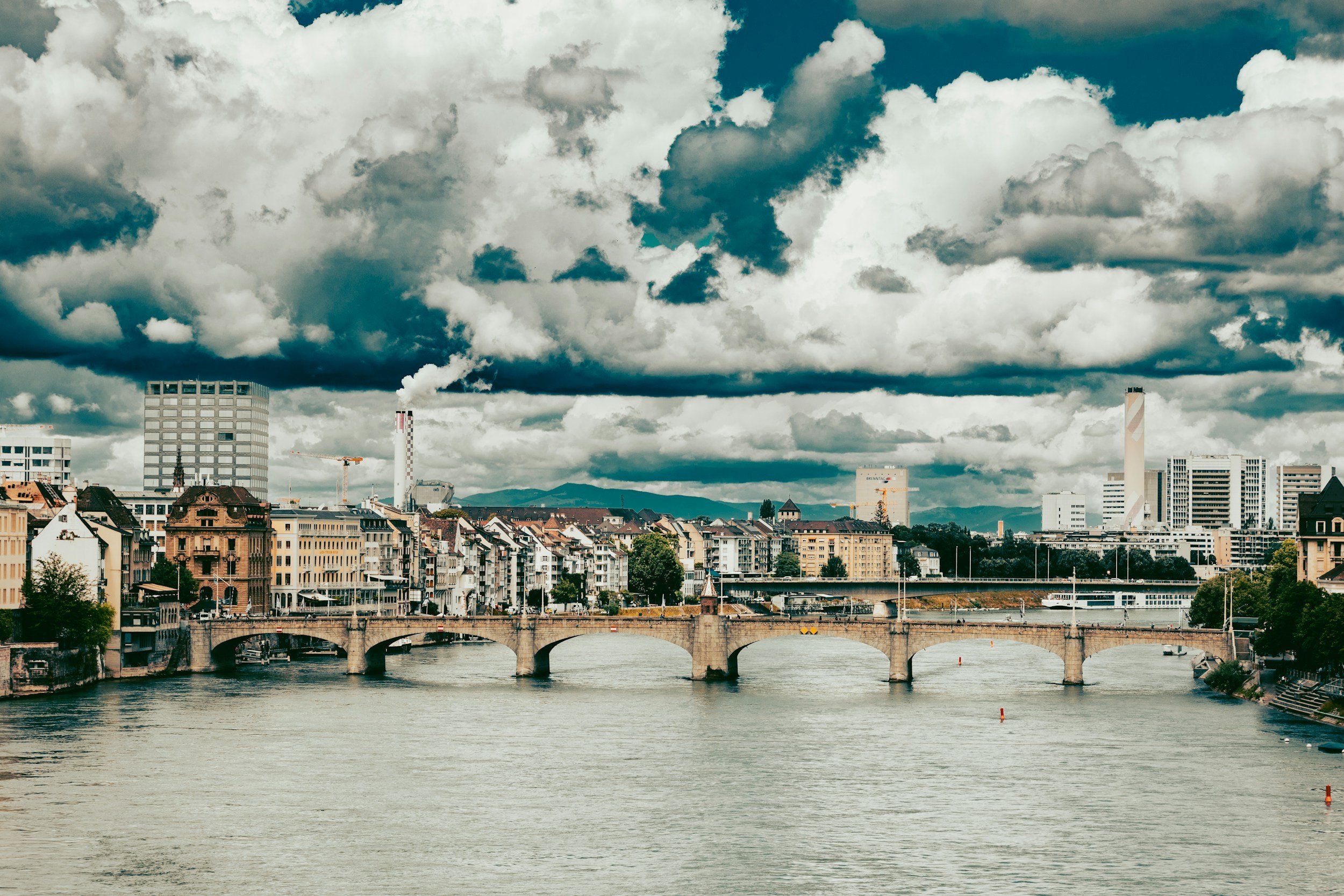
Your first day in Basel focuses on the historic core, where most of the city’s key landmarks are close enough to explore at an easy pace, with plenty of stops along the way.
Old Town
Basel’s Old Town is compact and easy to explore on foot, with narrow cobblestone streets, pastel-coloured townhouses, and a series of small courtyards, many with Baroque fountains. The layout makes it easy to move between main streets and quieter pockets without straying far.
Based on our time in Basel, the best way to spend your first day is walking through the Old Town at a relaxed pace. Areas around Spalenberg are noticeably quieter, while the Pfalz Terrace offers one of the best views over the Rhine and the city below.
👀 Keep an eye out for: The picturesque streets of Rheinsprung and Augustinergasse, and be sure to swing by Milo’s Cookies in Andreasplatz for some of the most delicious cookies I’ve ever had.
Basler Munster
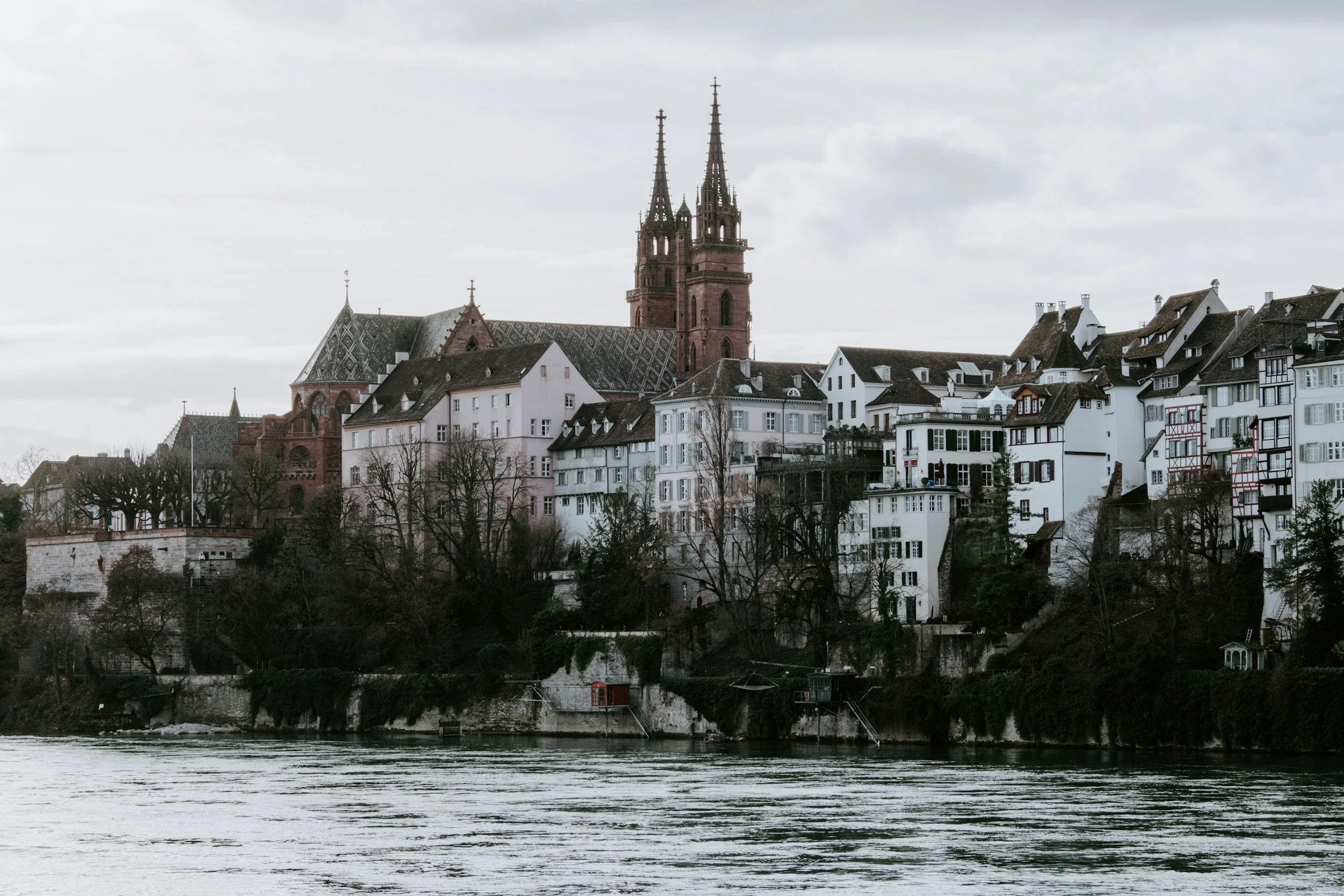
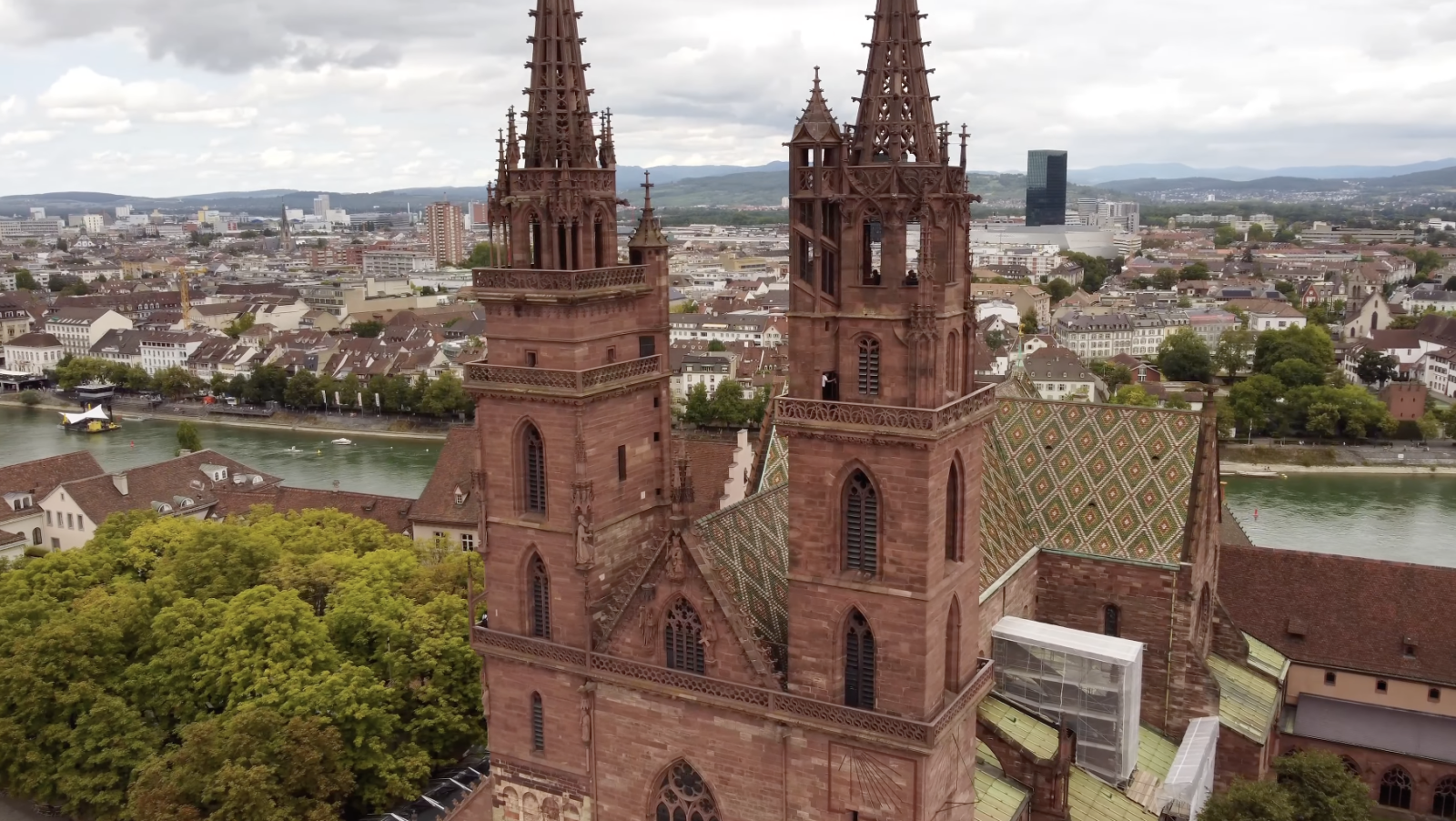
Dating back to 1091, Basel Minster is the city’s most recognisable landmark, set on a hill above the Rhine. Its twin towers and red sandstone exterior dominate the Old Town skyline, and the terrace behind the cathedral offers one of the best views in the city.
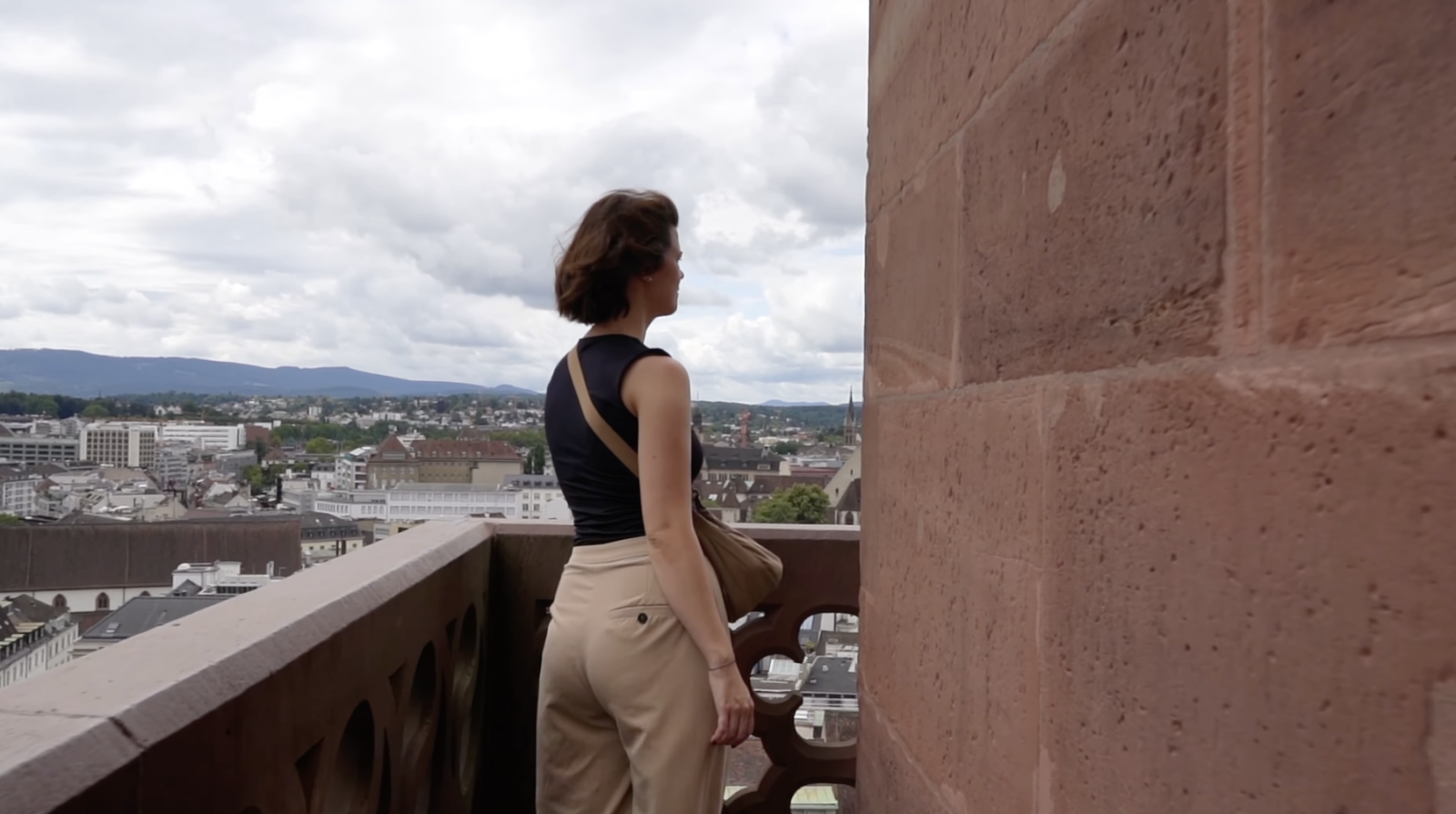
If you’re up for it, you can climb St. George’s Tower or St. Martin’s Tower for panoramic views over Basel and the river below. The climb is steep, but the view makes it worthwhile.
Practical information
Good to know: access involves a steep spiral staircase – wear sturdy shoes
Opening hours: usually 10:00 AM–5:00 PM daily (seasonal changes apply)
Tower tickets: approx. CHF 5–6 per person
Discounts: available for children and groups
Tours: guided tours run throughout the day
Where to Eat & Drink – Day One
After a full afternoon walking through the Old Town, it makes sense to eat somewhere informal and flexible rather than committing to a long, sit-down meal.
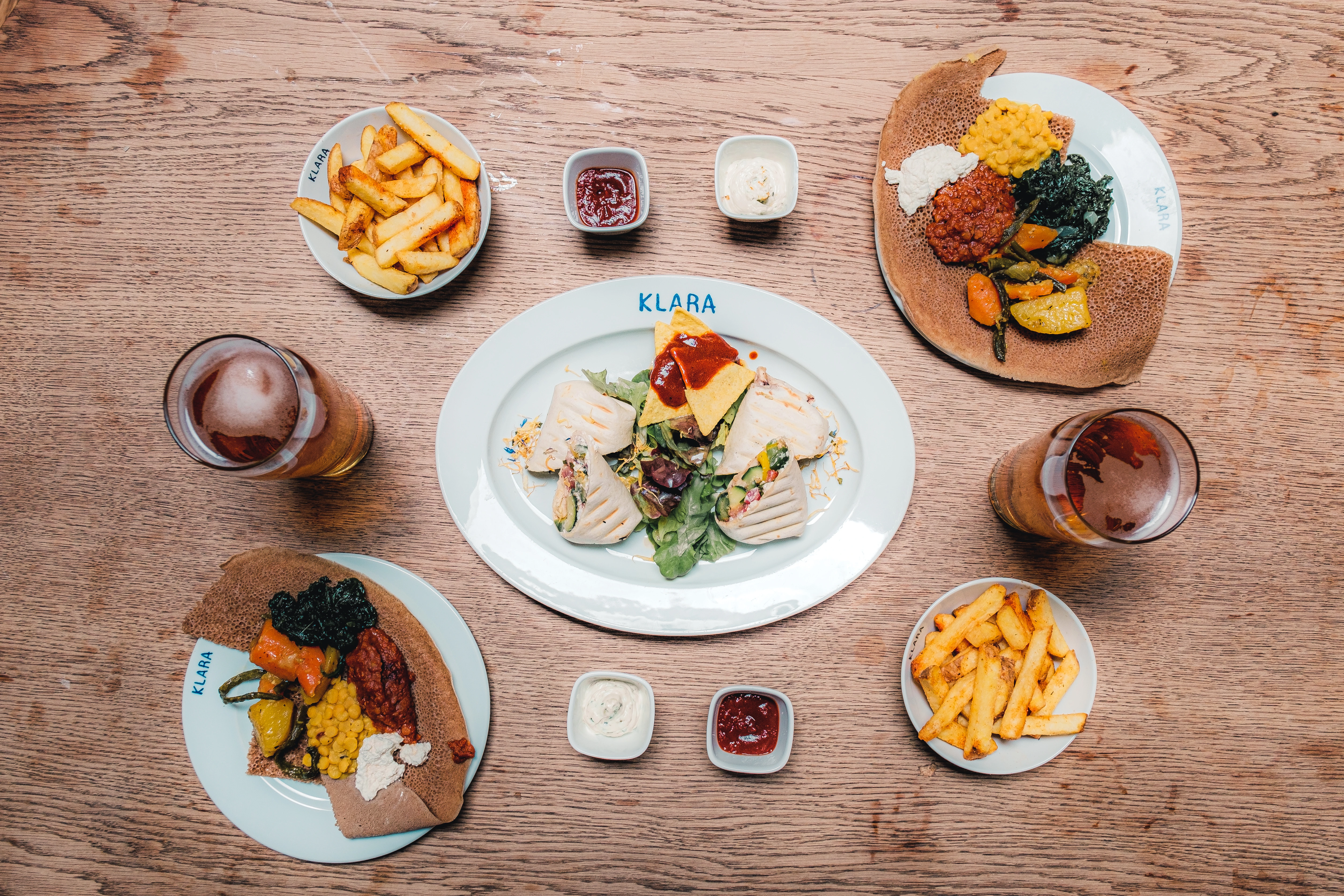
KLARA
KLARA is a large indoor food hall made up of rotating food stalls, each focusing on a different cuisine. Options typically include Asian street food, Middle Eastern dishes, and European comfort food, with vegetarian choices always available.
Seating is communal, service is quick, and you order directly from the stalls. This makes it a practical choice if you are tired, indecisive, or travelling with people who want different things. Drinks are mostly regional, with Swiss beer and soft drinks, plus wines and spirits from nearby France and Germany.
It is not a traditional Basel restaurant, but it is a useful first-night option and popular with locals.
Volta Bräu
Volta Bräu is a small brewery and restaurant located in Voltaplatz, slightly outside the Old Town. Beer is brewed on site, and the food menu is designed to pair with the house beers rather than compete with them.
Dishes are straightforward and seasonal, with a focus on local ingredients. Portions are generous, prices are reasonable for Switzerland, and the space attracts a mostly local crowd, especially in the evenings.
If you want somewhere relaxed but distinctly Basel, Volta Bräu is a stronger choice than many of the more central tourist-leaning spots.
Coffee Break
Daniska
Danishka Coffee and Matcha in Basel offers expertly crafted drinks, from rich coffee to vibrant matcha lattes. With a focus on high-quality ingredients, the menu also includes delicious pastries and light bites. It’s the perfect spot to relax and enjoy seasonal specials.
Day Two: Food Traditions, Art, and Green Space
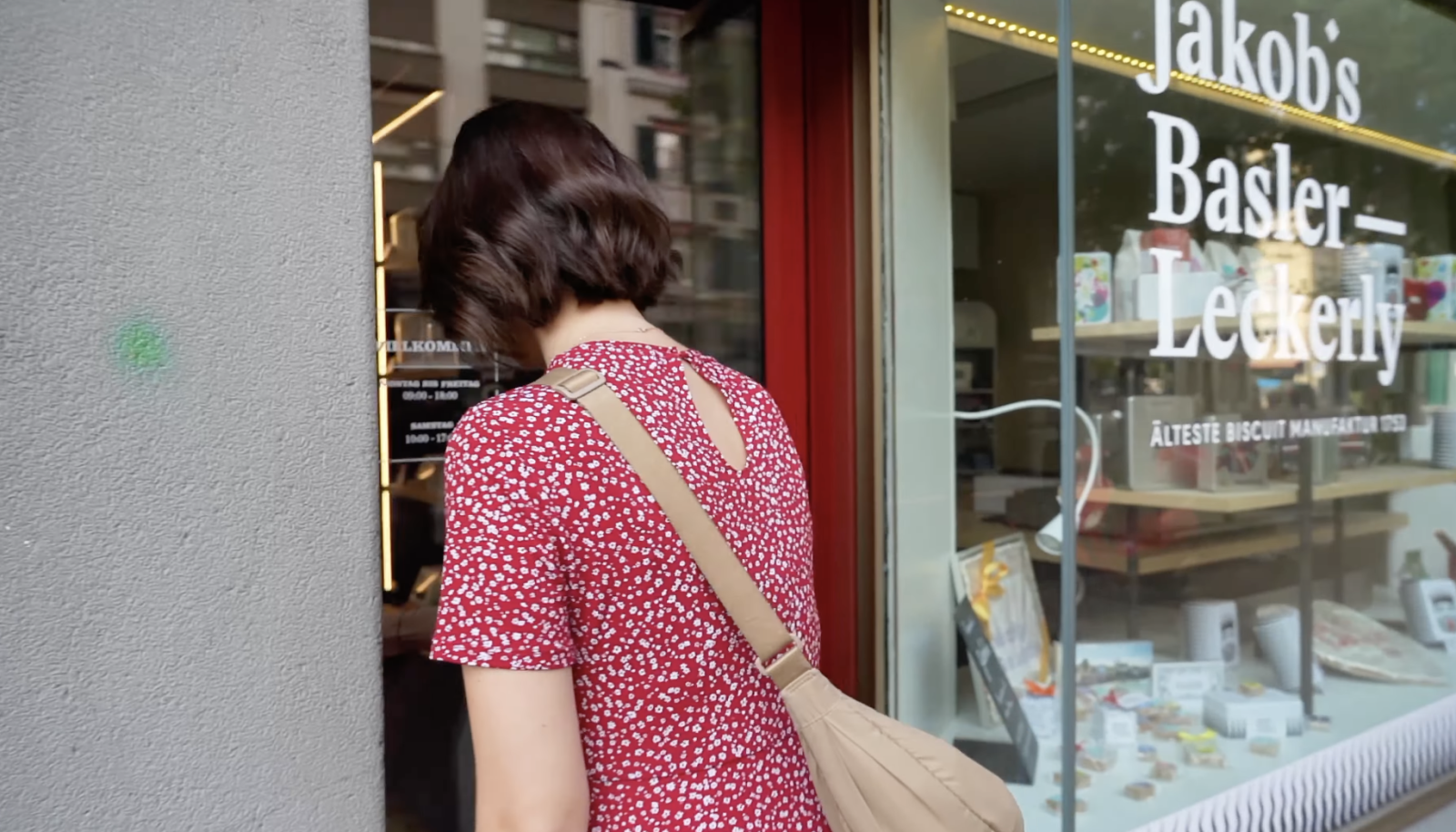
Jakob’s Basler Leckerly
A stop at Jakob’s Basler Läckerli is one of the most location-specific things you can do in Basel.
Basler Läckerli are dense spiced biscuits made with honey, nuts, candied citrus peel, and kirsch. They are not soft or delicate, and that is the point. This is a traditional recipe that has barely changed over centuries.
Jakob’s dates back to 1753 and is still considered the reference point for Läckerli in the city. The shop itself is small and functional rather than charming, but the quality speaks for itself. If you want an edible souvenir that actually reflects Basel, this is the right place to buy it.
If you have time, the bakery tour and tasting are worth doing. It provides useful historical context and lets you try Läckerli fresh, which is very different from the packaged versions sold elsewhere.

Choosing One Museum, Not Several
Basel has more than 40 museums, and trying to visit multiple major ones in a single day usually backfires. The better approach is to choose one primary museum and give it proper time. We actually only visited the Kunst Museum during our first visit to Basel, and during our second visit in the winter, we visited both over a few days.
Below are two strong options depending on how much energy you want to spend and how central you want to stay.
Kunst Museum
Kunstmuseum Basel is the most historically significant museum in the city and the best choice if you want depth.
Founded in 1661, it holds the world’s oldest public art collection. The permanent collection spans from the late Middle Ages through modern art, with particularly strong holdings in Renaissance works and twentieth-century European painting.
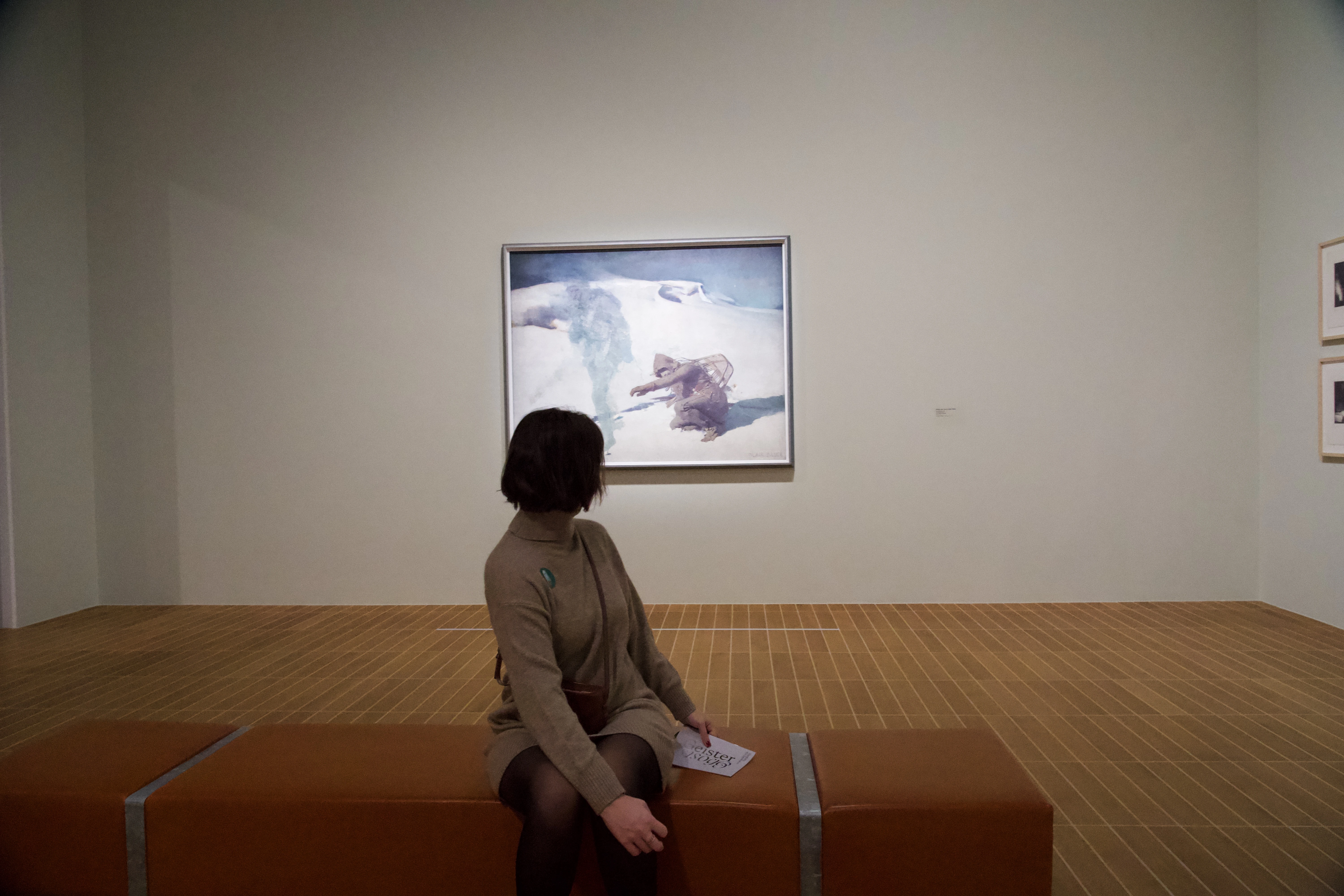
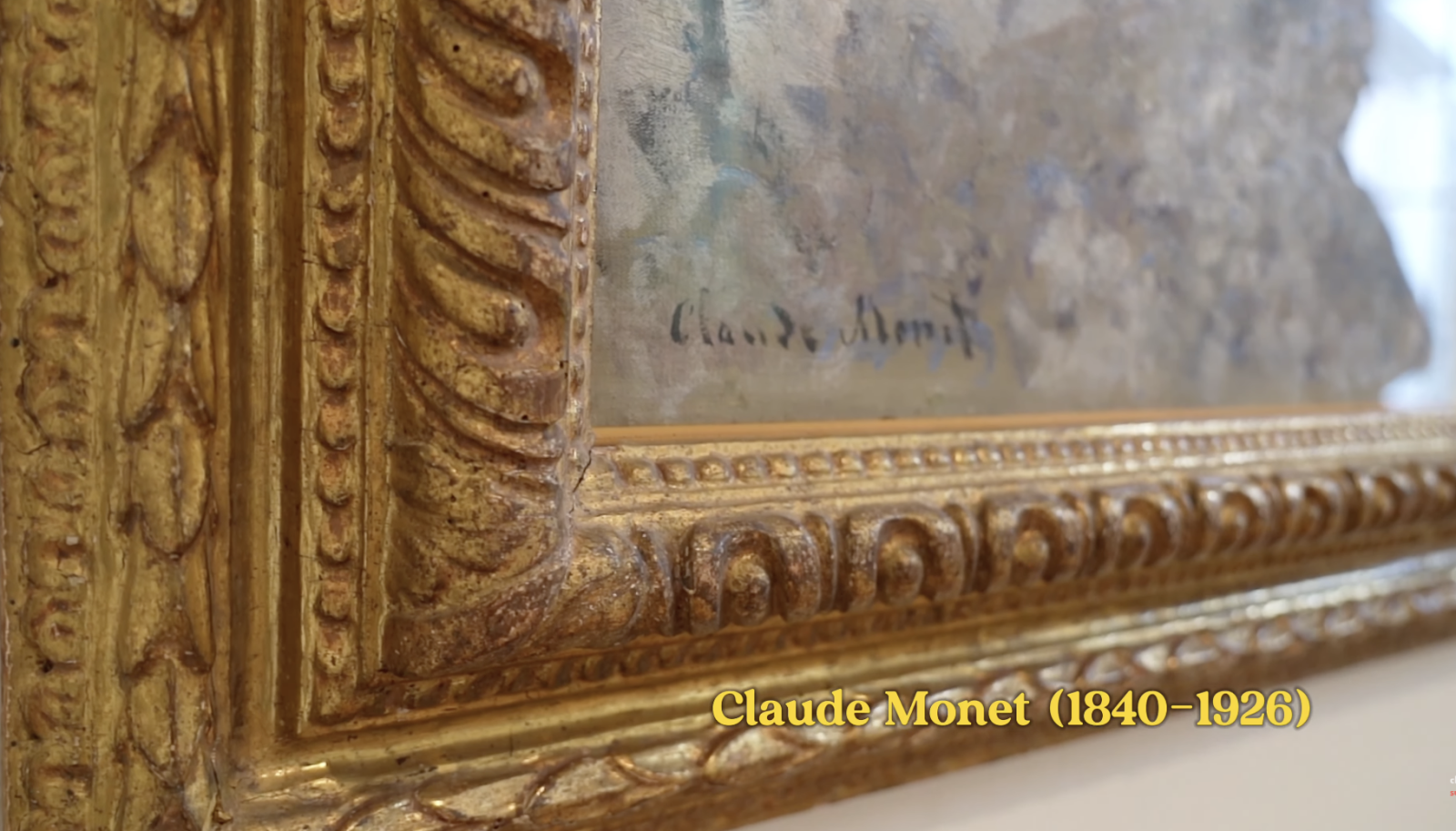
Expect to see works by Holbein, Cézanne, Monet, Van Gogh, and Picasso. The museum is spread across multiple buildings, and it takes time to absorb properly. If you enjoy reading wall text and understanding historical context, plan at least two to three hours here.
This is not a museum to rush. If art is a priority for your Basel trip, it justifies structuring the rest of the day around it.
Tickets and admission
- Adults (20+) – 25 CHF
- Students (20–25) – 12 CHF
- Teenagers (13–19) – 12 CHF
- Disabled visitors with ID – 12 CHF
- Groups (20+ people) – 20 CHF per person
Free entry times for the permanent collection
- Tuesday and Thursday, plus Friday – 5–6 pm
- Wednesday – 5–8 pm
- First Sunday of every month
- Holidays excluded
If you’re flexible with timing, the evening hours are a great way to experience the collection without paying full admission, especially midweek when it’s noticeably quieter.

Fondation Beyeler
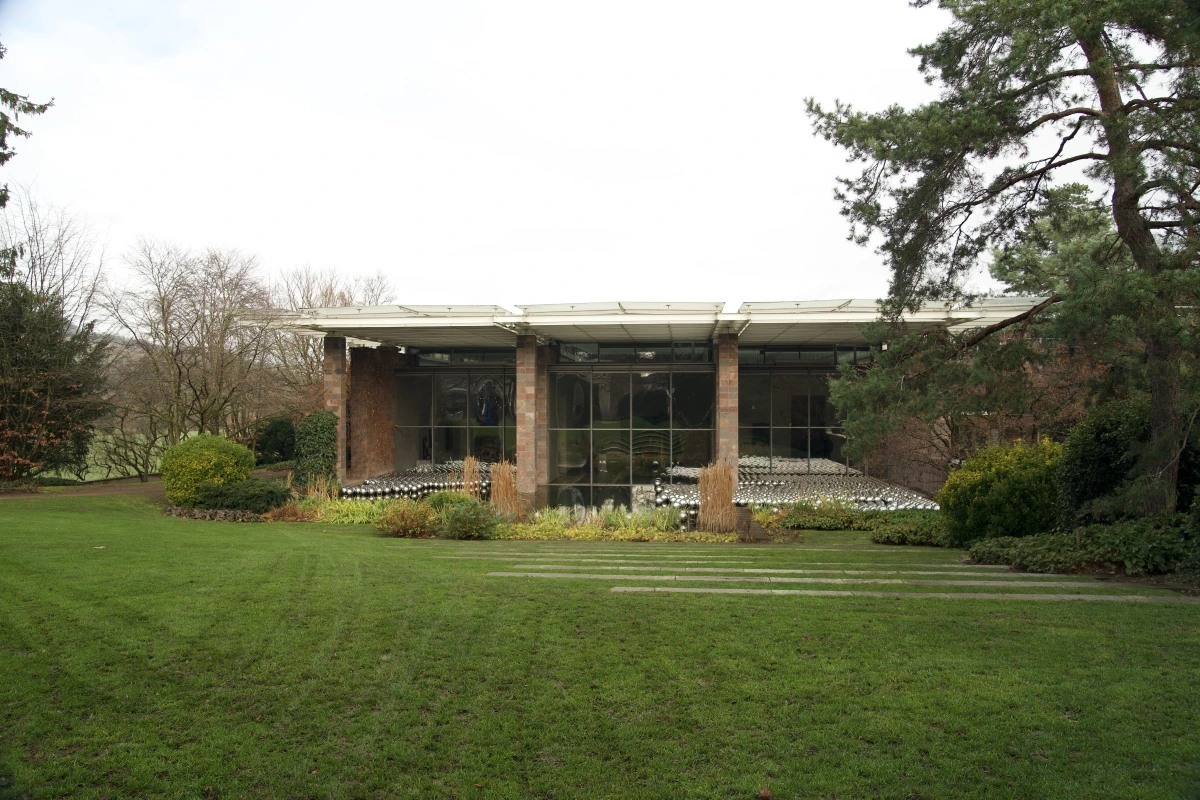
If you prefer a quieter, more contained experience, Fondation Beyeler is an excellent alternative.
Located in Riehen, just outside the city centre, Fondation Beyeler combines modern and contemporary art with a strong sense of place. The building is surrounded by landscaped gardens, and views extend into the surrounding countryside.
The permanent collection includes works by Monet, Picasso, Matisse, Rothko, and Giacometti, alongside rotating exhibitions that are consistently well curated. The atmosphere here feels calmer and more spacious than Kunstmuseum Basel.

Getting there by tram is simple, and the setting makes it feel like a half-day excursion rather than just another museum visit. Just hop on the 6 tram from Basel, and it’s just about a 15-20 minute tram ride away.
Tickets and admission
- Adults – 25 CHF
- Free entry for visitors aged 25 and under
- Reduced admission available for students, seniors, and visitors with disabilities (with valid ID)
Free admission
Additional free admission options vary by program and partner offers
Selected categories qualify for free entry year-round, including visitors aged 25 and under
Botanical Garden of the University of Basel
After time indoors, the Botanical Garden of the University of Basel is an easy reset.
Founded in 1589, it is one of the oldest botanical gardens in the world. Despite that, it feels compact and accessible rather than formal. The garden covers around 8,000 square metres and contains more than 7,500 plant species from a wide range of climates.
It sits close to Spalentor and is easy to visit without planning. Entry is free, and guided tours are also offered at no cost. Even a short walk through the greenhouses and outdoor beds is enough to break up a museum-heavy day.
The garden is free to visit, along with free guided tours. For more information, visit here.
Where to Eat & Drink – Day Two
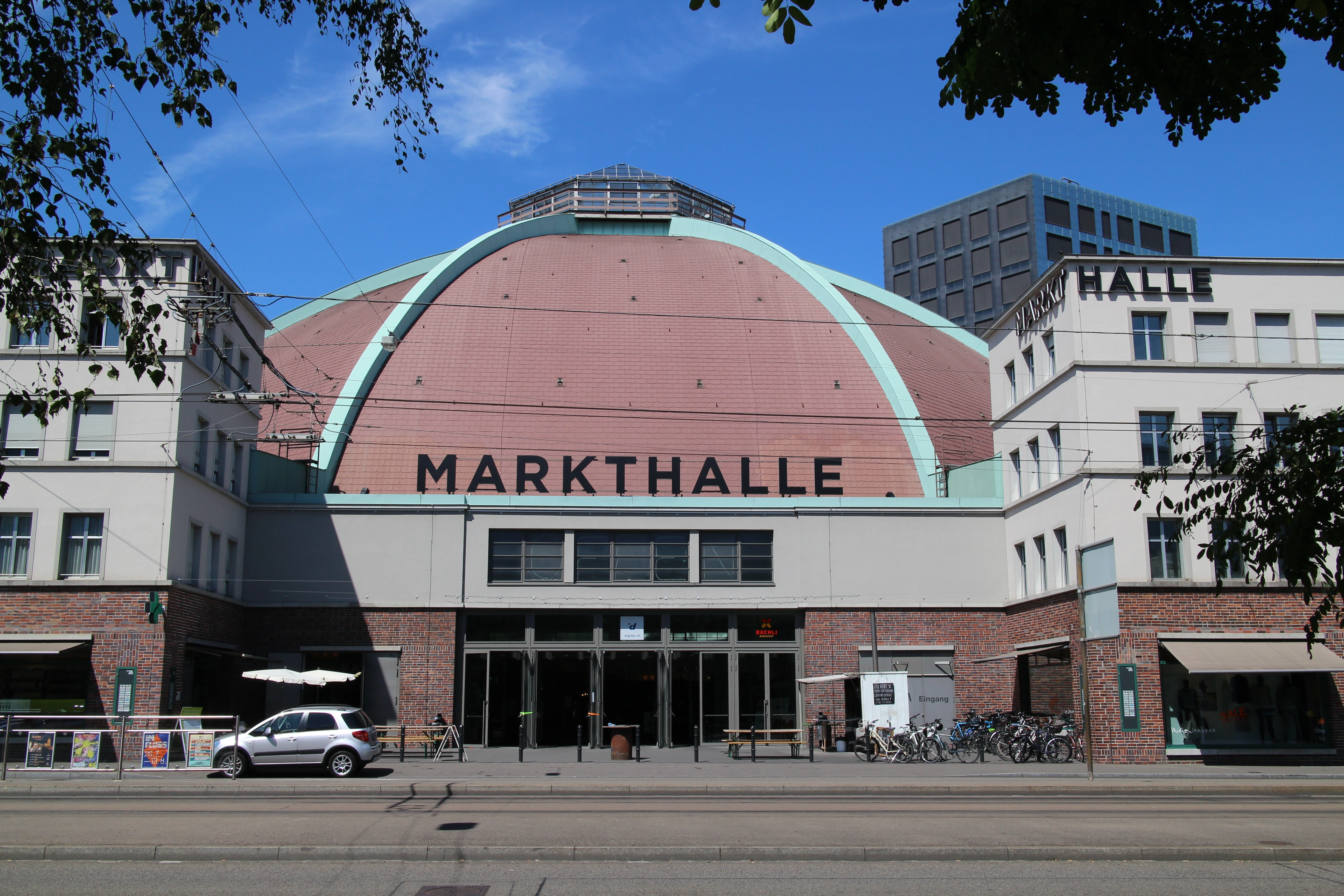
Markthalle Basel
Originally built in 1929, Markthalle now functions as an indoor food market with stalls serving a wide range of cuisines. Expect everything from Afghan and Indian food to Italian and Middle Eastern dishes.
It is centrally located near Basel SBB, which makes it useful if you are transitioning between sightseeing and travel. Quality varies slightly by stall, but overall standards are good, and it is easy to find something quick without committing to a long meal.
Consum
For something slower and more intimate, Consum is a strong choice.
This small wine bar in the Old Town focuses on natural and low-intervention wines, paired with simple charcuterie and small plates. The space is relaxed, and the crowd skews local.
It works particularly well as an early evening stop or a final drink after dinner rather than a full meal.
Tibits Basel
If you are a vegetarian or vegan, Tibits Basel is one of the safest and most consistent options in the city.
This Swiss plant-based chain operates on a buffet system where you pay by weight. Dishes change seasonally and pull from multiple cuisines. Everything is clearly labelled, which is helpful if you have dietary restrictions.
Even if you are not a vegetarian, it is a solid lunch option, especially between museum visits.
Coffee Break
Smilla Café
Smilla Café sits slightly outside the main tourist flow and is worth the detour.
Located in the Neubad area, it serves good coffee and a focused brunch menu. The atmosphere is casual and local, making it a good place to slow down before wrapping up the day.
Basel might not top your list for a trip to Switzerland, but spend a few days here, and you’ll quickly realise it’s a destination like no other. With its rich culture, vibrant food scene, world-class art, and deep historical roots, Basel offers an unforgettable experience that’s hard to replicate anywhere else.

Ready to keep planning your trip? Explore more of our Basel guides!
7 Handpicked Basel Hotels We’d Book in 2025
4 Incredible Day Trips from Basel, Switzerland (France, Germany & Alsace)
Basel for Free: 10 Brilliant Ways to Explore the City in 2025
How to Spend a Lovely Day in Alsace from Basel (DIY Itinerary + Best Tours)
How to Get from Basel to Colmar (Train, Car and Bus 2025 Guide)
And if you’re looking for a first-person look into what it’s like to explore Basel, check out our YouTube video here!