A First-Time Guide to Kefalonia: Greece’s Emerald Isle
This article includes affiliate links. If you choose to book through them, you’re directly supporting the free content we create, and we’re so grateful for your support.
I absolutely love the Ionian Islands, and Kefalonia is one I keep thinking about long after I leave. It is one of the largest islands in Greece, yet it still feels refreshingly unspoiled. You get dramatic cliffs, turquoise beaches, forested mountains, and villages that feel lived in rather than staged for tourism. Compared to Corfu or Zakynthos, Kefalonia is quieter, more spread out, and noticeably more relaxed.
What surprised me most was how easy it is to explore once you understand the layout. Life here runs year round, and while tourism is important, the infrastructure is low key enough that the island has not been overbuilt. It feels local first, visitor friendly second.
You will find award winning beaches, genuinely good Greek food, and a slower pace that many popular islands have lost.
Here is what you need to know to plan a trip properly, from getting around and choosing where to stay to the beaches, villages, viewpoints, and tavernas that are actually worth your time.

When to Visit Kefalonia
Early May and late summer into early autumn are the best times to visit.
We visited Kefalonia in early May, hoping to avoid peak season and take advantage of better accommodation prices. While we weren’t sure if the weather would be warm enough, we were pleasantly surprised by sunny days, clear water that was comfortable for swimming, and beaches that felt calm and uncrowded.
I’d recommend avoiding Kefalonia at the height of summer. The island has fewer hotels than other Greek destinations with larger tourist infrastructures, and many beaches are smaller, which means they can feel busy quickly during peak season. The Ionian islands also become extremely humid in the middle of the summer, and for me personally, this isn’t enjoyable!
Late summer and early autumn are ideal times to visit Kefalonia, and the Greek islands more broadly. Crowds thin out, temperatures are warm rather than scorching, and the island settles into a slower pace. It’s my favourite time to travel here.
Getting to Kefalonia
Kefalonia is the largest of the Ionian Islands, but it’s surprisingly straightforward to reach. Whether you’re travelling from mainland Greece or elsewhere in Europe, getting here is easy by air – and, if you prefer, by sea.
Flights to Kefalonia
From Greece
Kefalonia has one airport, Kefalonia International Airport (EFL), with year-round domestic flights from Athens (ATH). Both Aegean Airlines (Olympic Air) and Sky Express operate this route, with a flight time of around one hour.
During the summer months, there are also seasonal domestic flights from Thessaloniki, as well as limited connections from nearby Ionian islands such as Zakynthos and Corfu.
From Europe
From May through October, Kefalonia is well-connected to Europe with direct seasonal flights from a number of cities. These are mostly operated by budget and charter airlines, including EasyJet, Ryanair, Jet2, and TUI, making the island a popular summer destination.
If you’re flying from a city without a direct route, connecting via Athens is usually the easiest option. Athens acts as the main hub for domestic flights to Kefalonia and typically offers the most flexibility with schedules and prices.
Ferries to Kefalonia
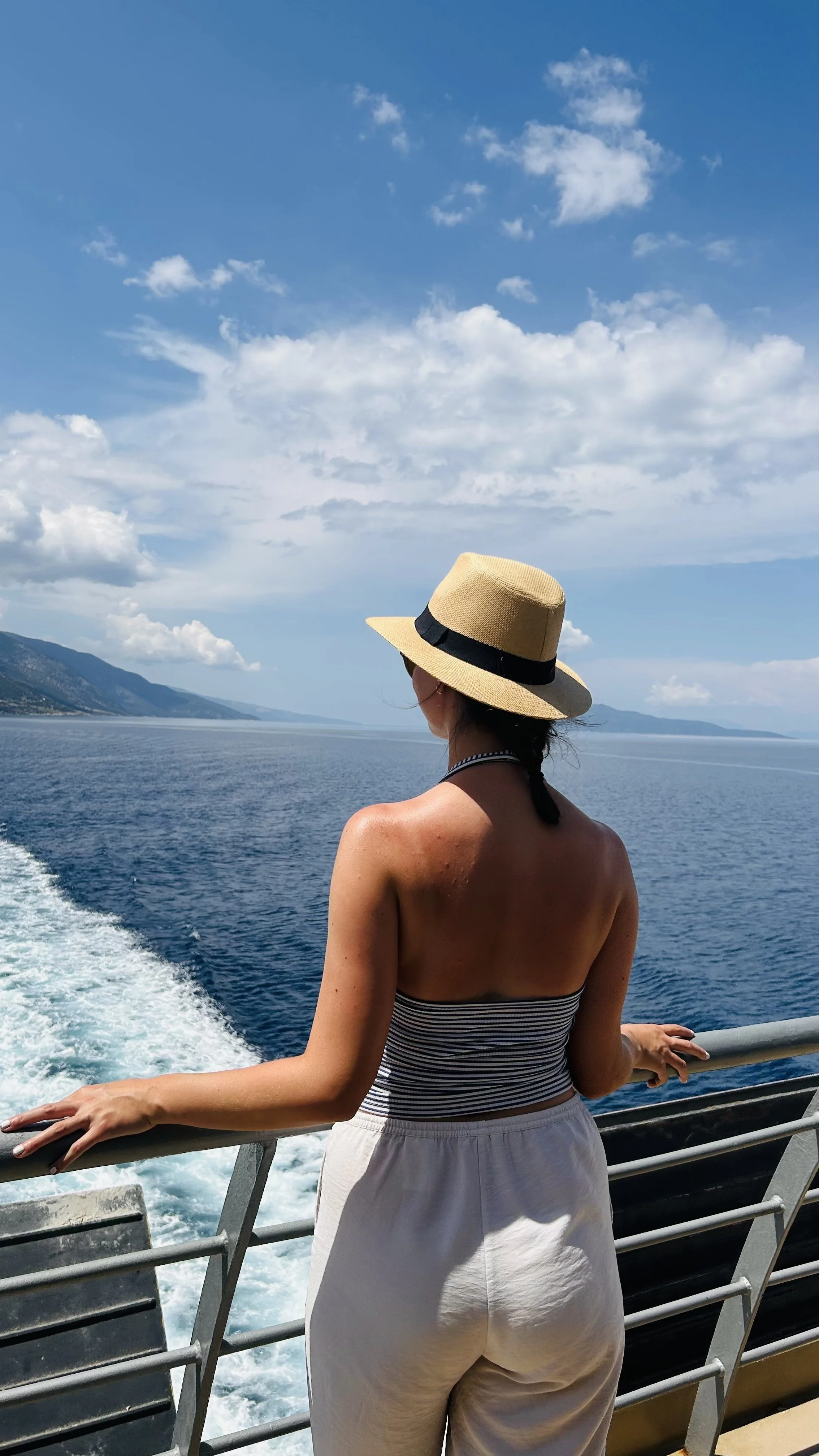
If you prefer to travel by sea, Kefalonia is well connected to the Greek mainland by ferry. It’s an especially good option if you’re already on a road trip, as ferry crossings to Kefalonia are shorter and far more affordable than many routes to the Aegean islands.
There are also regular ferry connections between Kefalonia and nearby Ionian islands, including Zakynthos, Ithaca, and Lefkada, making island hopping a realistic and easy option.
If you’re combining Kefalonia with mainland Greece, taking the ferry is often the most practical and flexible choice, especially for travellers driving or planning to explore more than one region.
Mainland Ferry Routes
- Patras → Sami
One of the longest-running routes, with daily services. The crossing takes around 3.5 hours. - Kyllini → Poros
The most frequent ferry connection has multiple departures each day. The journey takes about 1.5 hours and is ideal if you’re travelling by car. - Astakos → Sami
A less common route, but still useful depending on your itinerary. Crossing time is roughly 2.5 hours.
How to Get Around Kefalonia
Kefalonia is a large and diverse island, and distances between beaches, villages, and viewpoints can be longer than they look on a map. For most travellers, renting a car is the easiest and most flexible way to get around.
Renting a Car
Cars are widely available at Argostoli Airport, in Argostoli itself, and in other major towns. That said, if you’re already travelling through mainland Greece, renting a car on the mainland and bringing it over by ferry is often cheaper than hiring one directly on the island.
Roads are generally well maintained, but expect winding routes and steep sections, particularly in the mountainous interior. Driving does, however, give you access to remote beaches, rural villages, and scenic viewpoints that are difficult to reach otherwise.
Taxis and Public Transport
If you’d rather not drive, taxis and private transfers are available, though costs can add up quickly over longer distances.
Public buses connect key towns such as Argostoli, Lixouri, Fiskardo, and Skala, but services are limited and infrequent. They’re fine for short hops, but not ideal if you want to explore the island in depth.
Scooters, ATVs, and boats
For shorter distances or a more adventurous feel, scooters and ATVs are popular, particularly in summer. If you’re comfortable on two or four wheels, they can be a fun way to explore nearby beaches.
Another great option is renting a small boat, which allows you to explore Kefalonia’s coastline and reach hidden coves that aren’t accessible by road.
Car Rental Tip
For car rentals across Europe, we consistently use Discover Cars. It’s been our go-to for the past few years for comparing providers and finding competitive rates, especially when travelling in Greece.
Where to Stay in Kefalonia
Where to Stay in Kefalonia Based on Your Travel Style
Beach lovers
Skala, Lourdata, Myrtos, Xi
If your trip revolves around long beach days and clear water, these areas make the most sense.
Skala is known for its long, organised beach, with tavernas, cafés, and shops all within easy reach.
Lourdata feels quieter and more relaxed, with wide Ionian views and a slower pace.
Myrtos Beach is Kefalonia’s most recognisable beach, framed by dramatic white cliffs and vivid turquoise water.
Xi Beach stands out for its red sand and shallow waters, making it a good option for gentle swims.
Culture seekers
Argostoli, Sami, Assos
If history and local character are high on your list, these areas are a good fit.
Argostoli is the island’s cultural hub, with small museums, waterfront walks, and traces of Venetian influence.
Sami is well located for nearby archaeological sites and the impressive Melissani Cave.
Assos is compact and postcard-pretty, with pastel houses and a Venetian fortress overlooking the bay.
Food-focused travellers
Fiskardo, Lixouri, Argostoli
Kefalonia has a strong food scene, and where you stay can shape your experience.
Fiskardo is known for polished seafood tavernas and harbour-side dining with Ionian views.
Lixouri feels more local, with traditional tavernas and close ties to regional produce, including local cheeses.
Argostoli offers the widest variety, from bakeries and seafood markets to lively waterfront restaurants.
For those looking to escape
If you’re renting a car and want something quieter, staying in Kefalonia’s rural interior offers a completely different pace. This is exactly what we did.
It meant longer drives to beaches and towns, but mornings were slow and peaceful, with coffee by the pool and mountain views in every direction
The trade-off was worth it.
Fewer crowds, genuinely warm local hospitality, and a deeper sense of everyday island life away from the busier coastal hubs.

The Best Things to Do in Kefalonia
Kefalonia is best suited to travellers looking for a more laid-back Greek island experience. From hiking and exploring natural sights to long beach days, the best things to do in Kefalonia are rooted in slowing down and exploring at your own pace.
Beyond the coastline, you can amble through historic towns, visit local wineries, and dig a little deeper into the island’s culture and history.
Natural Wonders
Kefalonia is one of those islands that quietly show off. You’ve got cliffs dropping into clear blue water, beaches that feel properly wild, and places like Myrtos Beach that stop you in your tracks the first time you see them.
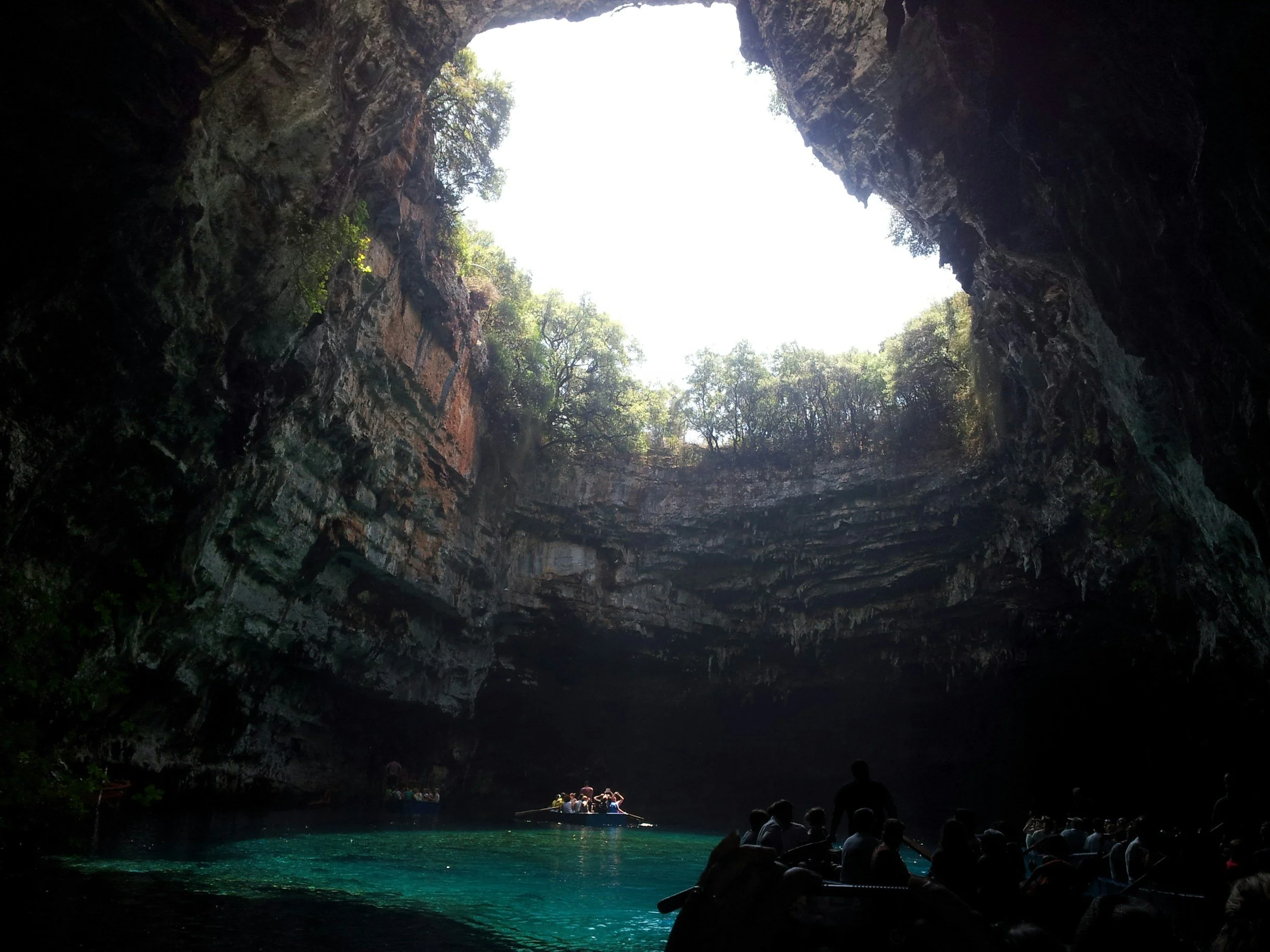
Then there’s Melissani Cave, where you drift across an underground lake that doesn’t quite feel real until you’re there.
Away from the coast, the island opens up even more. Hiking on Mount Ainos is slower, quieter, and less polished than on some islands, but that’s part of the appeal. The views stretch out across the island, and most of the time, you’ll have the trail to yourself.
What really makes Kefalonia work, though, is the balance. You can spend the morning exploring, then end the day swimming at a beach you almost miss on the drive past. It’s an island that makes it easy to slow down without ever feeling bored.
Explore the Caves
Kefalonia has a number of caves worth visiting, but Melissani Cave and Drogarati Cave are the standouts.
Melissani Cave, just outside Sami, is famous for its vivid blue water, created when sunlight pours through the open roof above. It’s one of the island’s most popular sights and gets extremely busy once tour buses arrive.
Tip: Arrive as early as possible. The light on the water is at its best earlier in the day, queues are much shorter, and the experience feels far calmer before the crowds build.
Drogarati Cave offers a completely different experience, taking you underground into a vast chamber of stalactites and stalagmites formed over millions of years. It’s cooler and less affected by crowds, but still worth visiting earlier in the day if you want to avoid peak tour times.
Mount Ainos National Park
Mount Ainos National Park is the only national park on a Greek island, and it’s where Kefalonia really shows its wilder side. It’s a reminder that this island isn’t just about beaches – the interior is just as striking.
The park stretches across more than 3,000 hectares, rising to Megas Soros, the island’s highest point. Pine forests, open trails, and wide views make it a rewarding place to explore, especially if you’re keen to see a quieter, more rugged side of Kefalonia.
Keep an eye out for wildlife while you’re here, too. The park is home to rare plant species and, if you’re lucky, you might even spot the island’s wild mountain horses moving through the landscape.
For detailed information on the trails at Mount Ainos, visit here.
Charming Villages & Towns
One of the things that makes Kefalonia feel different from many Greek islands is that it’s very much lived in year-round.
It’s not just a summer destination that shuts down once the season ends. Because of that, its towns and villages feel grounded, layered, and genuinely local, with history woven into everyday life.

Fiskardo
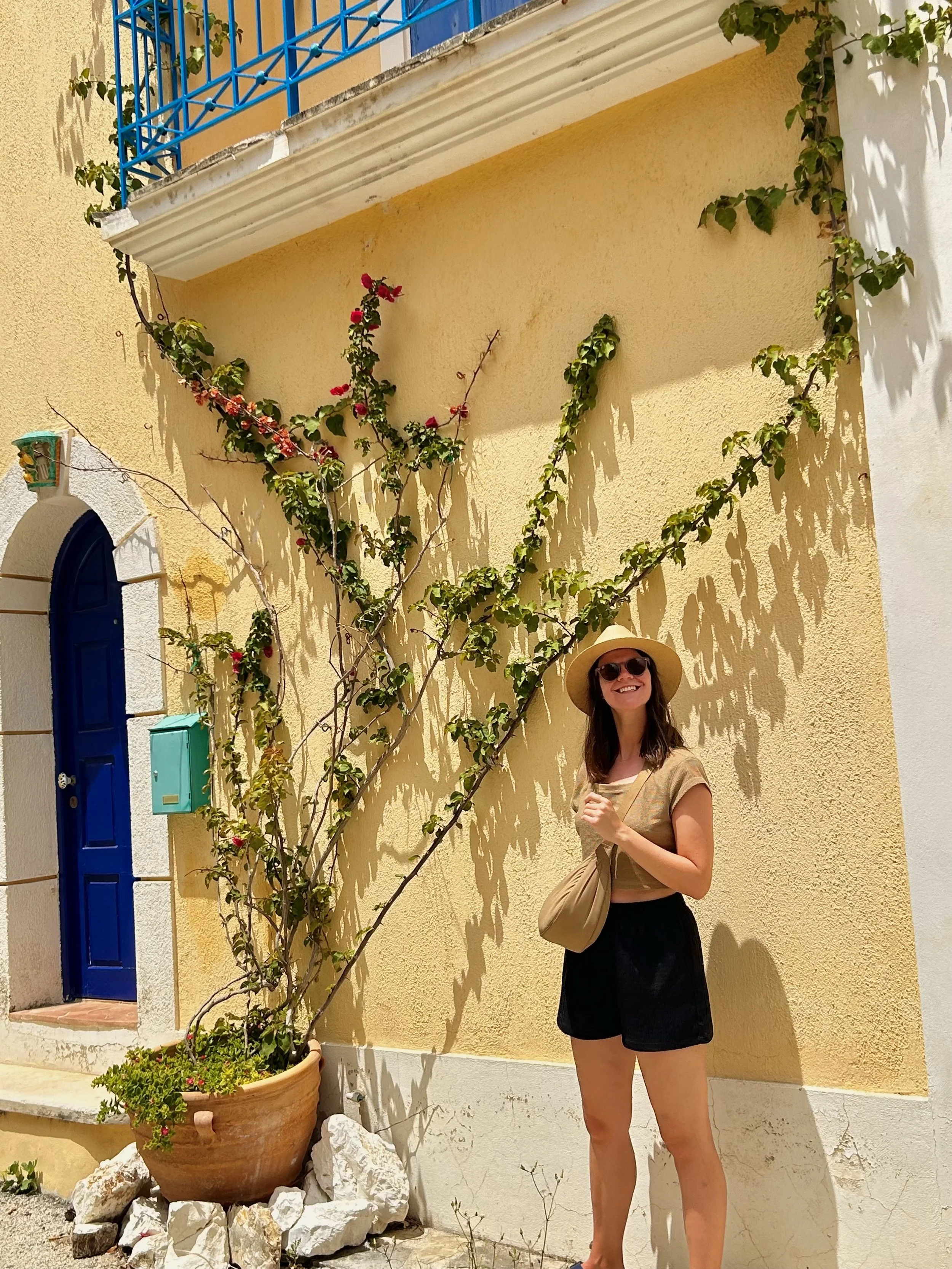
Set in the northeast corner of the island, Fiskardo is Kefalonia at its most polished. Cypress trees, bougainvillea, and olive groves frame the harbour, where colourful houses sit behind a line of waterfront tavernas, cafés, and bars.
It’s an easy place to slow down. Lunch stretches into the afternoon, boats drift in and out of the marina, and evenings feel quietly glamorous without being flashy.
Fiskardo is also one of the few places on the island that escaped the 1953 earthquake, so its Venetian influence is still visible today. If you’re interested in history, you can walk out to the Venetian Lighthouse or visit the nearby Roman Cemetery for a glimpse into the island’s past.

Assos
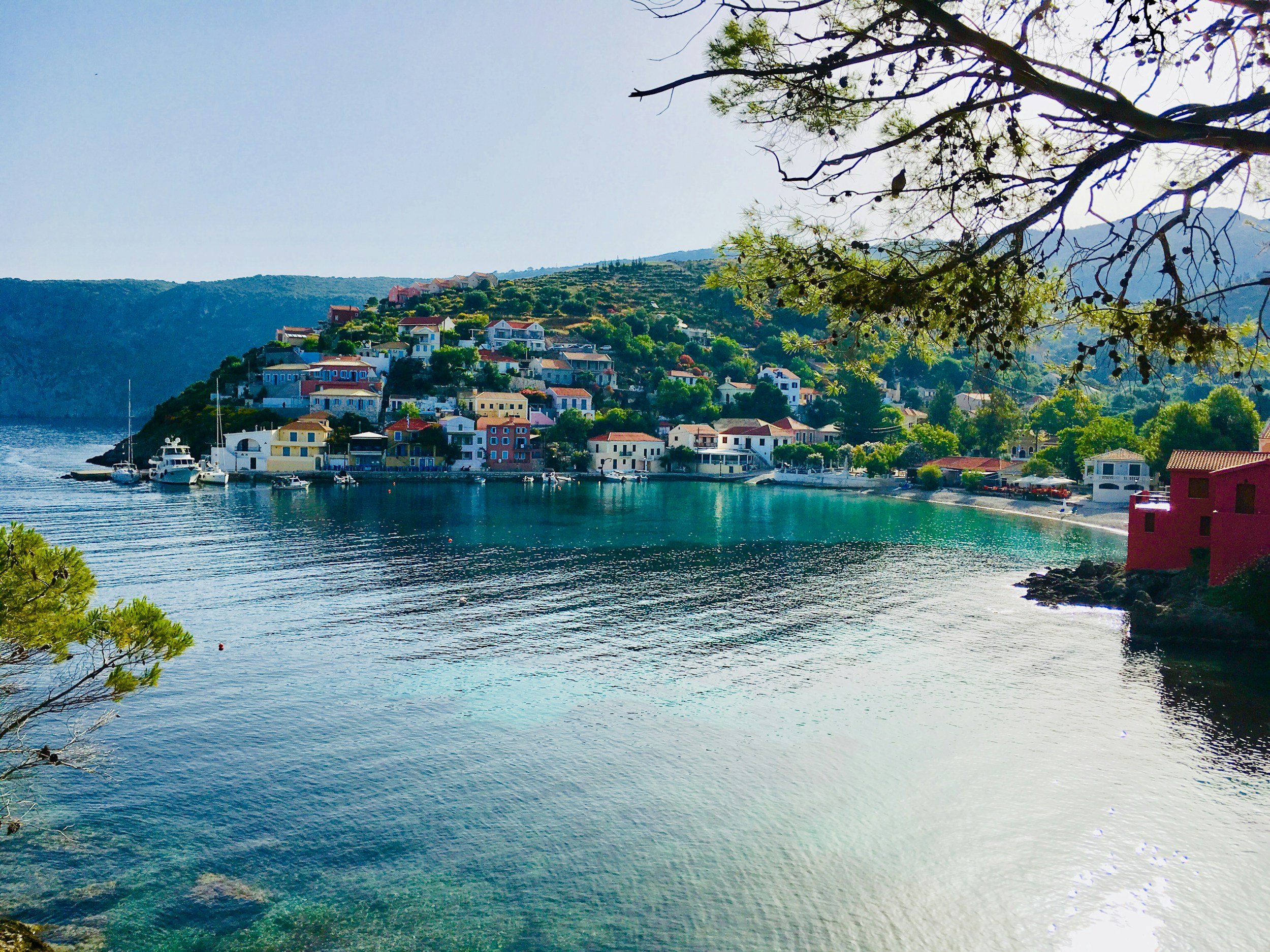
Assos is one of those places that feels almost unreal when you finally arrive. Tucked away on a rugged peninsula on the west coast, the village sits in a perfect horseshoe-shaped bay, reached by steep, winding roads that only add to the sense of arrival.
Time moves differently here. Assos felt calm, unhurried, and quietly magical, and it ended up being one of the most memorable stops of our trip.
Above the village, the Castle of Assos rises through cypress trees and wild greenery. Walking the cobbled path up to the castle takes around two hours round trip and offers sweeping views across the Ionian. The ruins themselves are simple, but the scenery alone makes the climb worthwhile.
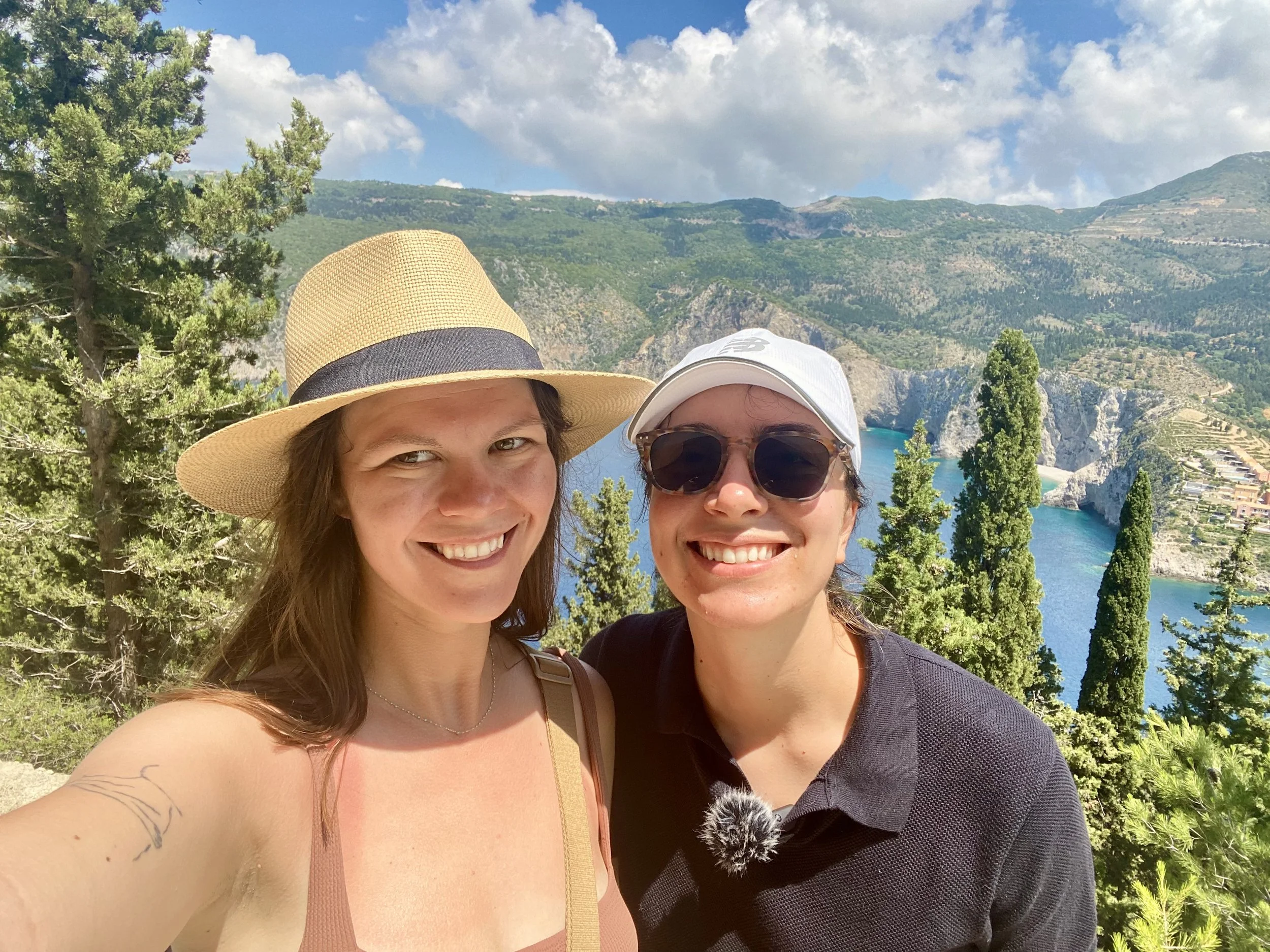
If we return to Kefalonia, Assos is where I’d want to stay for a few nights, just to fully settle into its rhythm.
Argostoli
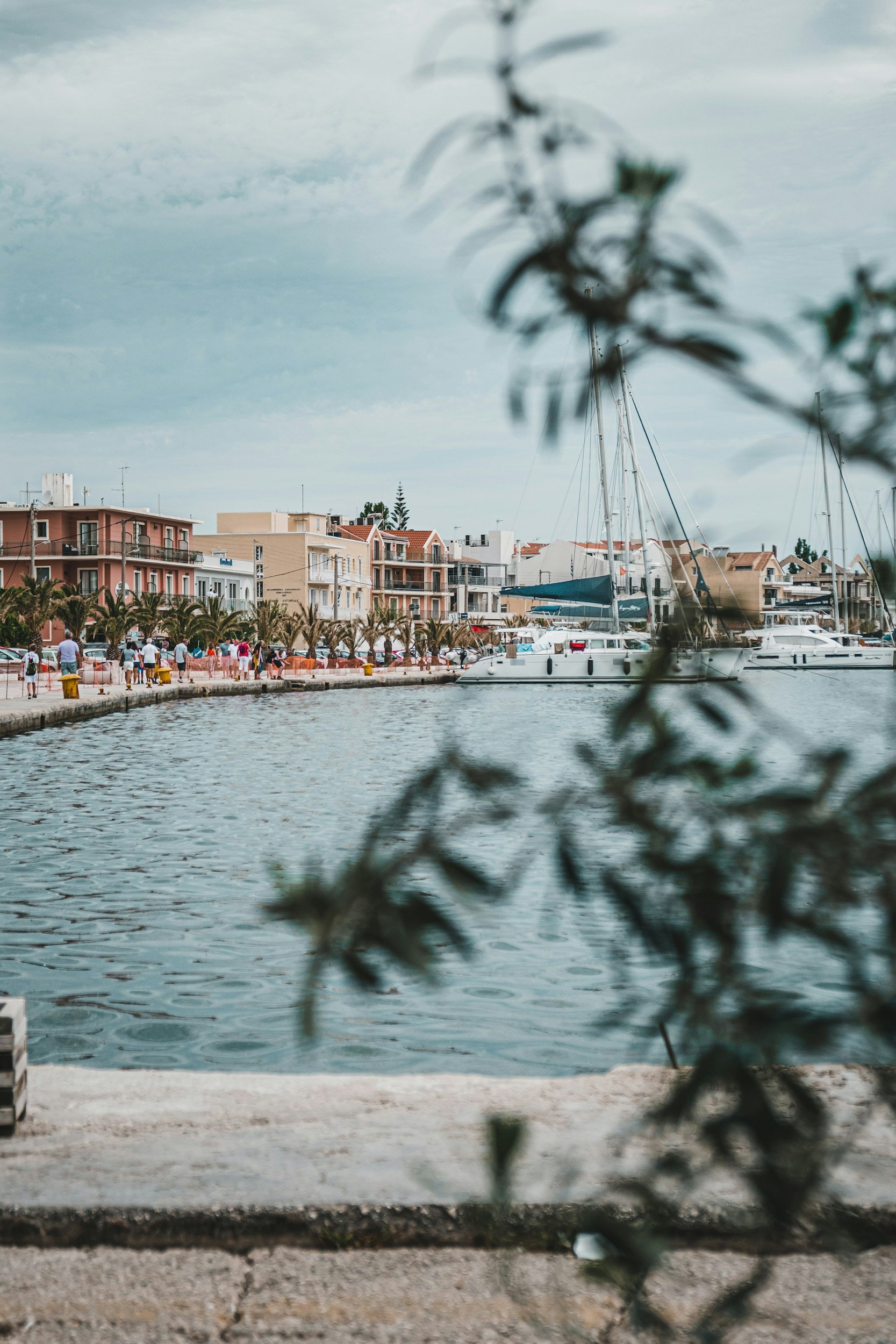
Argostoli is Kefalonia’s lively capital, stretching along a wide bay with palm-lined promenades, cafés, and local shops.
Much of the town was rebuilt after the devastating 1953 earthquake, but there are still hints of its Venetian past scattered throughout, especially in the layout of the streets and surviving historic buildings.
Spend time wandering the markets, walking along Lithostroto, or stopping for a coffee by the water. If you’re patient, you might even spot loggerhead turtles gliding through the harbour, one of Argostoli’s most unexpected highlights.
It’s a place that balances everyday life with coastal charm, and a good base if you want a bit of energy without losing that island feel.
Cultural & Historic Sites
Kefalonia’s history runs deep, shaped by ancient civilisations, Venetian rule, earthquakes, and strong local traditions. Across the island, you’ll find Roman remains, medieval fortresses, monasteries, and villages that still hold onto their customs.
Two places stand out in particular.
St. George’s Castle
Just outside Argostoli, St. George’s Castle sits above the villages of Travliata and Peratata. It was once the capital of Kefalonia, up until 1757, before earthquakes weakened its defences. While there isn’t exactly that much to see, the remains are a unique look into what Kefalonia once was.
The castle dates back to the 12th century, beginning in the Byzantine era, later passing through Turkish hands before being expanded under Venetian rule in the 16th century.
There’s a small entrance fee, but the panoramic views across Kefalonia and the surrounding Ionian islands make it well worth it.
Monastery of Agios Gerasimos
Set at the foot of Mount Ainos, the Monastery of Agios Gerasimos is one of the island’s most important spiritual sites.
Founded in 1560 by Saint Gerasimos, Kefalonia’s patron saint, the monastery remains a place of pilgrimage today. His relics are kept here, and many locals visit to seek blessings and protection.
Even if you’re not religious, it’s worth stepping inside. The frescoes, chandeliers, and atmosphere offer a deeper understanding of how faith and history shape life on the island.
Wine & Local Flavours
With its lush landscape and mountainous terrain, Kefalonia is well-suited to winemaking. The island is especially known for Robola, an indigenous grape variety, alongside Mavrodaphne and Muscat of Kefalonia, both PDO wines.
Gentilini Winery
Just outside Argostoli, Gentilini Winery offers one of the most memorable wine experiences on the island. Tastings here feel thoughtful and unrushed, with generous pairings and a setting that overlooks the sea.
If you have the time, their picnic experience is particularly special, combining wine, local food, and sweeping views that make you want to linger far longer than planned.


Kefalonia’s Beaches
Kefalonia is, at heart, a beach island. And not just one type of beach, either. Dramatic cliffs, tropical-feeling coves, organised shores, and wild, open stretches all exist side by side.
Myrtos Beach
Myrtos is Kefalonia’s most famous beach, and it earns that title easily. White pebbles, towering cliffs, and impossibly blue water come together in a way that feels almost unreal.
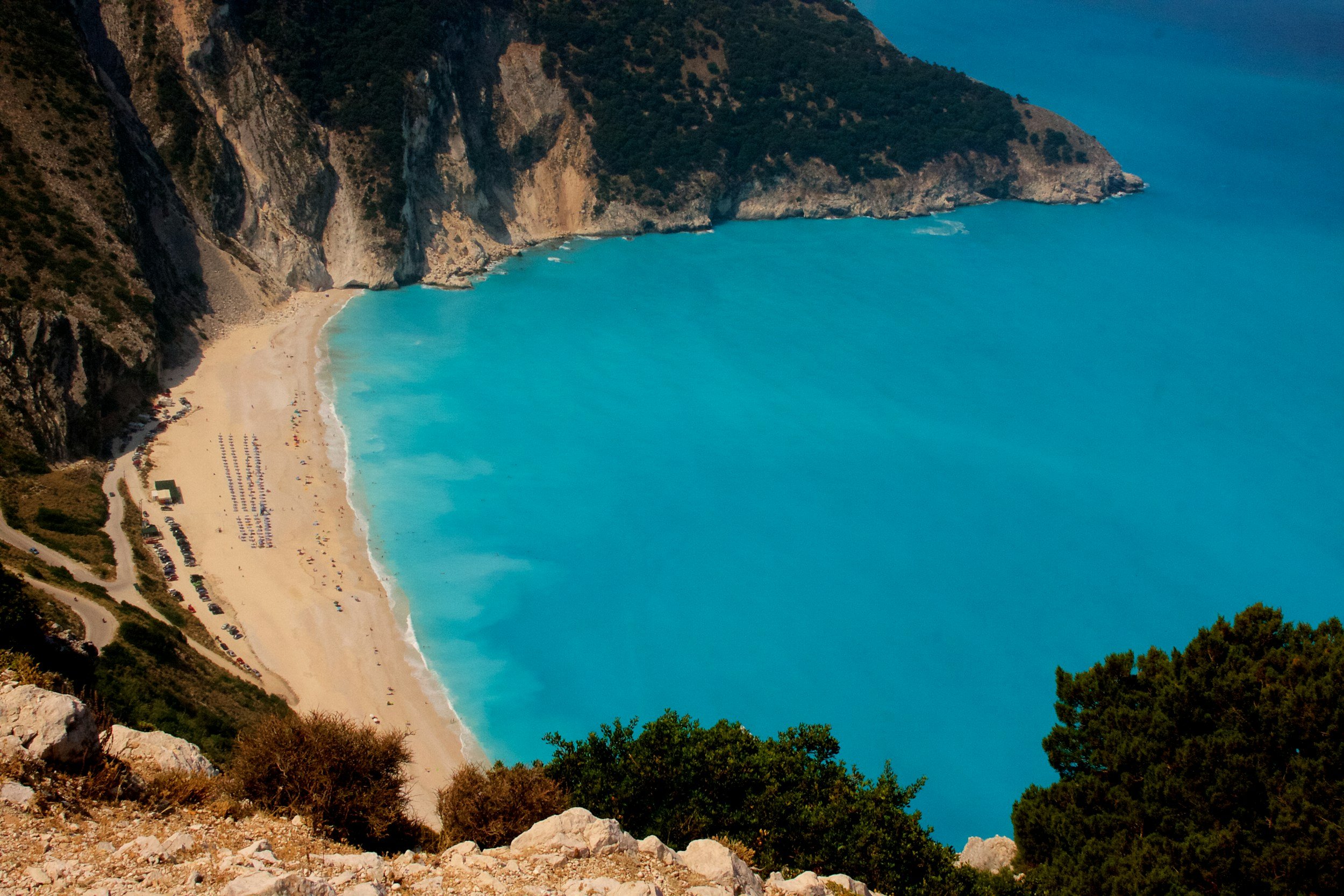
The views from the road above are breathtaking, and the beach itself is expansive enough to still feel wild, even in summer. From June through summer, seasonal beach bars pop up along the shore, offering drinks, snacks, and sun loungers to rent, turning this natural wonder into the perfect spot to linger a little longer.
Alexandros Myrtos Restaurant
For a classic Greek tavern meal after a day at the beach, head to Alexandros Myrtos Restaurant in the nearby village of Divarata for some of the BEST papoutsakia (bechamel and meat sauce stuffed eggplants) and moussaka I’ve ever had!

Tucked away on the island’s west coast, Myrtos is best reached by car, though joining a tour is a hassle-free alternative.
Antisamos Beach
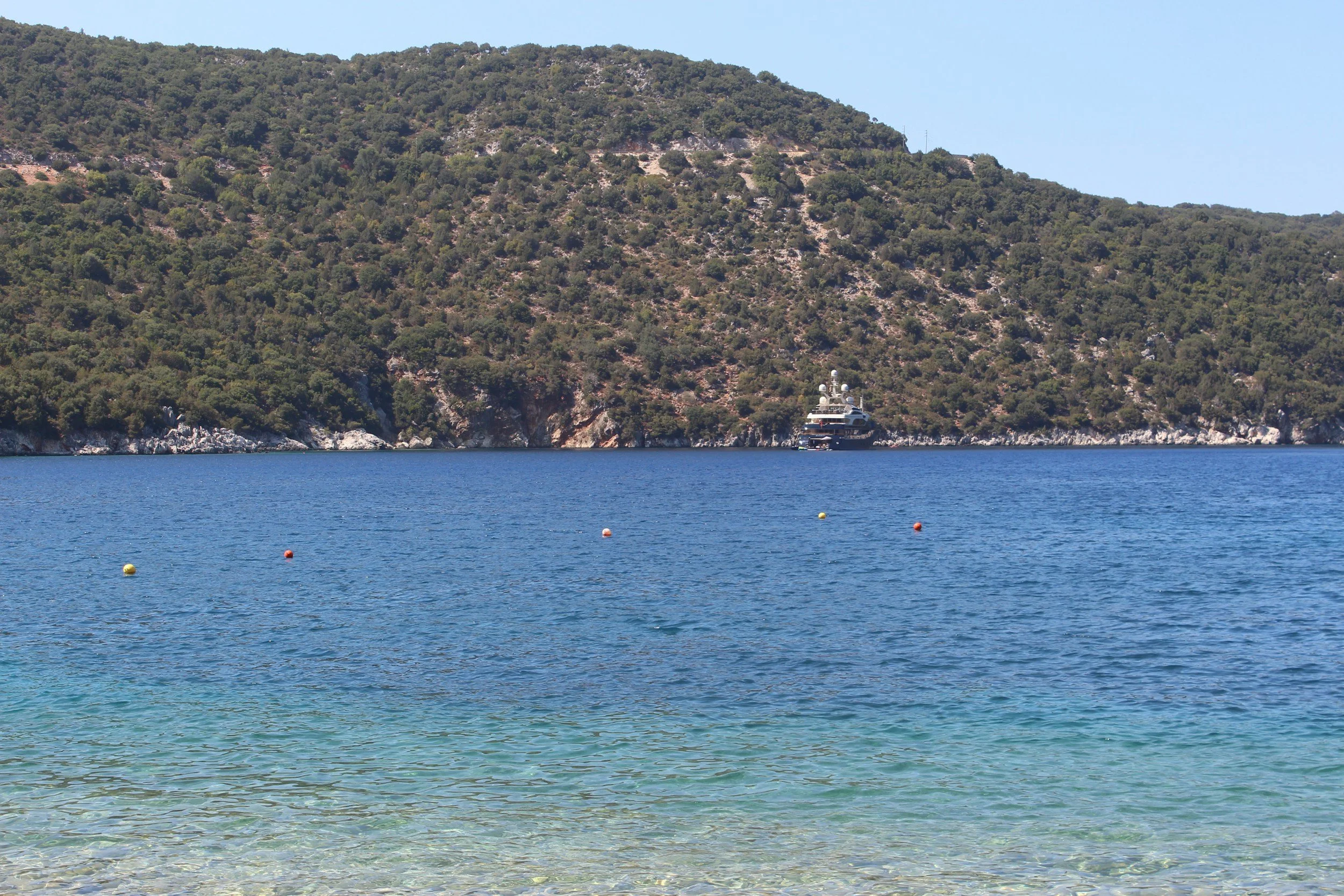
Antisamos feels like a completely different side of the island. Set in a lush bay near Sami, it’s backed by pine-covered hills that tumble down into bright turquoise water.
It’s more lively than Myrtos, with beach bars, sunbeds, and water sports. We went tubing here, and it ended up being one of the most fun afternoons of the trip.
Afterwards, Acron Restaurant & Beach Bar was the perfect place to refuel, with good food, cold drinks, and your feet practically in the sea.
Xi Beach
Xi Beach feels like it belongs on a completely different island. Instead of Kefalonia’s usual white pebbles and deep blue water, you’ll find soft, burnt-orange sand and shallow, crystal-clear sea, which makes it feel like a total outlier in the best way.
The beach is backed by smooth white clay cliffs, giving the whole place an almost surreal look. It genuinely feels a bit like stepping onto another planet, just with warm Ionian water instead of dust.
The clay here is rich in minerals, and locals swear by its skincare benefits, so don’t be surprised to see people casually covering themselves in DIY mud masks straight from the cliffs.
Despite how striking it looks, Xi is one of the island’s most relaxed beaches. The shallow water is great for swimming, sun loungers and umbrellas line the shore, and beach bars keep the drinks cold and food coming all day.
It’s easy, unfussy, and a fun change of pace if you want to see a more unexpected side of Kefalonia.
Petani Beach
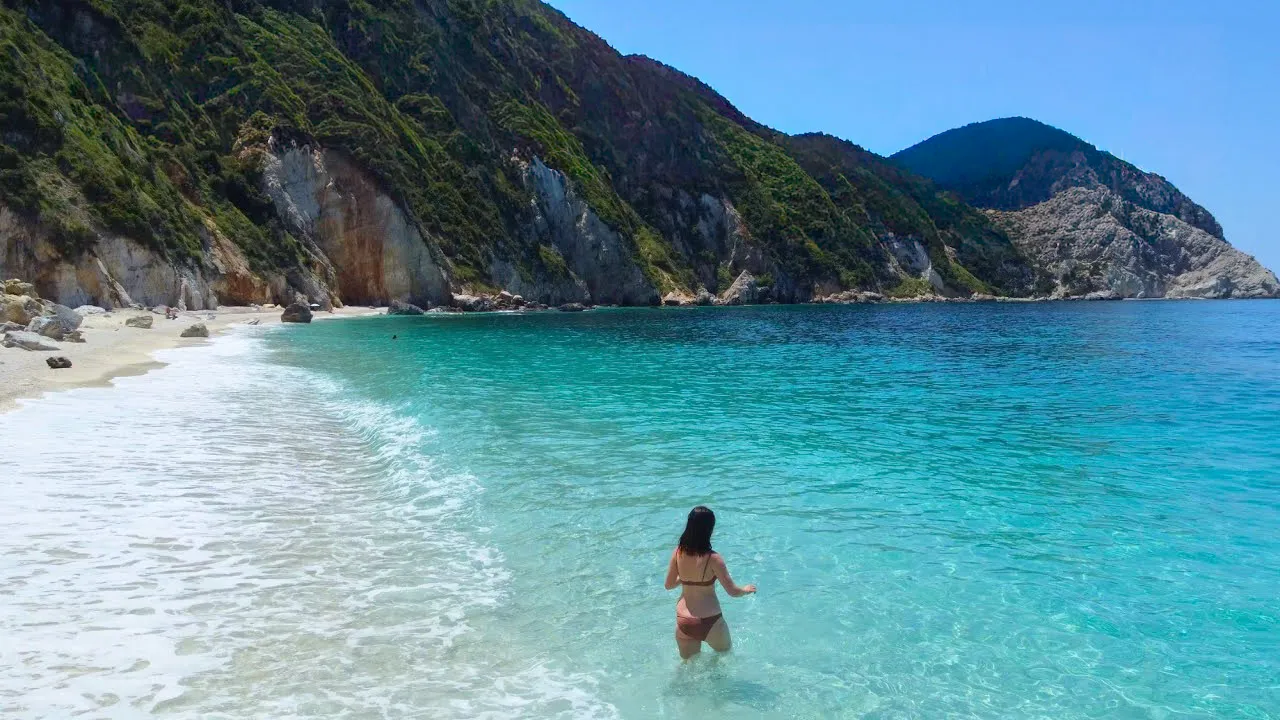
Petani Beach completely caught me off guard. I might even say I loved it more than Myrtos. While Myrtos has the fame, Petani feels wilder and more raw, which makes it feel extra special.
Set along Kefalonia’s rugged west coast, the beach is framed by cliffs that drop straight into intensely blue water. The mix of golden pebbles, green hills, and constantly shifting shades of the sea made this one of the most beautiful places we visited.
The water is incredibly clear, and the waves tend to be a little livelier than elsewhere on the island, which makes for a refreshing swim, especially on a hot day.
Even with its untamed feel, Petani is well set up for spending hours here. There are sun loungers, a few beach bars, and tavernas serving fresh seafood right by the shore.
Stay until sunset if you can. Watching the sky turn pink and gold over the Ionian was one of those moments that stay with you. If there’s one beach I’d go back to without hesitation, it’s this one.

Kefalonia truly stands out as one of the best Greek islands, offering a perfect blend of warm, welcoming locals, stunning and diverse beaches, rich history, and a distinct, laid-back culture. With its slower pace of life and deep-rooted traditions, it’s a destination that invites you to relax, explore, and experience the island in a way that feels both authentic and unforgettable.

Check out the rest of our Greek island articles!
Greek Islands Travel Guide | How to Visit & Plan the Perfect Trip
Skyros Island Travel Guide
The Ultimate Guide to Visiting Kefalonia, Greece | Where to Swim, Eat, and Sleep
Slow Travel in Milos | A Guide to Visiting Milos, Greece
An Escape to Anafi | Santorini’s Rugged, Wild Secret Sister
An Alternative 7-Day Greece Itinerary for First-Timers in 2026
Is Greece Expensive to Visit? A Realistic Cost Guide for 2026
Renting a Car in Greece: Everything You Need to Know (A Local’s Guide)