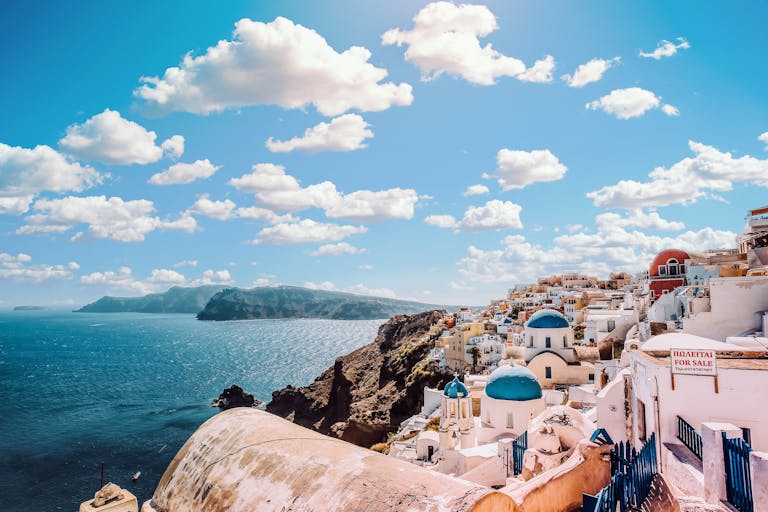
A Local’s One Week in Greece Itinerary (Athens + Kefalonia Island)
This article includes affiliate links. If you choose to book through them, you’re directly supporting the free content we create, and we’re so grateful for your support.
Anytime someone tells me they’re planning a trip to Greece and I ask what their itinerary looks like, I’m rarely surprised. It’s usually a race to tick off as many Greek islands as possible, often skipping Athens altogether or sticking to the most touristy and expensive stops.
I get the appeal, and those trips can still be memorable. But they can also feel rushed, crowded, and more exhausting than restorative.
This detailed itinerary is an alternative to the standard Greece bucket list. It’s slower, more considered, and slightly off the beaten path, designed to balance iconic places with breathing room and time to actually experience them.
Itinerary Overview
This Greece itinerary begins in Athens, with a few days in the capital to settle in, eat at some of my favorite spots, and fit in a bit of sightseeing at an easy pace.
From there, you’ll head to Kefalonia, one of my favorite Greek islands and a place I keep coming back to for its food, beaches, and slower rhythm.
Rather than rushing between multiple islands, the second half of the trip is spent entirely on Kefalonia, giving you time to explore its villages, swim at some of the island’s most beautiful beaches, and slow down properly before returning to Athens for your journey home.

Why Alternative?
In my experience from living in Greece for the past five years, the most authentic experiences here aren’t paying €40+ for a main at a restaurant filled with tourists, overpriced “cultural” experiences that are really just tourist attractions, or €100 sunbeds on the beach.
The most memorable experiences in Greece are the ones that allow you to really relax, fall into the groove of the local culture, and leave feeling like you not only visited somewhere but did so unrushed, well-fed, and genuinely rested.
Most typical Greece itineraries will either spend one day, or none, in Athens before heading straight to the whitewashed Cyclades to visit islands like Santorini, Mykonos, and Paros. While all of these are certainly worth visiting, I suggest saving them for the off-season, ideally early June or September.
With this alternative Greece itinerary, I invite you to experience Greece in the way I appreciate it most: rugged, relaxing, adventurous, and utterly delicious.
Who This Itinerary Is For
This itinerary is for anyone wondering which Greek islands to visit if they want a trip that actually feels like a vacation, not a checklist.
It’s designed for those looking for something relaxing and culturally rich without being surrounded by the biggest tourist crowds of the Cyclades.
It’s ideal if you’re happy spending more time in fewer places, eating well, slowing down, and getting a better feel for each destination rather than rushing between islands.
If you’re looking for a typical, box-ticking Greece itinerary focused on Santorini, Mykonos, and constant movement, this one isn’t for you.
Things to Consider
When is the best time to visit Greece?
While I genuinely think Greece is worth visiting at any time of year, each season offering something entirely different, if you’re after that classic “Greek island experience,” summer or early autumn is really the only way to do it.
That’s when you get the heat, the beaches, and that unmistakable summer atmosphere. And as I mentioned earlier, this itinerary is designed specifically with summer travel in mind.
Do you need a visa to go to Greece?
This really comes down to your passport. If you’re an EU, EEA, or Swiss citizen, you can travel to Greece freely with no visa at all, as it’s part of the Schengen zone.
If you’re visiting from countries like the United States, the United Kingdom, Canada, Australia, or Japan, you’re also visa-free for short trips. You can stay in Greece for up to 90 days within any 180-day period, which is usually more than enough for a vacation.
If you’re coming from a country that isn’t visa-exempt, such as India, China, or South Africa, you’ll need to apply for a Schengen visa in advance before arriving in Greece.

Is Greece expensive to visit?
While planning a week-long trip anywhere in Europe will inevitably take a chunk out of your bank account, in my experience, after traveling through nearly every country in Europe, Greece is genuinely one of the more affordable options.
That said, it really depends on how you travel. If you visit ultra-touristy islands like Santorini or Mykonos during peak season, prices climb quickly. Meals, hotels, transport, and even beach chairs and umbrellas can feel steep.
If instead you focus on more off-the-beaten-path islands like the ones in this itinerary, eat at local tavernas, and save the splurges for the occasional special meal or stay, Greece is surprisingly good value and far from an expensive destination.
Transportation
For this itinerary, I’ve suggested a simple mix of flights and a small amount of local driving. Athens and Kefalonia pair well because getting between them is straightforward and doesn’t eat into your time on the ground.
In Athens, getting around is easy with a combination of walking and public transport.
The metro is reliable, affordable, and connects the airport with the city center, and most central neighborhoods are very walkable once you’re there.
For Kefalonia, having a car makes a big difference. The island is large, distances add up quickly, and many of the best beaches and villages aren’t easily reached by public transport.
You can rent a car on arrival at the airport or in Argostoli. A scooter can also work if you’re confident riding one, but the roads are winding and hilly in places, so it’s not for everyone.
If you prefer not to fly between Athens and Kefalonia, it is possible to reach the island by ferry via the mainland, particularly if you’re planning a longer Greece road trip. That said, flying is by far the easiest and most time-efficient option for a week-long itinerary like this.
Day 1: Arrival in Athens
Welcome to your first day in sunny Greece! And yes, I can confirm that this stereotype is true: Athens is sunny over 300 days of the year!
You likely flew into Athens, and I suggest spending your first day with no specific plans so you can settle into Greece, attempt to beat jet lag, and begin to acquaint yourself with the country and a new culture.
Where to Stay in Athens
So where should you stay in Athens for your first night? Considering that this itinerary just spends one night in Athens, I suggest staying as central as possible; that way, you don’t need to factor in any public transportation or worry about fitting in as much as possible.
Plaka, the “old town” of Athens, is probably your best bet; although touristy, there are plenty of wonderful hotels, the atmosphere is charming, and you’re just a short walk from just about everywhere you likely want to visit during your time in Athens.
Ergon House Athens is a lovely option near the Plaka area, combining a stylish boutique hotel with a lively market-style restaurant below, centered around Greek produce and local flavors.
Another solid option for a first stay in Athens is Psyrri, just north of Monastiraki. It’s an area that’s changed a lot over the years, and in a really good way.
These days, Psyrri is full of character, with stylish restaurants, independent shops, colorful street art, and a creative buzz that runs through the neighborhood.
From slow morning coffees in hidden cafés to evening drinks in buzzing bars, it’s one of the best areas to stay in Athens for couples and younger travelers.
If you decide to stay in Psyrri, I suggest staying at the Foundry Suites. Set in a beautifully restored 1930s building, this stay offers spacious loft-style rooms and a rooftop garden, making it a great option for longer stays or traveling with a small group.
Curious to dig deeper into where to stay in Athens and my top suggestions for areas and hotels? Check out my detailed, comprehensive guide on where to Stay in Athens
Day 2: Athens Sightseeing & Eating
Kalimera! It’s your first day in Athens, your first full day in Greece, and I hope you’ve woken up with an empty stomach and lots of energy to explore this incredible city!
Morning: Breakfast at Takis Bakery
Before moving to Athens, spanakopita was one of the few Greek foods I really knew, and it’s still one of my favorite ways to start the day. This classic spinach pie is a Greek breakfast staple, made with flaky phyllo and a simple filling of spinach, cheese, and herbs.
For breakfast, head to Takis Bakery in Koukaki, just below the Acropolis. It’s a third-generation bakery with roots in Thessaloniki and a great spot to pick up a spinach pie, koulouri, or bougatsa before heading on to the Acropolis or the Acropolis Museum.

Afternoon: Acropolis and/or Acropolis Museum
Dedicate your afternoon to the Acropolis, the Acropolis Museum, or both, depending on how much time and energy you have.
If this is your first time in Athens and you have to choose just one, the Acropolis itself is the priority, but adding the museum really helps put everything you’ve just seen into context.

If you’re visiting during the warmer months, I like to head up to the Acropolis earlier in the afternoon and then finish at the museum.
The museum is air-conditioned, thoughtfully laid out, and a welcome break from the heat, making it a great place to slow down and take everything in before the evening.

Evening: Thissio Walk & Sunset at Philopappos Hill
In the early evening, head towards Thissio and take a walk along Apostolou Pavlou, one of the nicest pedestrian streets in Athens.
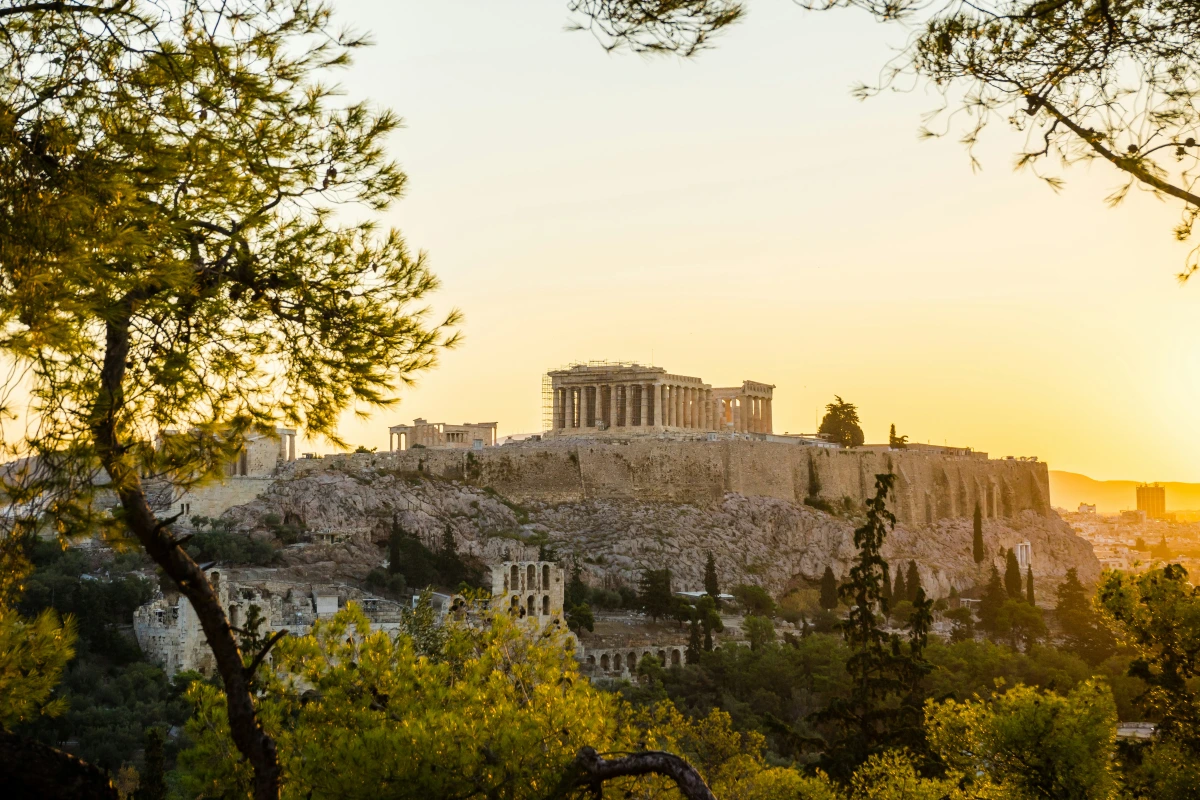
With constant views of the Acropolis, this stretch feels lively but relaxed, with families out for a stroll, street musicians playing, local artists set up along the way, and cafés spilling onto the pavement.
It’s a great place to slow down and ease into the evening.
From here, make your way up to Philopappos Hill for sunset. It offers sweeping views over the Acropolis and across the city and is far calmer than Areopagus Hill, with more space to sit, wander, and actually enjoy the moment as the light fades.

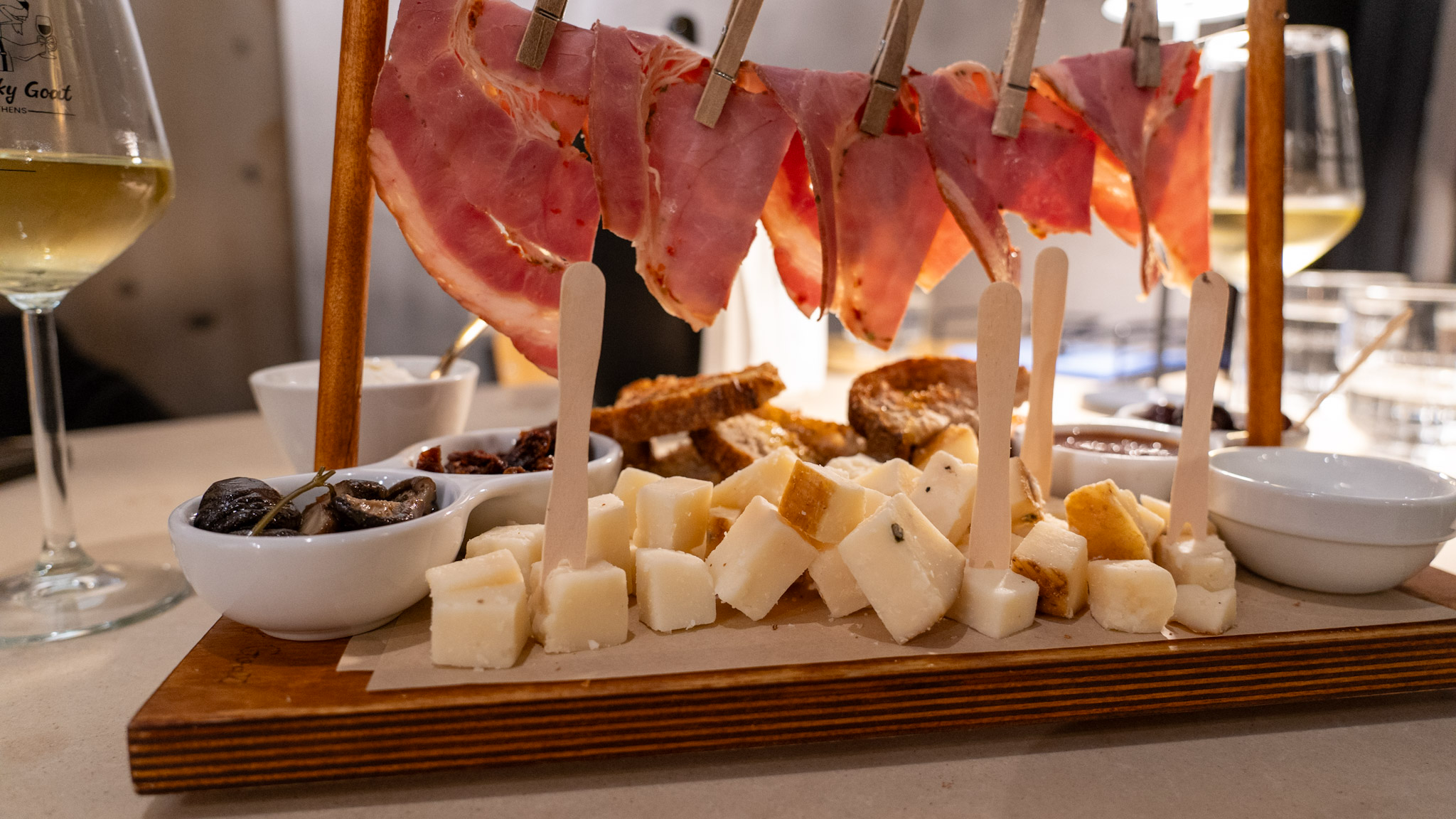
If jet lag hasn’t hit too hard and you’re in the mood for a drink and a few Greek-style small plates, I’d suggest heading to the Drunky Goat near Syntagma Square.
It’s a great spot to try Greek wines, paired with well-chosen bites that are perfect for winding down after a full day of exploring.
Day 3: Fly to Kefalonia
It’s day three of your Greece itinerary, and it’s time to head to the islands!
In this itinerary, you’ll visit Kefalonia, the biggest Ionian island. Teeming with some of the most striking deep cobalt blue and bright turquoise waters, colorful fishing villages, and lush mountains, Kefalonia is perfectly suited for some relaxation.
So, how do you actually get from Athens to Kefalonia? For this itinerary, and to make the most of your time, flying is by far the best option. The flight from Athens to Kefalonia takes around an hour, often less, and runs frequently, making it easy to find something that fits your schedule.
Both Aegean Airlines and Sky Express operate this route, with one-way fares often starting at around €50, depending on the season and how far ahead you book.
Once you arrive in Kefalonia, I suggest renting a car. Public transport on the island can be unreliable, and distances are larger than they look on a map.
Having your own car makes it much easier to reach beaches, viewpoints, and smaller villages without being tied to bus schedules.
Where to Stay in Kefalonia
Kefalonia is full of charming villages as well as some larger, busier areas, and either of these is great to base yourself in during your time in Kefalonia; it just depends on what you’re looking for and what’s better suited for you.
Argostoli
Argostoli is the island’s main town and the most practical base. You’ll find plenty of restaurants, cafés, shops, and supermarkets here, along with easy access to the airport and good road connections across the island.
It’s a convenient choice if you want a bit of buzz, plenty of dining options, and a central location for day trips.
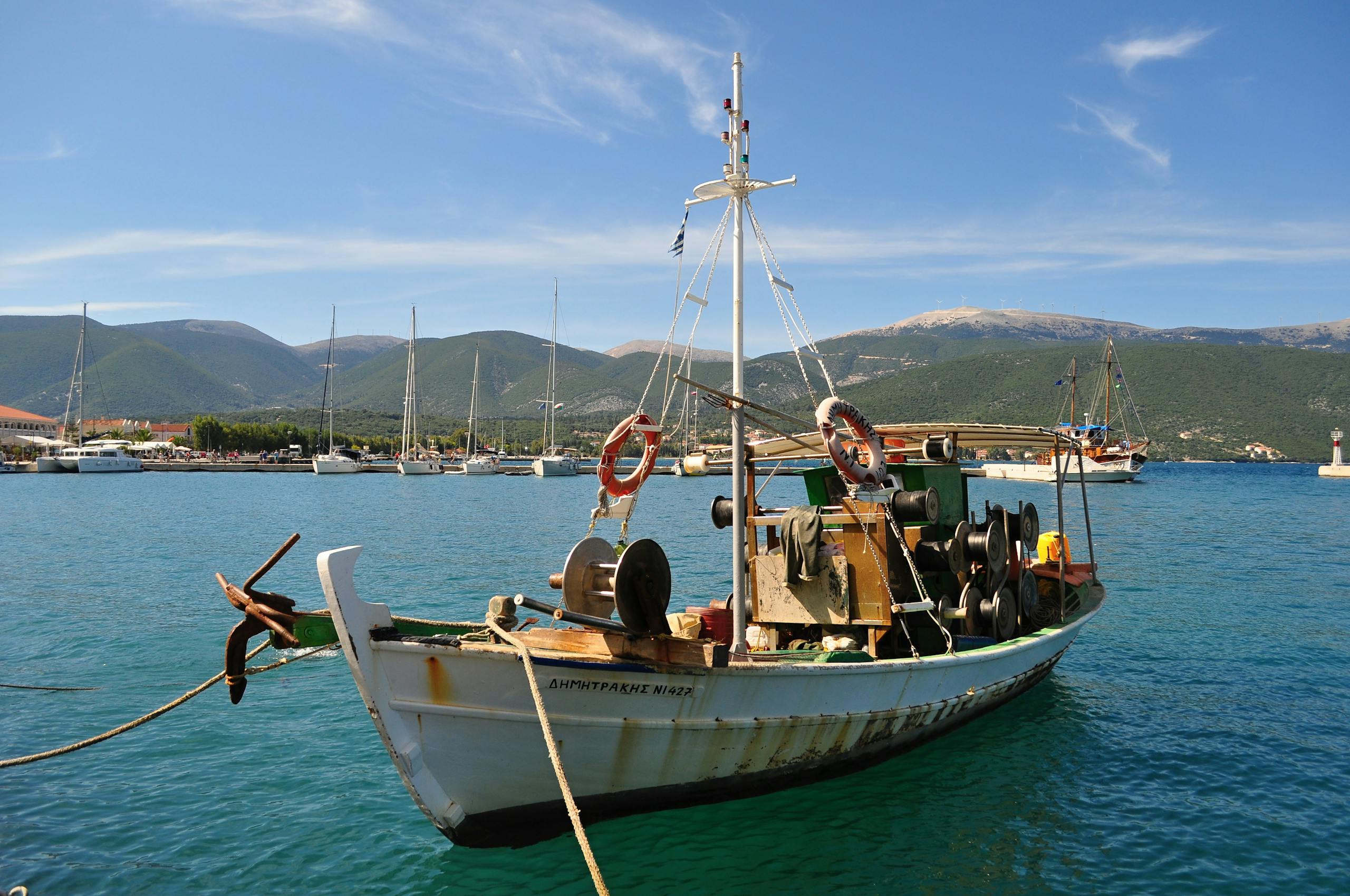
Where to stay in Argostoli: Argostoli Marina Suites is a group of newly created, stylish apartments located in the heart of Argostoli!
Assos
Assos is tiny, quiet, and impossibly pretty, with pastel houses curving around a calm bay. Staying here felt like stepping into the Greek island version of slowing down properly.
I loved Assos; it gave me that classic Greek island feel I always hope for, and it ended up being one of my favorite places in Kefalonia.
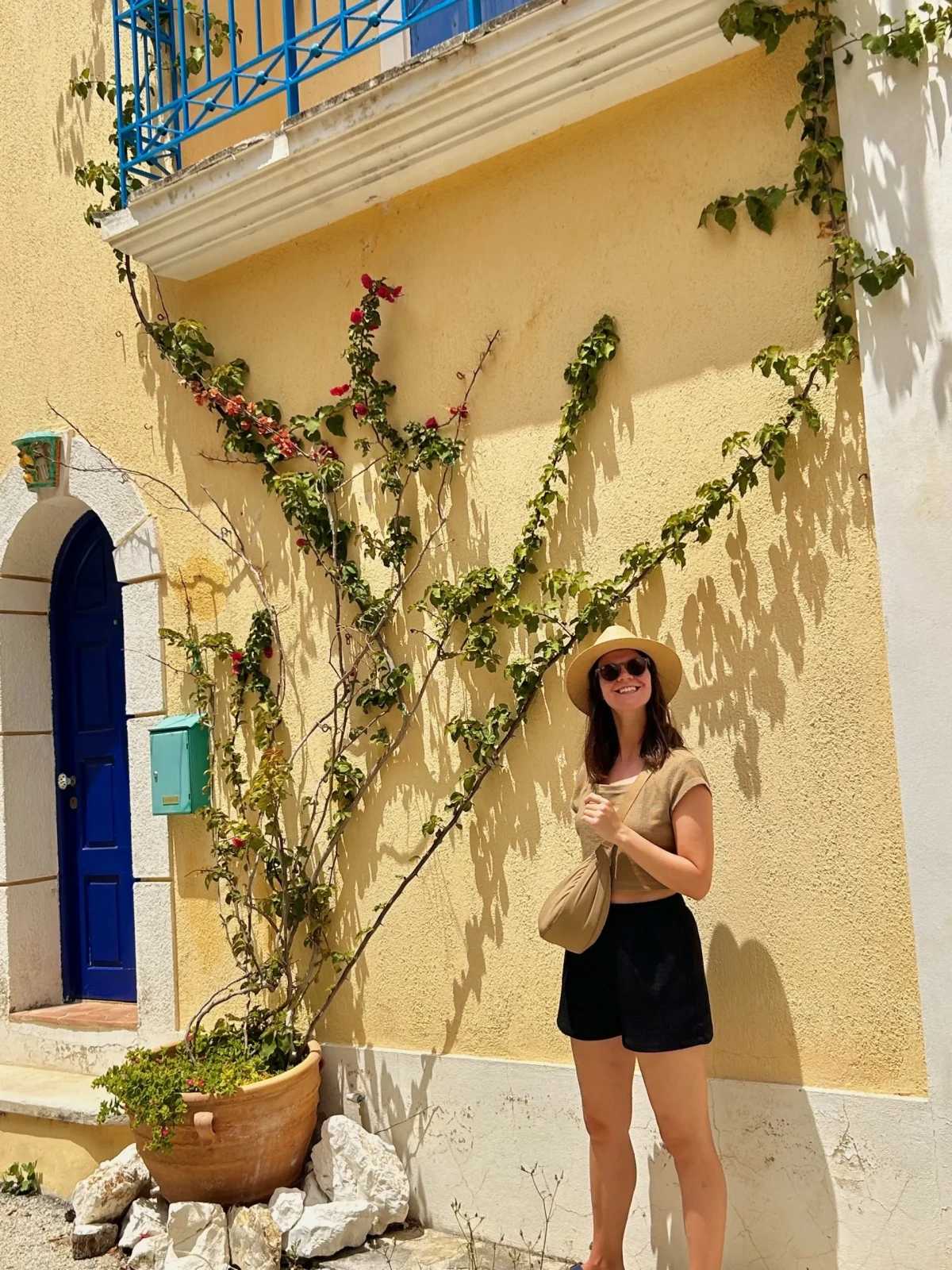
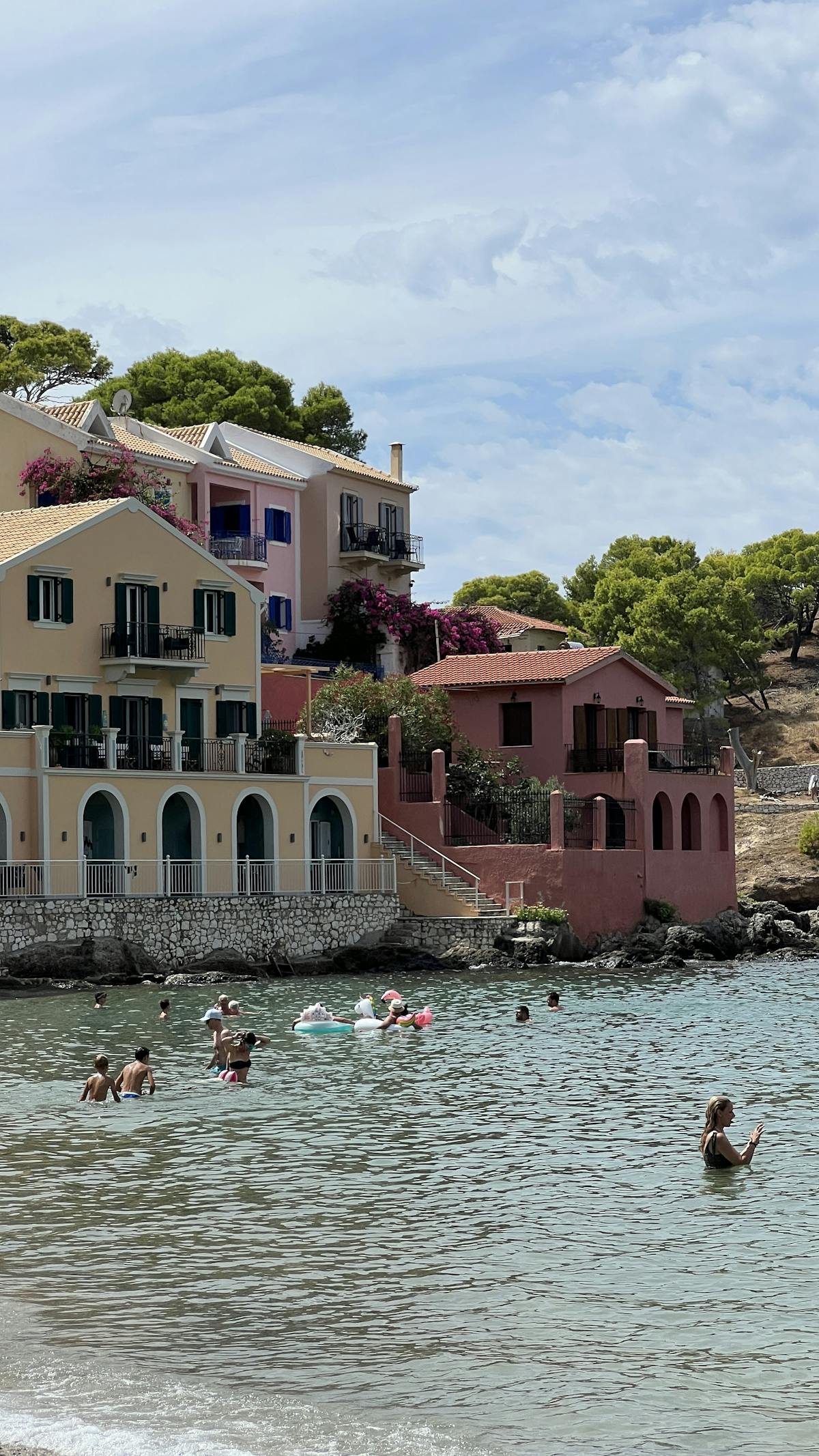
Where to stay in Assos: Roi Boutique Suites is a small set of modern, well-designed suites located in the center of Assos, within easy walking distance of the bay, tavernas, and swimming spots.
Fiskardo
Fiskardo sits at the northern tip of the island and feels a little more polished, with a lively harbor, sailboats, and excellent restaurants.
It’s one of the prettiest spots in Kefalonia and works well if you want a village atmosphere with a bit more energy, especially in the evenings.

Where to stay in Fiskardo: Emelisse is a well-established resort just outside the harbor, with sea views, pools, and easy access to Fiskardo by car. It’s a solid option if you want a quieter base with more space while still being close to the village.
Day 4: North Kefalonia – Myrtos Beach & Assos
Morning – Myrtos Beach
Today, you’ll start your day at one of Greece’s most photographed and award-winning beaches: Myrtos Beach.
Framed by dramatic limestone cliffs and backed by pine forest, it looks out over the Ionian Sea and is easily one of the most striking beaches I’ve seen, both in Greece and anywhere else.

Myrtos Beach sits on the northwest side of Kefalonia, around 30 km from the island’s capital, Argostoli. Unless you’re joining a guided tour with transport included, the only way to reach it is by car.
The drive itself is part of the experience, taking you along winding mountain roads before descending toward the coast.
As you round the final bend, the view opens up, and Myrtos appears below in full view, a moment that genuinely stops you in your tracks.
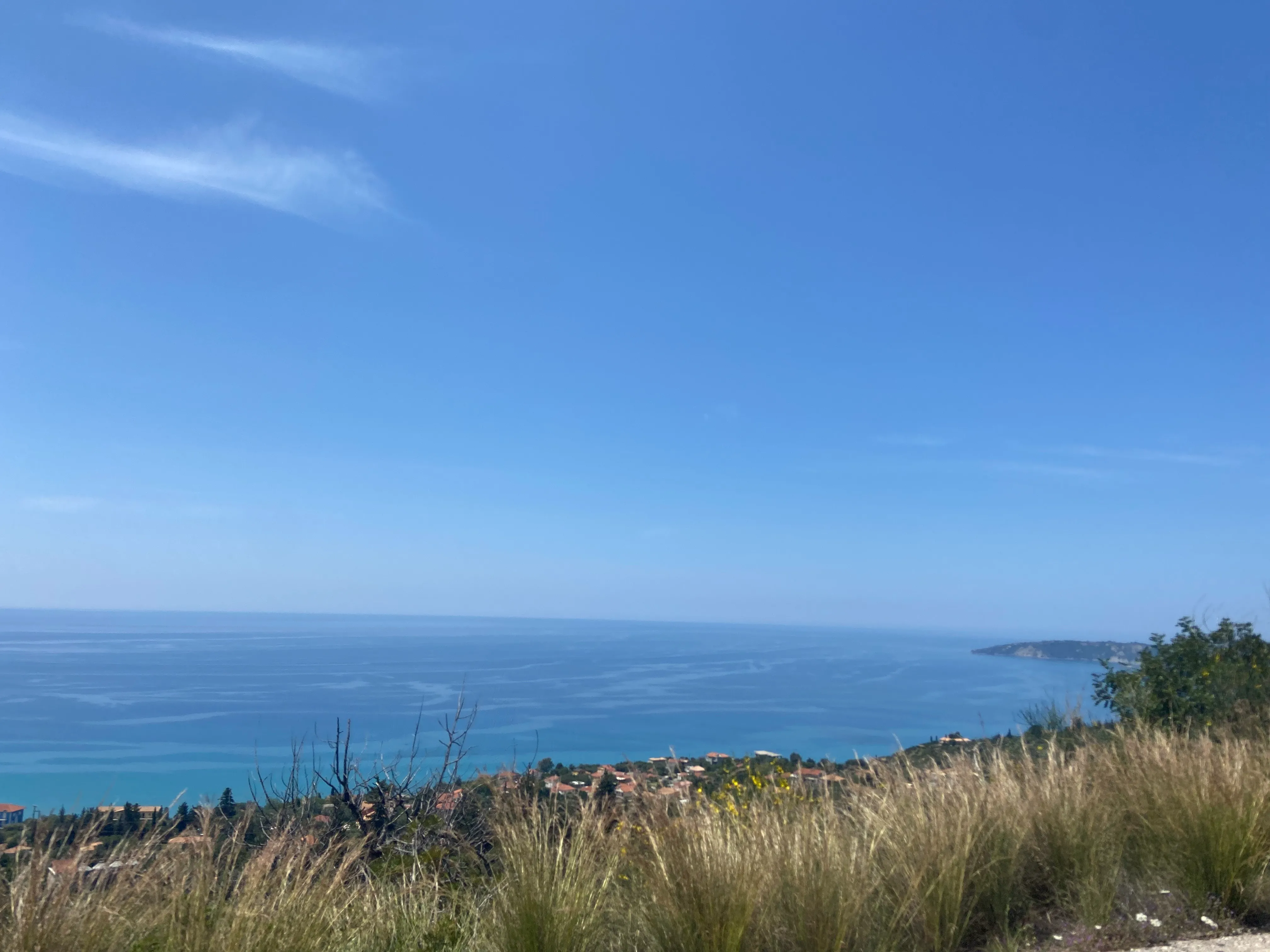
There’s a free public car park at the base of the cliffs, but it fills up quickly in summer, so arriving early is key.
Myrtos is a pebble beach with large white stones along the shoreline. If you have sensitive feet, water shoes are a good idea. Those same stones are what give the sea its intense blue color, especially on clear days.

The water is fantastic for swimming, with a gradually deepening shoreline, though conditions can change quickly. On windy days, waves can become strong, so it’s worth checking the forecast before heading down.
During the summer months, typically from June through August and sometimes into September, a beach bar operates on-site.
You can usually rent sunbeds and umbrellas for around €10 per pair, or sometimes for free with a purchase from the café, which is noticeably cheaper than on many other popular Greek islands.
If you’re driving and looking for a lunch spot afterward, I recommend heading to Alexandros Restaurant Grill in the village of Divarata, where I had some of the best papoutsakia (baked eggplant with meat sauce and béchamel) I’ve ever eaten.

Afternoon & Evening: Assos
For a slow late afternoon and dinner by the sea, head to one of my favorite places in Kefalonia, the fishing village of Assos.
Just a scenic 20-minute drive from Myrtos Beach, Assos was founded under Venetian rule, and you can still see this influence today in the village layout and in Assos Castle, which sits above the peninsula.
 On the walk up to Assos Castle
 On the walk up to Assos Castle
If you have the time, it’s worth walking up to the castle. The path is quite steep and exposed, especially in summer, so bring water and wear decent shoes, but the views back over Assos and the coastline are excellent.
It’s also far less busy than many of the island’s viewpoints, which makes the walk feel more worthwhile.
Back in the village, Assos is small and easy to explore on foot. There are a few tavernas along the waterfront that are ideal for an early dinner or a long lunch, and the bay is calm enough for a swim if you want one last dip before heading on.
Day 5: Wine & Town – Gentilini Winery & Argostoli
Morning: Gentilini Winery
Kefalonia is a great island to visit if you’re interested in wine.
Thanks to its limestone-rich soil, mountainous terrain, and sunny climate, the island produces several indigenous grape varieties, including Robola, Mavrodaphne, and Vostilidi.
There are a few ways to experience Kefalonia’s wine scene, whether that’s visiting a winery independently, joining a guided tasting, or booking a half-day wine tour that takes care of transport and tastings for you.
Wine tours are a good option if you don’t want to drive, or if you’re keen to learn a bit more about the island’s wine culture without planning each stop yourself.
One well-known stop just outside Argostoli is Gentilini Winery, which offers more than a quick tasting. Visits typically include sampling a selection of their wines with small food pairings, as well as time to walk through their seaside vineyard.
They also offer picnic-style experiences if you’d like to turn it into a slower, more relaxed afternoon.
If you’d prefer something more structured, I’ve linked a few recommended wine tasting tours below, which are an easy way to explore Kefalonia’s wineries without worrying about logistics.
Afternoon & Evening: Argostoli
If you’re not too tired after your wine tastings, plan to spend the late afternoon or evening in the island’s capital, Argostoli.
The town is larger than many visitors expect and, in certain pockets, feels closest to what Kefalonia has to an “old town.”

Much of Argostoli, however, is relatively modern. In 1953, a devastating earthquake destroyed most of the town, along with many settlements across the island, and Argostoli was largely rebuilt in the years that followed.
What you see today is the result of that reconstruction, with wide streets, low-rise buildings, and a layout that feels noticeably different from older Greek island towns.
That said, Argostoli is one of the best places to get a feel for everyday life on Kefalonia. The waterfront is lined with cafés and tavernas, and there are plenty of small shops to browse for souvenirs.
It’s an easy place to settle into a relaxed dinner, followed by a drink by the harbor if you feel like staying out a little longer.
Day 5 Alternative: Antisamos Beach
If you’d rather spend the day at the beach, a good alternative to Day 5’s plan is Antisamos Beach.
Located just outside Sami on the island’s east coast, Antisamos is set in a wide bay with deep blue water and green hills rather than dramatic cliffs.
I was genuinely impressed by Antisamos. While it’s becoming more popular and does feel touristy at times, it’s still one of the more unique beaches I’ve visited in Greece.
There’s something almost tropical about the setting, while still very much feeling Greek.
The beach is pebbled, with clear water that’s great for swimming and snorkeling, and it’s well organized with umbrellas, food, and drink available at fairly reasonable prices. There are also water sports on offer if that’s your thing. We tried the tubing and had an absolute blast!
Day 6: Caves & West Coast Swimming – Melissani, Drogarati & Petani Beach
Morning: Melissani & Drogarati Caves
Start the day by heading to the east side of the island to visit two of Kefalonia’s most well-known natural sights: Melissani Cave and Drogarati Cave.
They’re close to each other, which makes it easy to combine both in one morning.
Melissani Cave is best visited earlier in the day, when the sunlight hits the underground lake and lights up the water from above. Visits are short and organized, taking place by small boat, but it’s still worth seeing for the color of the water alone.
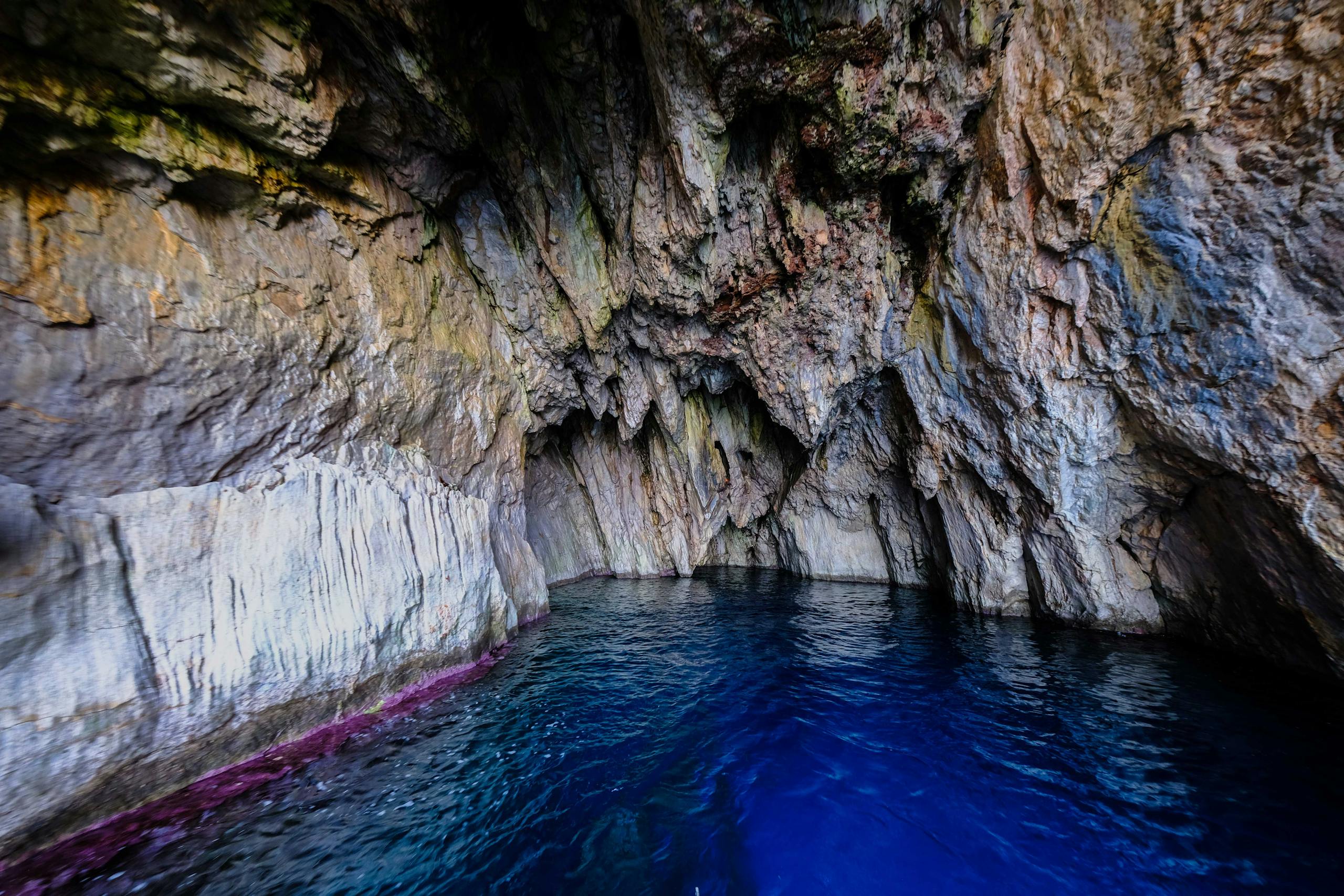
A short drive away, Drogarati Cave offers something entirely different. This is a large, open cavern with impressive stalactites and stalagmites, and it feels much cooler inside, which is welcome on hot days. The visit here is quick and straightforward, making it an easy stop before heading back across the island.
Afternoon & Evening: Petani Beach
In the afternoon, make your way over to the west coast for a swim at Petani Beach. Set between two headlands, Petani has clear water and a more relaxed feel than some of the island’s bigger-name beaches.
Petani Beach may have actually been my favorite beach in Kefalonia!

The beach is pebbled, with deep water that’s great for swimming, and there are a couple of tavernas right by the shore where you can grab a late lunch or coffee.
It’s a good place to slow the pace after a busy morning, whether that means swimming, sitting under an umbrella, or staying until sunset.
Day 7: Fly Back to Athens
I’d recommend booking a morning flight from Kefalonia back to Athens, as there are usually several short domestic flights operating daily, with flight times of around 1 hour.
Leaving in the morning gives you more flexibility if there are delays and makes the day feel far less rushed.
Kefalonia Airport is small, but it can get busy in summer when multiple flights depart around the same time. If you’ve rented a car, allow enough time to return it before check-in, and plan to arrive at the airport a little earlier than you normally would.
I’d recommend planning your flight home for the day after you return to Athens.
Flight schedules can vary, and allowing yourself that extra night takes a lot of pressure off the end of the trip. Instead of rushing straight from the island to the airport, book a hotel in the city and use the evening to slow things down.
A final sunset walk through Athens and one last good meal feels like a much nicer way to close out the journey before heading home the following day.
If you’re visiting Greece for the first time and want a trip that feels considered, delicious, and genuinely relaxing, this alternative itinerary is exactly how I’d do it. Save the Cyclades for another time. Greece will still be here, and it’s even better when you’re not racing through it.

Stay a Little While
Ready to continue planning your Greece trip? Check out more of our Athens and Greece articles here!
Greek Islands Travel Guide | How to Visit & Plan the Perfect Trip
Skyros Island Travel Guide
The Ultimate Guide to Visiting Kefalonia, Greece | Where to Swim, Eat, and Sleep
How to Spend 4 Perfect Days in Corfu, Greece
Slow Travel in Milos | A Guide to Visiting Milos, Greece
An Escape to Anafi | Santorini’s Rugged, Wild Secret Sister
The Best Souvlaki in Athens? Here’s Why Elvis Is Our Favourite
Athens in One Day: A Local’s 10-Stop Walk Through History and Modern Life
How Many Days in Athens is Enough? (Honest Guide for First-Timers)
Where to Eat in Athens: Aerides Plaka Restaurant
Slow Coffee in Athens: A Visit to Omsom in Koukaki
How to Spend 3 Days in Athens: A Realistic Local Itinerary You’ll Actually Love
Is Greece Expensive to Visit? A Realistic Cost Guide for 2026
Renting a Car in Greece: Everything You Need to Know (A Local’s Guide)
Things to Do in Thessaloniki: A Guide to Greece’s Coolest City