Renting a Car in Greece: A Local’s Complete Guide

This article includes affiliate links. If you choose to book through them, you’re directly supporting the free content we create, and we’re so grateful for your support.
Renting a car can feel like the most stressful part of planning a trip. I get it. I have rented a car 121 times in the past five years while living in Greece, so I have seen every hidden fee, insurance upsell, and airport counter situation you can imagine.
That said, having your own car in Greece can completely change your experience. It gives you the freedom to reach remote beaches, mountain villages, and archaeological sites without relying on limited public transport. You save time, avoid unnecessary stress, and move at your own pace.
In many cases, renting here is surprisingly affordable, sometimes even cheaper than owning a car year round, which is why I drive a rental most days.
Here is what you actually need to know before booking, including how to avoid common mistakes, what insurance to choose, and when renting makes sense and when it does not.
Let’s dive in!
Frequently Asked Questions
Do you need a rental car in Greece?
It depends on your itinerary. If you are only staying in central Athens or Thessaloniki, you can get by without one. For Greek islands, mainland road trips, or day trips beyond city centers, a rental car is strongly recommended and often essential.
Can you take a rental car on a ferry in Greece?
Yes, but only with permission from the rental company. Not all suppliers allow ferry travel, and some restrict it to specific islands. Always check the rental terms in advance and make sure ferry use is explicitly allowed in writing, or your insurance may be invalid.
Do rental car companies provide car seats in Greece?
Yes. Most car rental companies offer child seats and booster seats for an additional daily fee. Availability can be limited in summer, so it’s best to reserve car seats in advance rather than requesting them at pickup.
Is it safe to drive in Greece as a tourist?
Yes, driving in Greece is generally safe, especially outside major cities. City driving in places like Athens can be stressful due to traffic and scooters, but highways and rural roads are straightforward. Drive defensively, follow speed limits, and avoid distractions.
Do you need an international drivers license to drive in Greece?
Only if your driver’s license is not written in the Latin alphabet. If your license is in English or another Latin-based language, you do not need an International Driving Permit. Travelers with licenses in Arabic, Cyrillic, Japanese, Chinese, or Korean scripts will need one.
Is there an age limit for hiring a car in Greece?
Yes. Most car rental companies in Greece require drivers to be at least 21 years old and to have held a valid driver’s license for a minimum of one year.
Drivers under 25 are often charged a young driver fee, and some suppliers restrict access to larger or higher-end vehicle categories. A few companies set the minimum age at 23 or 25, so it’s important to check the rental conditions for your specific provider before booking.
Manual or automatic car rental in Greece?
In Greece, manual cars are the standard and make up the majority of rental fleets. They’re easier to find and significantly cheaper. Automatic cars are usually available, but in much smaller numbers and at a noticeably higher cost, especially in summer or on islands. If you need an automatic, it’s best to book early and double-check that the transmission type is clearly listed on your reservation.
Check prices here: Athens Airport, Athens, Santorini, Milos, Kefalonia, Corfu, Crete, Rhodes, Thessaloniki

Driving in Greece
Is it easy to drive in Greece? Short answer: It’s not for the faint-hearted, especially in major metropolitan cities like Athens and Thessaloniki.
When you leave the city, the driving is quite easy. Unless you are a very confident driver, I would avoid driving in the Athens city center.
On busy streets, the lanes seem to blend with no warning, and between the erratic taxi drivers and zooming motorcycles, it can be quite stressful.
Plus, the transportation system in Athens and Thessaloniki is pretty impressive.
We’ll go over the technicalities of driving in Greece in the Road Signs in Greece section.
Choosing the Right Car for Your Trip
There are many categories of cars to choose from. You’ll want to make sure you do a little research ahead of booking so there are no surprises.
The category of car you’ll want depends on a few things, from the distance you’re planning on driving to how many people will be in the car, to how much room you need for luggage, strollers, etc.
Should I Rent a Car in Greece?
Unless you’re in Greece just to visit Athens, you’ll need a car. It’s not a strict rule, but it’ll make your holiday so much better.
This is true especially if you’ll be spending time in islands such as Corfu, Kefalonia, Zakynthos (Zante), Rhodes, and Milos. On these islands, a car is a must.
The public transportation system in most islands (with a few exceptions) is underdeveloped and doesn’t always run on time.
In some rare cases, the buses don’t even show up. It could be a nationwide strike, or it could be that one bus driver got sick and now there is just one bus operating that route all day. In my opinion, it’s better not to risk it; that’s why I always rent.
If you want to explore mainland Greece without participating in an organized tour, a car hire in this situation is also a must. In Greece, there’s a monopoly on the interregional buses. Don’t even get me started about the train system!
Unlike countries where competing private bus companies keep prices and service high, Greece relies on KTEL for interregional travel. Fares are often expensive, and bus quality varies widely by region.
Some are modern, but many are outdated, with weak air conditioning. You won’t know which one you’re on until you board.
If you are planning a mainland Greece road trip, my advice would be to rent a car from the airport, as the prices tend to be better than renting in a city center.
For example, if you plan on exploring the Peloponnese, you can fly into the Kalamata Airport (seasonally) orthe Athens Airport.

Requirements for Renting a Car in Greece
The most important thing to look into before booking is the general requirements for your rental.
Driver’s License – Always carry your driver’s license with you. A picture of it is not enough, and an International Driver’s Permit (IDP) is not enough, either.
International Driver’s Permit – Do you need it? You don’t need it if your driver’s license is in English. In fact, some car rental suppliers extend it to the Latin alphabet.
Credit Card – Sometimes yes, and sometimes no; it really just depends on the supplier. Make sure you carefully read the rental conditions on the booking site.
Deposit – Be prepared to pay a deposit, or the price of your car rental will increase, because you’ll have to buy the rental supplier’s insurance.
I use Discovercars.com, and all the information is straightforward from searching to the confirmation email you receive with all the information you need to know.
Driver’s License
You’ll need a license that has been valid for at least a year. Most car rentals won’t rent to you if you’ve been driving for less than a year.
If you just renewed your license, as I did, don’t panic; you have two options. A lot of driver’s licenses have the first date of issue printed somewhere on the card in addition.
If your license doesn’t have that, simply bring your renewed license along with your expired license to show proof that you’re not a new driver.
“But I have a photo of my driver’s licence. It’s the same thing,” the traveller said.
“And I have a photo of a car. That’s all you’re getting,” the rental agent replied.
On one of my most recent rentals in Milan, I mentioned this to the staff member handling my paperwork. He told me it happens more often than you’d think.
Some travellers arrive with only their International Driving Permit, having left their actual license at home because they were afraid of losing it.
International Driver’s Permit
This is only mandatory if your license is in a non latin language. You’ll only need an IDP if your license is in Arabic, Japanese, Cyrillic, Chinese, Korean, etc.
I have an American driver’s license and have never been asked for an IDP. If it makes you feel more comfortable having one, it doesn’t hurt.
Credit Card
A lot of car hire companies only accept Visa or Mastercard, and you must have the physical card with you. Apple Pay and Google Pay aren’t accepted at the counter.
The card also needs to have all the key details printed on it, including your name, which must exactly match the name on the booking and your driver’s licence. It can’t be a parent’s, sibling’s, or partner’s card.
Some suppliers will accept a debit card, but this is far from universal and often comes with extra restrictions, such as a higher deposit or limited vehicle categories.
Even small discrepancies can cause problems. I once made a simple typo on a booking; my surname was missing a single “i”. The reservation had to be cancelled. For insurance and liability reasons, car hire companies won’t accept anything that doesn’t match exactly.
Deposit or Insurance
The big surprise that can change the price of your car rental significantly is the deposit. Sometimes this can be triple the cost of your actual rental!
You usually have the choice between a deposit and accepting the car rental supplier’s insurance. The insurance typically adds 10-20 EUR per day. We’ll dive deeper into this in a later section.
I use the Chase Sapphire, which, like a handful of other travel credit cards, includes car rental insurance. With these cards, you still pay a deposit when you pick up the car.
If there’s damage, the rental company can charge up to the deposit amount to your card. You then file a claim with your credit card’s insurance provider, and once approved, you’re reimbursed, either by check, a statement credit, or a direct deposit to your bank account.
If you go this route and need to file a claim, make sure the rental company gives you a police report (even if the police weren’t involved) or an official damage report. You’ll need this documentation to recover the funds from your credit card insurance.
Out of all the times I’ve rented a car in Greece, I’ve only had one instance where part of my deposit was withheld, and it was really easy to file a claim and get reimbursed.
Pro Tip: Keep in mind that a lot of credit card rental insurance policies won’t cover you if the rental is over 30 days.
If you’re renting for longer, it’s best to split the booking into periods of no more than 20 days. I usually rent from Athens Airport for 13–20 days at a time.
This isn’t just for insurance limits. Longer rentals often have a higher daily rate, so shorter bookings can be cheaper.
If your credit card doesn’t include rental car insurance, it’s risky to leave a €1,000 deposit unprotected. For short rentals, it’s often worth paying extra for the supplier’s insurance or adding third-party coverage, such as DiscoverCars option at checkout.
Pro Tip: Before you drive off, take clear, detailed photos and videos of the entire car. Walk around it slowly and capture every panel, the windscreen, wheels, undercarriage (if visible), interior, and the dashboard with mileage and fuel level.
Do this even if the staff says it’s “already noted.” Older scratches, chipped windscreens, or curb-rashed wheels are the most common reasons deposits get partially withheld. Having timestamped photos on your phone makes disputes quick and stress-free if damage is questioned at return.
Car Supplier Insurance vs. DiscoverCars Insurance
The car supplier’s insurance will be the most straightforward option.
You buy their insurance, pay no deposit, and return the car with no questions asked (unless you had a big accident). In a lot of cases, they don’t even inspect the car. The catch? This insurance will be the most expensive.
A 3rd party insurance works a little differently, much closer to how you would handle a claim if you had insurance through your credit card. This means you still have to pay the deposit, but you won’t lose it since you will get reimbursed.
Now let’s introduce two terms you’ll read quite frequently when you’re renting a car.
CDW: Collision Damage Waiver
The CDW protects you financially if the rental car is damaged, stolen, or totaled during your hire period. In Greece, this is always included, no matter what insurance method you choose.
This waiver essentially protects you from the car rental supplier asking for the full cost of the car in the event of total loss.
Typicall,y the deposit will be the same as your excess (which is the total amount you are liable for). In rare cases, excess can be higher than your deposit. A telltale of that can be a very low deposit amount. Always check the rental conditions before you book your car rental.
Let’s use a real example:
For a two-week compact SUV rental in late March with CarQ, the excess is €850, meaning that’s your liability for damage, with exclusions like the windshield, undercarriage, and interior.
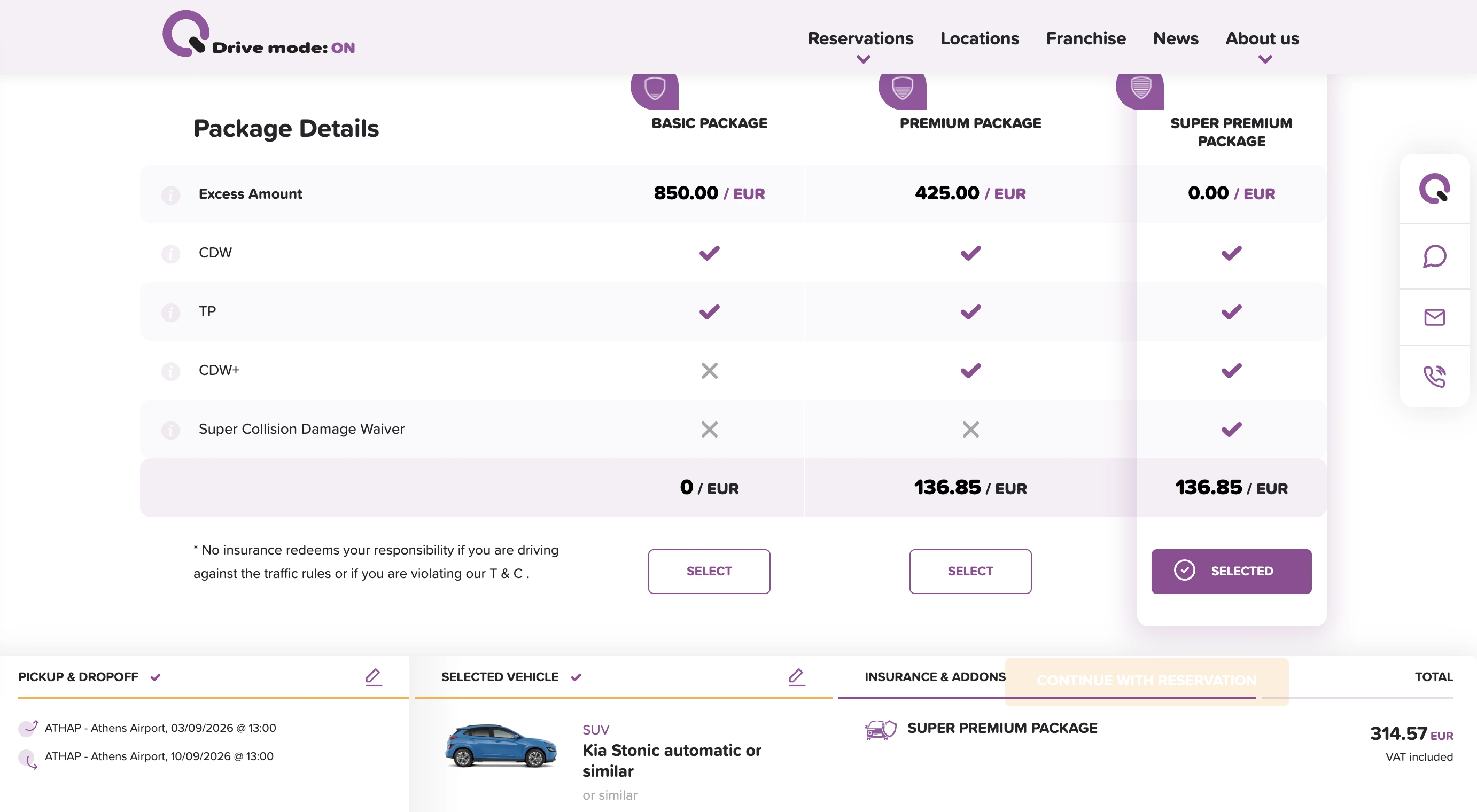
CarQ’s Premium insurance reduces liability to €425 and costs €136.85 (€20/day). The Super Premium option brings liability to €0 and usually is €30-€60 more than the Premium Package, but right now they are running a special that costs the same. The base rental, by comparison, is €25.4 per day, so insurance quickly becomes the most expensive part, especially during low season, when the base rental can be just €5 per day and insurance costs stay the same at €20 per day.
If you can afford the deposit, a third-party insurance makes more sense, especially for longer rentals. Through DiscoverCars, for the same car and dates, coverage costs €58.72 total (about €8.4/day) and covers everything except interior damage, at a fraction of the supplier’s price.
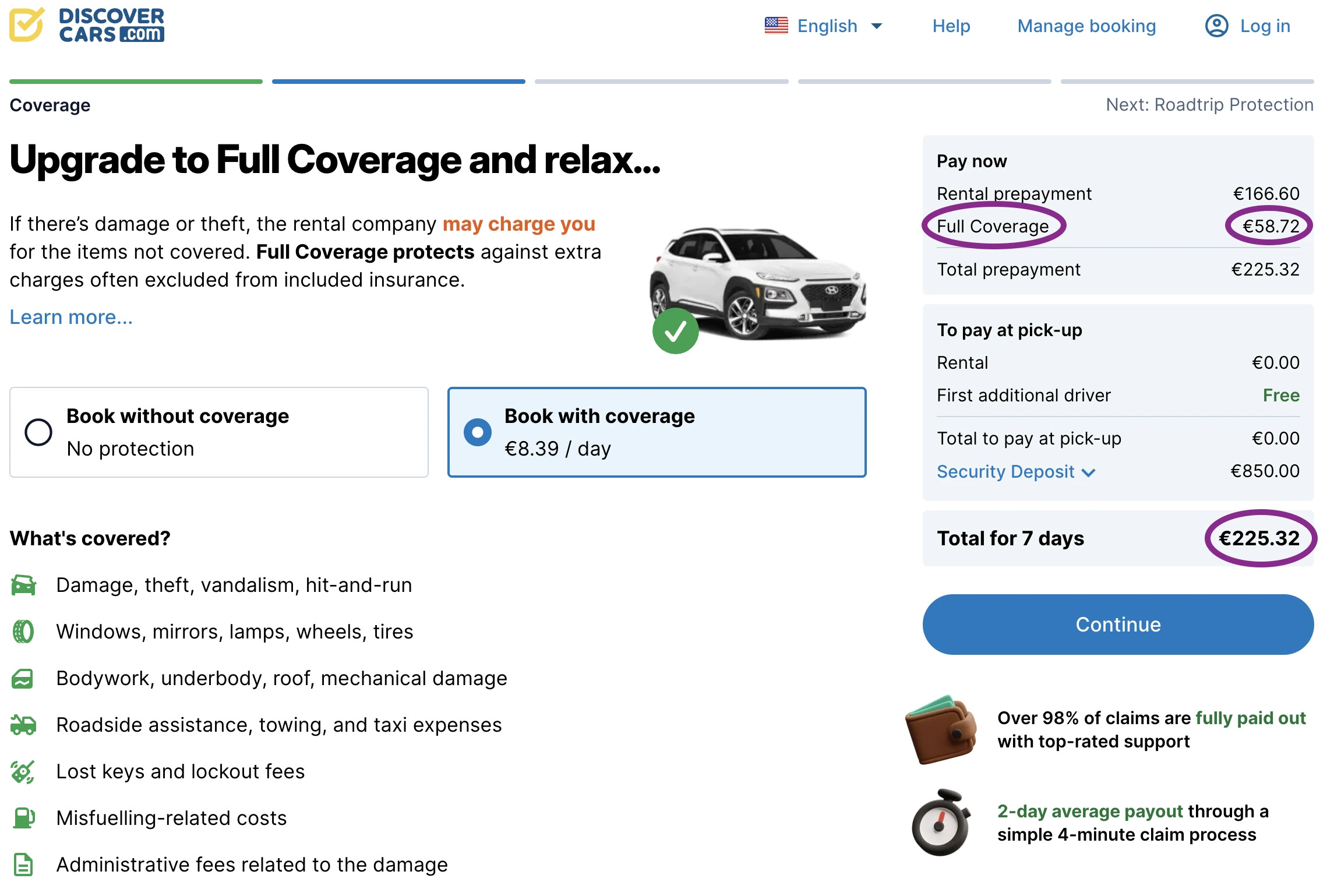
This insurance will even cover up to €300 in taxi costs if the car becomes unusable due to damage. Full details are available here.
Pro Tip: When renting a car in Greece, don’t sit in the car wearing a wet swimsuit! Salt water can dry into white stains, and most rental companies will charge for this damage, usually between €80 and €200, depending on severity.
If you absolutely have to drive while wet, lay down a thick, dry towel so seawater doesn’t seep through.
Important: Insurance won’t cover you if you break traffic laws, such as running a red light or using your phone while driving.
Additional Deposits
In some cases, there’s an additional deposit for fuel. For example, Centauro and Goldcar will charge you anywhere from an additional €20-190 on top of the excess. The amount depends on the size of the car and the fuel level at pick up.

Choosing the Right Rental Car
If you’re on a tight budget, the cheapest option is usually a mini car. These are fine for city driving, but not ideal outside towns.
On mainland highways or steep, rural roads, a mini car will feel underpowered and cramped, especially with luggage or passengers in the back. Most only fit one medium suitcase in the boot.
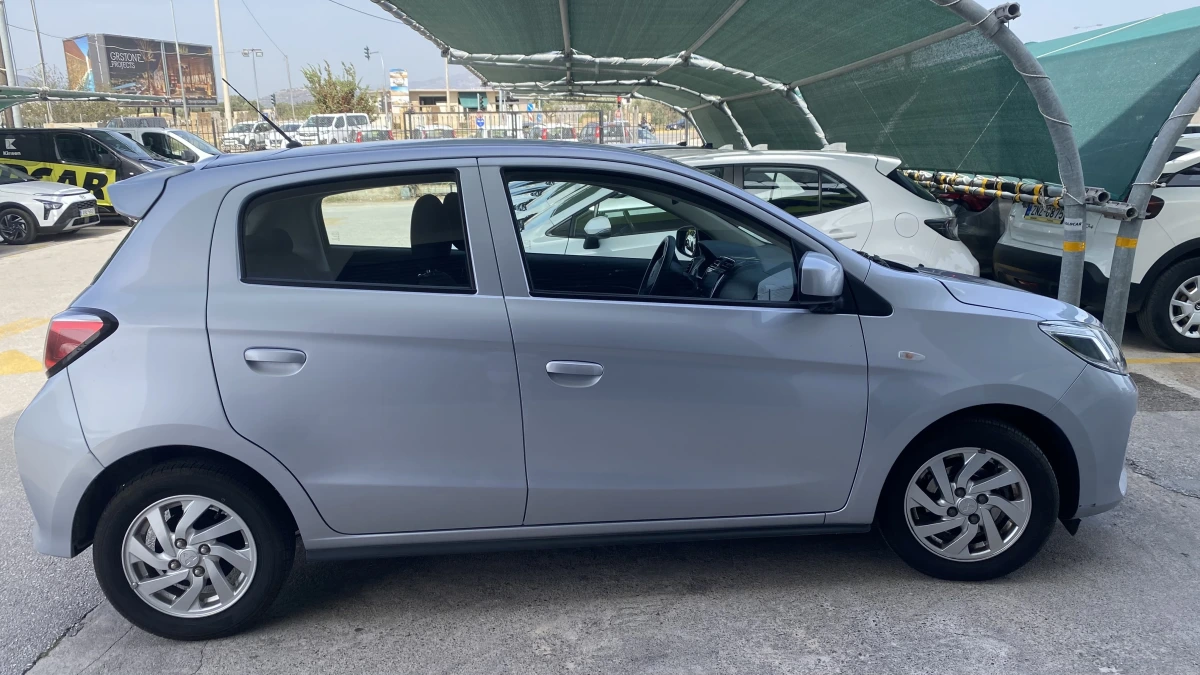
I usually choose a compact or economy car, a compact SUV, or an intermediate SUV. For families with children, an intermediate SUV is the most comfortable option.
Renting an Electric Car in Greece
If you plan on going on roadtrips, Electric car hire in Greece can be quite pricey and a bit of a headache when it comes to charging.
As much as I love the feel of driving an electric car, having to stop for at least 30 minutes at a time to charge can be a bit inconvenient.
In recent years,s I’ve seen quite a few electric car charging stations. Not just in big cities, but also throughout the Peloponnese, from the service stations on the side of the highway, to towns like Sparta and Kalamata.

On Greek islands, charging stations become a bit more sparse, especially on more or less visited islands, where you’ll have to research in advance.
About two years ago, we rented an electric car in Sweden, a country with a great electric car infrastructure. We drove over 2,000 kms so we really put an electric car roadtrip to the test (you can watch our YouTube video here). I wouldn’t do it again. Even in a country like Sweden, it was still inconvenient to make such long stops or try to find the best charger on the route.
Imagine you’re driving during a heatwave, the AC is in full blast, and the battery’s cooling system is working harder than normal. This alone will reduce your range by about 15%. It’s an unnecessary stress that you can easily forgo.
Best Car Rental Companies in Greece
In the summer of 2021, I moved from Los Angeles to Athens, Greece. That’s when I started my first of many series of car hires.
Of course, you have the big names like Hertz, Avis, and Europcar, but they don’t come cheap, especially in the summer. During summer, prices can go over €800 for a five-day car rental, especially if you’re not booking early.
In the winter, spring, and fall, prices go down, but not nearly as much as the smaller European car hires.
After extensive online research and years of first-hand experience, these are my top five car rental companies in Greece.
My rankings are based on car quality, pricing, model selection, customer service, and deposit requirements:
Centauro
This is my first choice because their fleet quality and car selection are on par with the major international brands.
When I spoke with the manager, he explained that each spring they purchase over 1,000 new cars for the summer season, then sell around 90% of the fleet in early October.
As a result, most of their cars are under a year old, giving you a very high chance of renting something fairly new.


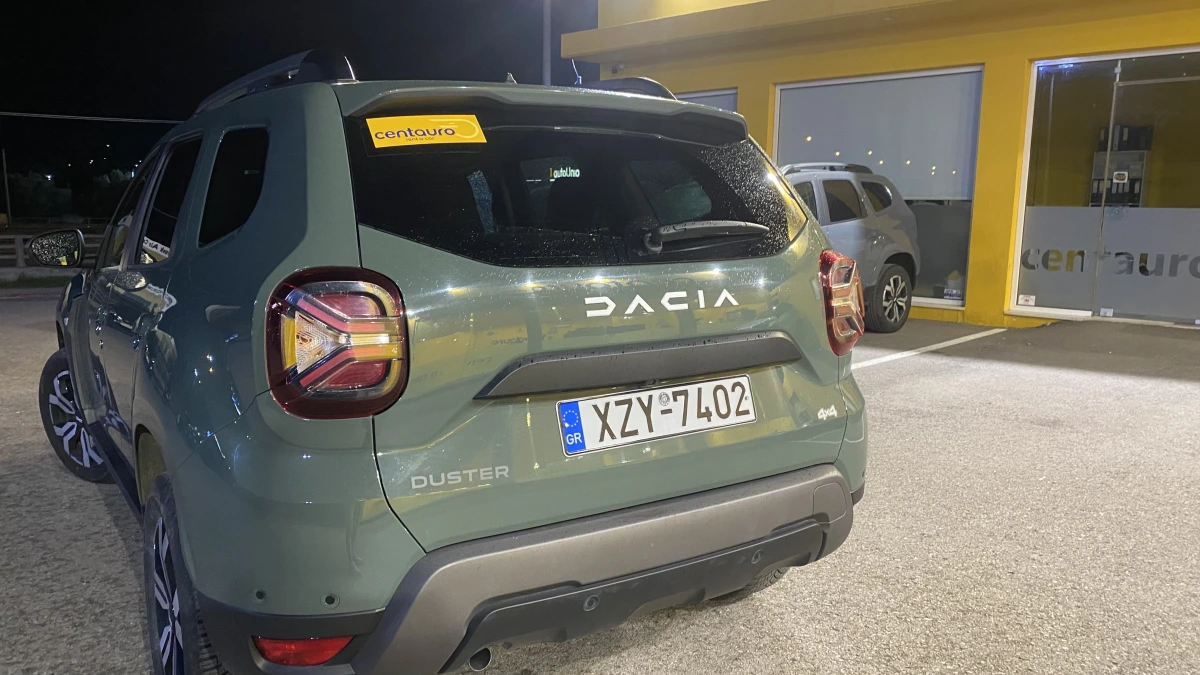
It’s one of the few companies that lets you choose a specific car within the category you booked. If they don’t offer it right away, ask as soon as you see them grab the keys; it’s usually before the car is logged in the system.
I’ve also been upgraded for free several times when compact cars sell out, which happens often.
The main drawback is the deposit. Excess is €1,100 for smaller categories and €1,400 for larger ones, plus a separate fuel deposit (€25–€190).
Despite this, it’s the company I consistently choose for Athens Airport and island rentals, including Santorini, Corfu, Crete, Thessaloniki, Rhodes, and Kefalonia.
When demand is high and prices run above average, I switch to CarQ.
CarQ
My second choice is CarQ. Their car condition is excellent. While they don’t refresh their fleet as aggressively as Centauro, they do add a few new cars almost every year, especially in the compact and large SUV categories.
Their cleaning standards stand out. Cars are consistently spotless and noticeably well-maintained.
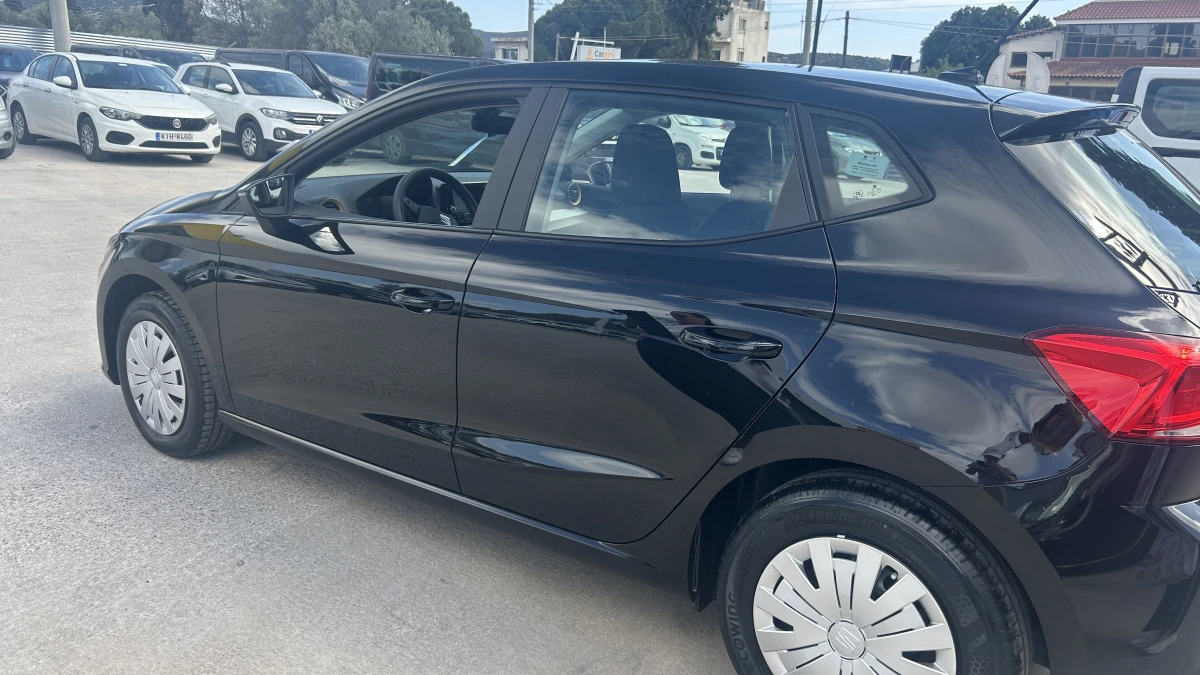
Two major advantages are the lower deposit and the free additional driver, which can save a significant amount if you need a second driver. Deposits range from €750 for compact or economy cars to €1,000 for intermediate SUVs.
Like Centauro, CarQ has locations across Greece, making it a solid option for car hire in Athens, Santorini, Corfu, Kefalonia, Chania, Heraklion, Paros, Naxos, Thessaloniki, Kalamata, Skiathos, and Rhodes.
Goldcar
I only use Goldcar as an option when Centauro and CarQ are significantly more expensive. Their fleet is fairly new, though not typically under a year old, and the cars are generally well-maintained.
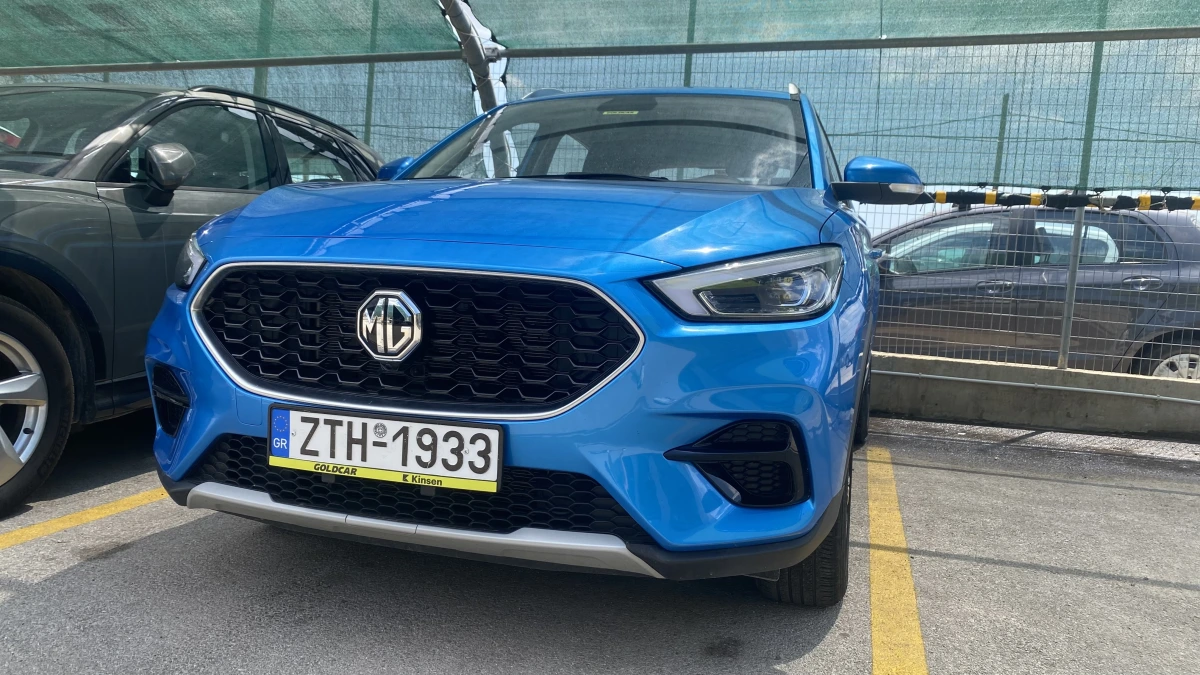
Last summer, I rented an SUV from Goldcar for 23 days in July for €325, which was far cheaper than competitors at the time.
I booked the compact crossover category, advertised as a Jeep Renegade. While they do have a few, most cars in this category are MG ZS models. The car was comfortable and well kept, but underpowered on steep highway inclines, struggling to exceed 100 km/h when the limit was 130 km/h.
Deposits are similar to Centauro, €1,100 for smaller categories and €1,400 for larger ones. Goldcar is also one of the few companies that requires a separate fuel deposit, typically around €120.
Other Options

WheeGo, RecordGo, YOURS, and Drive are solid backup options when Centauro, CarQ, and Goldcar are over budget. Car quality and service are decent, and deposits are generally average. Drive stands out for having the lowest deposit, though the excess structure differs.
Pro tip: Be patient with rental staff, especially in summer. They’re dealing with hundreds of stressed, tired travellers in extreme heat, and it shows. A calm attitude and a bit of kindness go a long way. In my experience, staying friendly often turns the interaction around and gets you preferential treatment.
After reading hundreds of car rental reviews across Europe, one common complaint is feeling pressured into buying insurance or surprised by deposits.
Insurance is where rental companies make most of their profit, and staff often earn commission, so some pushback is normal.
If you already have coverage through your credit card or a third-party policy, be clear and confident about it. When you show certainty, they usually stop pushing, which saves time and frustration.
Cost of Renting a Car in Greece
Having rented cars across Greece for the last five years, I’ve learned that prices can change dramatically depending on where you are, the month, and even the exact day you book.
Car rental prices in Greece are dynamic and can shift from one week to the next based on supply and demand.
Renting a Car in Greece in the Winter
If you’re looking for a cheap car rental in Greece, winter is the best time to visit. It’s not unusual to find cars for as little as €3 per day, which is why renting long-term has often been cheaper for me than owning or leasing a car.
Renting a Car in Greece in Spring or Autumn
Prices start to rise in spring and autumn, but they’re still relatively reasonable.
May and September tend to be the most expensive shoulder-season months, with prices starting at around €10 per day.
Renting a Car in Greece in Summer
Summer is a completely different story. This is when Greece is flooded with visitors, and demand for rental cars increases dramatically.
In 2025, Greece welcomed 35.2 million visitors, with more than half arriving between June and August. August alone saw around 7.5 million visitors, making it the most competitive month for car rentals.
If you book early and manage to beat the summer rush, prices can start at around €13 per day in June. From there, rates climb quickly, and by August, even the smallest car categories often start at €35 per day.
Pro Tip: If you know your travel dates, check every week, and if you find a price within your budget, book it. With DiscoverCars.com, you can cancel or change your booking for free up to 48 hours before pickup, which is a big plus.
I also recommend tracking prices weekly, especially in the three weeks leading up to pickup. If demand isn’t as high as expected, prices often drop closer to your travel date.
While companies like Centauro and Hertz quickly moved out of my budget, Goldcar ended up saving me like a knight in shining armor.
Location
Location, location, and supply! If you’re looking for a car rental in Athens, Athens Airport gives you the best value, as well as in Thessaloniki.
Greek Islands
Why Island Car Rentals Cost More
Once you start looking at car rentals on islands like Santorini or Milos, prices change noticeably. Island fleets are smaller, and rental companies face higher costs bringing cars over by ferry.
Add strong summer demand and the need to make up for quiet winter months, and prices quickly add up.
Mykonos and Santorini: High Demand, High Competition
In June, a Mykonos car rental might cost around €22 per day, compared to roughly €13 per day in Athens.

You might be thinking, “But Mykonos is the most expensive island in Greece.” That’s true, but its popularity also creates intense competition.
With so many rental companies operating on Mykonos and Santorini, prices are often kept surprisingly competitive despite the demand.
That brings us to renting a car in Milos, an island where having your own wheels really matters. Milos is relatively remote, making it more expensive for rental companies to transport cars from the mainland.
As a result, supply is far more limited than on Mykonos, Santorini, or even Paros and Naxos, despite Milos being extremely popular.
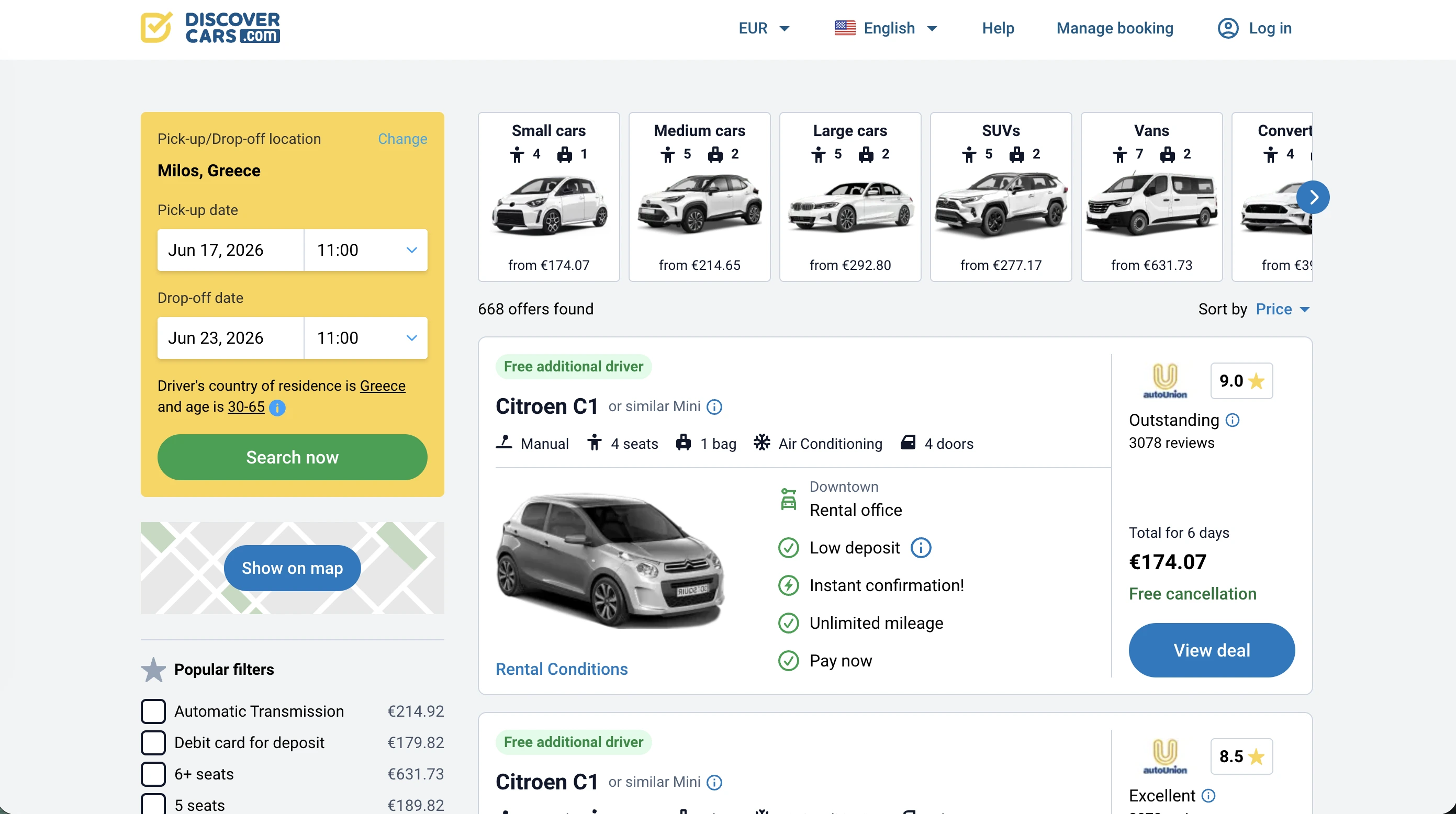
If you book early, Milos car rentals typically start at around €29 per day.
Wait until just a few weeks before your trip, and prices can easily climb to €40 per day, often for cars that are eight years old or more, which, in rental terms, is not something I’d be keen to drive.
The Ionian Islands: Better Value Overall
Enough about the breezy Aegean islands. Let’s shift west to the Ionian islands, which are forested, lush, and strongly influenced by Italy.
The Ionian islands are surprisingly affordable overall. Between well-priced hotels, budget-friendly restaurants, and ferries costing around €29 round trip, with the option to bring your car for an additional €59 round trip, they offer excellent value.


Compared to the much higher ferry prices to many Aegean islands, this is one of the reasons I often fly to places like Rhodes, Crete, or Santorini, then rent a car or scooter once I arrive.

In June, a Kefalonia car rental typically starts at around €19 per day. Its more popular sister island, Corfu, also known as Kerkyra, is often even cheaper.
For the same dates, Corfu car hire prices frequently start at around €14 per day, very similar to Athens Airport rates. Given Corfu’s popularity and the large number of direct flights it receives from across Europe, that pricing makes sense.
Road Signs in Greece
As I mentioned earlier, the city streets in major cities can be overwhelming. But as someone who received their license in the US, what’s even more overwhelming is understanding the signs.
In Europe, many of the signs are the same, but if you’re coming from a different continent, chances are, you’ll get confused. These are the main signs you’ll need to know.
Traffic Signs
The most important road signs to know, beyond the obvious ones like stop and do not enter.
Parking Signs

You can’t park, but you can stop temporarily.

You can’t park and you can’t stop.

However, if this sign has another sign directly underneath with an arrow pointing down, it means that you can park from that point on. If the arrow is pointing up, you can park behind that sign, but not after it.
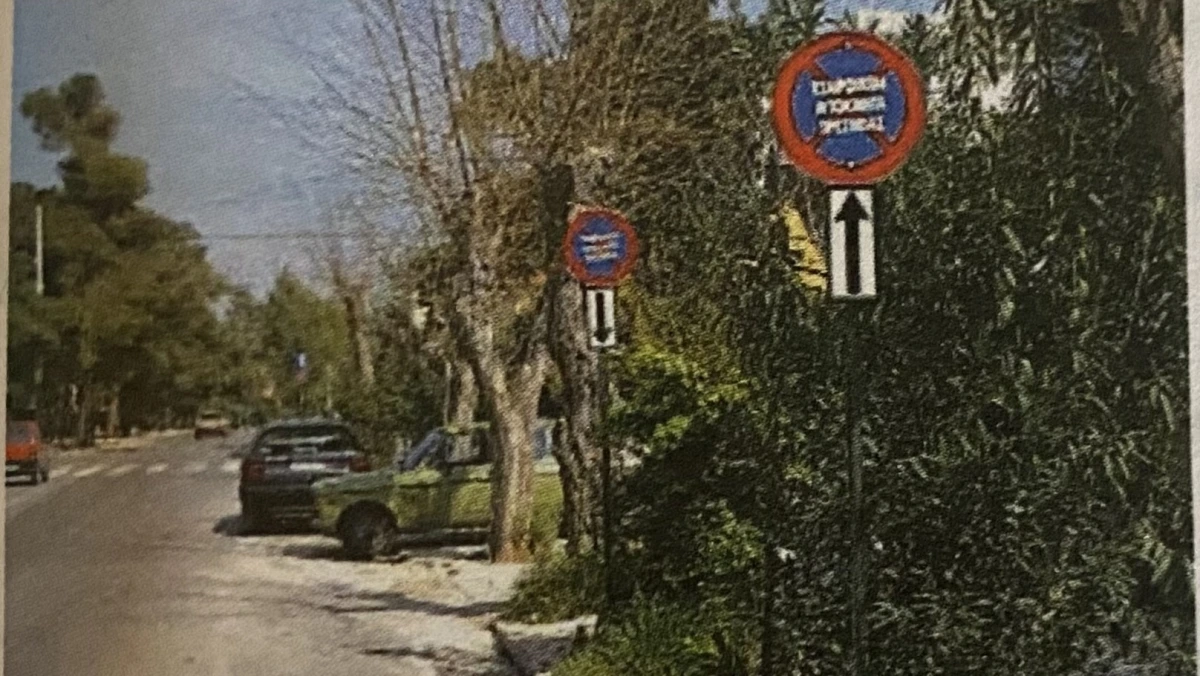
In the above scenario, you can’t park in between the signs.
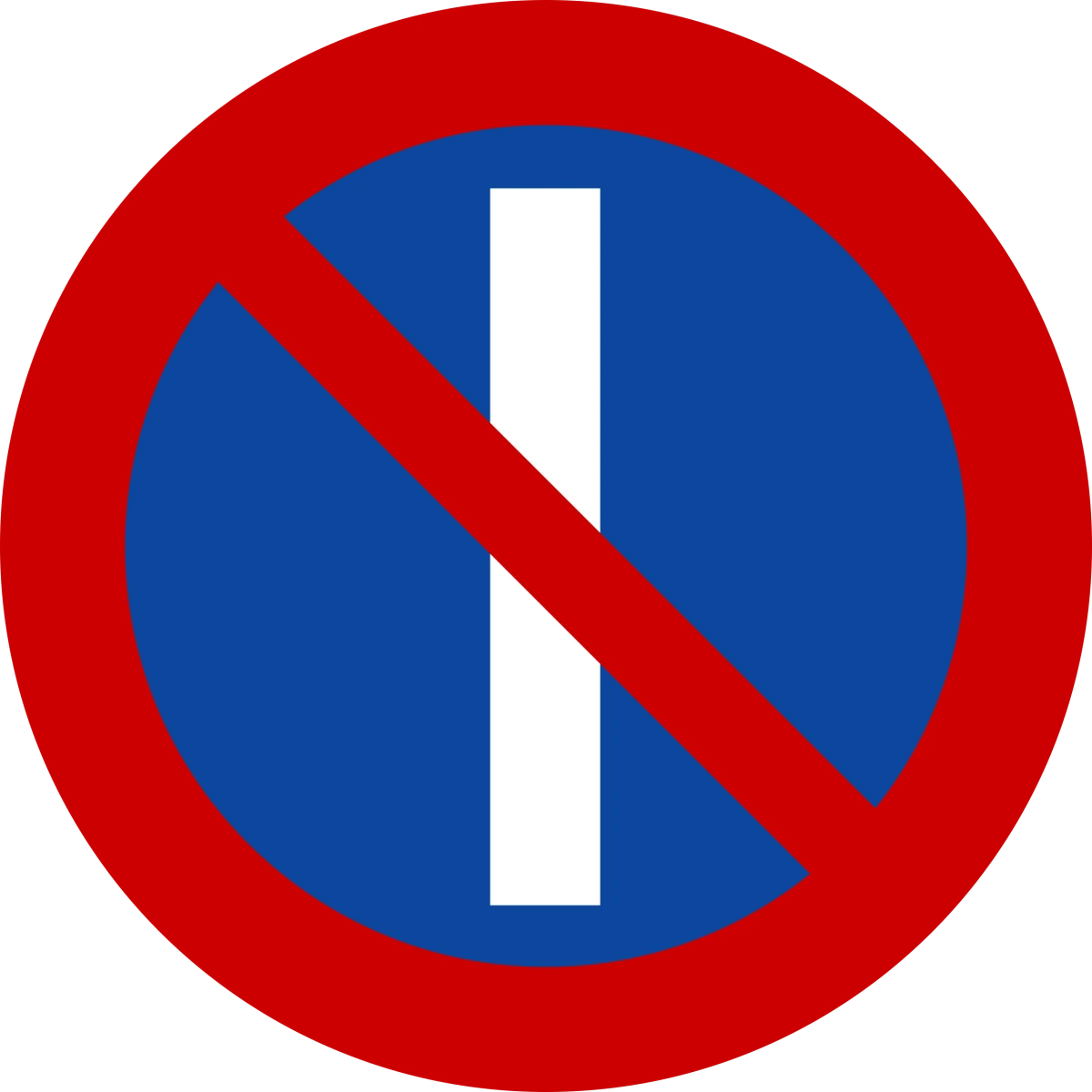
You can’t park or stop on that side of the street during odd months.
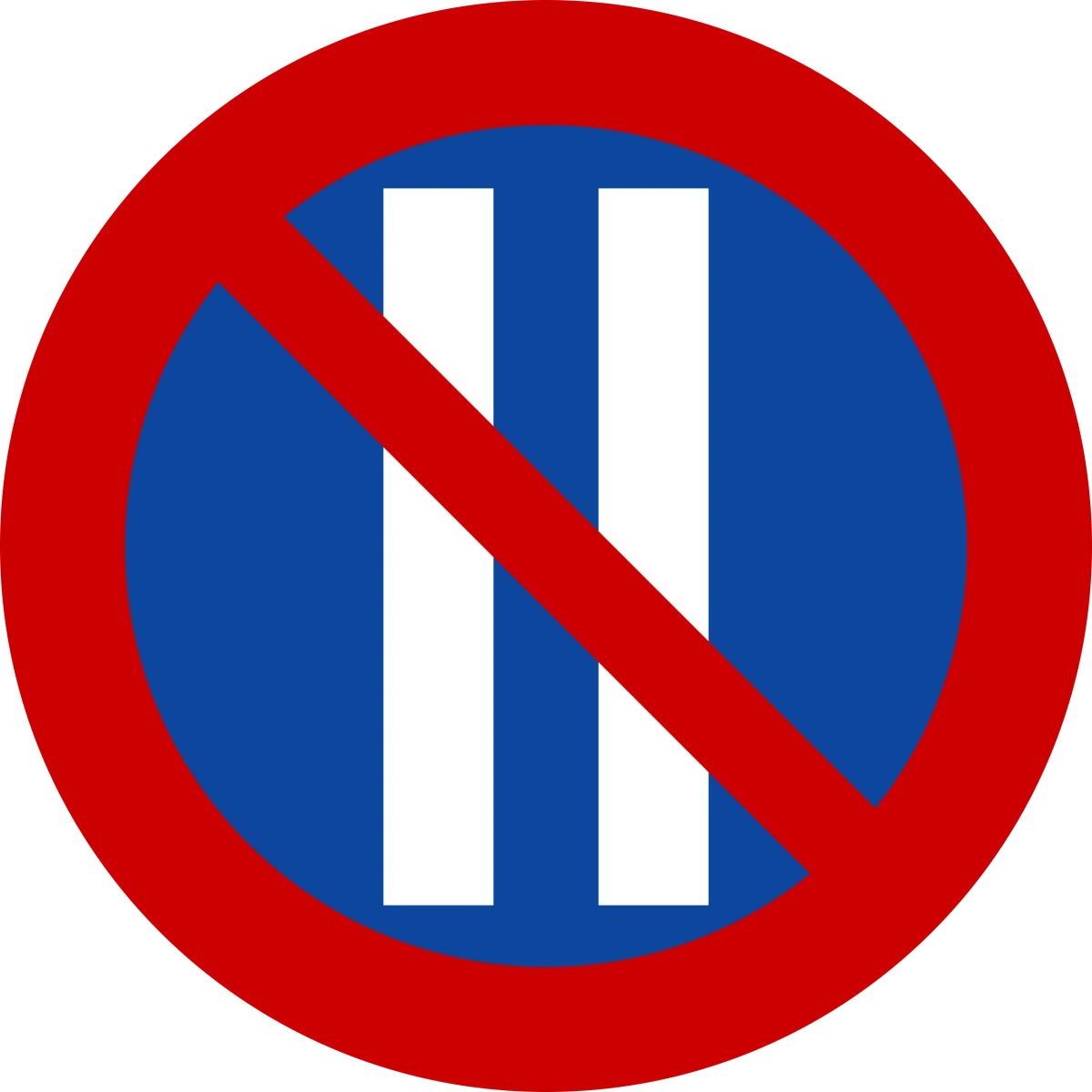
You can’t park or stop on that side of the street during even numbered months.

You can park for a short period. The exact time is a mystery, but it’s safe to assume you can park for a few hours.
Between you and I, like many other Greeks, I’ve parked in a do not park street in the city center for a few hours and have only gotten one parking ticket in the last 5 years.
So I wouldn’t stress about the amount of time you park near this sign. Just don’t leave your car overnight.
Roundabouts

This was something that really confused me in Greece. In the US, priority on a roundabout is given to the drivers already on it, not those entering.
In Greece, it’s the opposite. Drivers entering the roundabout have priority, unless there’s a yield sign, which you’ll see at some roundabouts.
In this scenario car number one has priority and car number two needs to yield.

Yield sign

Priority Sign
Stop Signs
You’ll notice that, especially on rural Greek roads, stop signs are often placed a few metres before the intersection.
In the US, you stop exactly where the STOP sign is. In Greece, you pass the sign and make your stop at the start of the intersection itself, which may or may not be marked with a white line.
In practice, full stops aren’t always enforced and many drivers will roll through if there’s no visible traffic. I wouldn’t recommend doing the same. Cars can appear quickly and unexpectedly, especially since speed limits aren’t always followed.
Fueling your Car Rental
In Greece, there aren’t any self-service fuel stations. You pull up, open your fuel tank, and an attendant comes to your window to ask how much you want and which type of fuel.
Payment is usually done by card or cash while you stay in the car, though in rare cases you may be asked to pay at the cashier inside the station.
With some rental cars, you may get lucky and receive a diesel vehicle, which is far more economical than petrol. Just make sure to tell the station attendant you’re filling up with diesel before they start.
In even rarer cases, you may receive a car that runs on gasoline and liquid gas (LPG). If you have the option to choose, choose this one.
LPG has the lowest cost, but you also have a gasoline tank which will give longer driving range. Also, when you return the car, the car rental supplier does not care about the LPG level, you can return it empty.
They will only look at the gasoline level to match the same level it was when you checked out.

Should I Rent a Car in Greece?
Absolutely. Greece isn’t as well-connected by rail and buses as many other European destinations, and if you want to make the most of your trip, renting a car is often the best option.
The exception is if you’re only staying within the city centres of Athens or Thessaloniki, where public transport will generally cover your needs.
If you plan on heading out on day trips from Athens (there are many!), I highly recommend a car rental.
Pro tip: Athens is generally safe, but petty theft does happen. Locals will tell you not to leave anything visible in a parked car.
Car rental staff often repeat this when you pick up your vehicle, and I’ve been told by multiple companies not to leave even a water bottle inside — there have been break-ins for less. Store belongings in the glove compartment or take them with you.
Stay a Little While
Ready to continue planning your trip to Greece? Check out more of our guides here!
Greek Islands Travel Guide | How to Visit & Plan the Perfect Trip
Skyros Island Travel Guide
The Ultimate Guide to Visiting Kefalonia, Greece | Where to Swim, Eat, and Sleep
How to Spend 4 Perfect Days in Corfu, Greece
Slow Travel in Milos | A Guide to Visiting Milos, Greece
An Escape to Anafi | Santorini’s Rugged, Wild Secret Sister
The Best Souvlaki in Athens? Here’s Why Elvis Is Our Favourite
Athens in One Day: A Local’s 10-Stop Walk Through History and Modern Life
How Many Days in Athens is Enough? (Honest Guide for First-Timers)
Where to Eat in Athens: Aerides Plaka Restaurant
Slow Coffee in Athens: A Visit to Omsom in Koukaki
How to Spend 3 Days in Athens: A Realistic Local Itinerary You’ll Actually Love
Acropolis or Acropolis Museum? Here’s What to See and How to Visit (2026 Guide)
An Alternative 7-Day Greece Itinerary for First-Timers in 2026
8 Best Hotels Near the Acropolis to Book in 2026 (All Budgets!)