The Black Forest: A Guide to Visiting Germany’s Fairytale Region

This article includes affiliate links. If you choose to book through them, you’re directly supporting the free content we create, and we’re so grateful for your support.
The Black Forest is far more than a cake. Yes, it is the region that gave the world chocolate, cherries, and kirsch-soaked sponge, but that is the least interesting thing about it.
Before visiting, we had already spent time nearby in Basel and Alsace, where France, Switzerland, and Germany meet. From the outside, the Black Forest felt like a backdrop, something scenic you pass through on the way to somewhere else.
Planning the trip changed that completely. This is a vast, forested region of spa towns, thermal baths, cuckoo clock folklore, and hearty local food. Villages feel shaped by centuries of tradition, and the landscape is denser and moodier than you expect.
If you are considering a visit, here is what the Black Forest is actually like beyond the stereotype.
What is the Black Forest?
So what is the Black Forest exactly?
Before we visited, I had no real sense of its scale. I pictured it as a small pocket of Germany, maybe a single forested area you could drive through in a day. In reality, the Black Forest is vast.
Covering roughly 6,000 km² in southwest Germany, it’s a region so large that where you go within it completely changes how it feels.
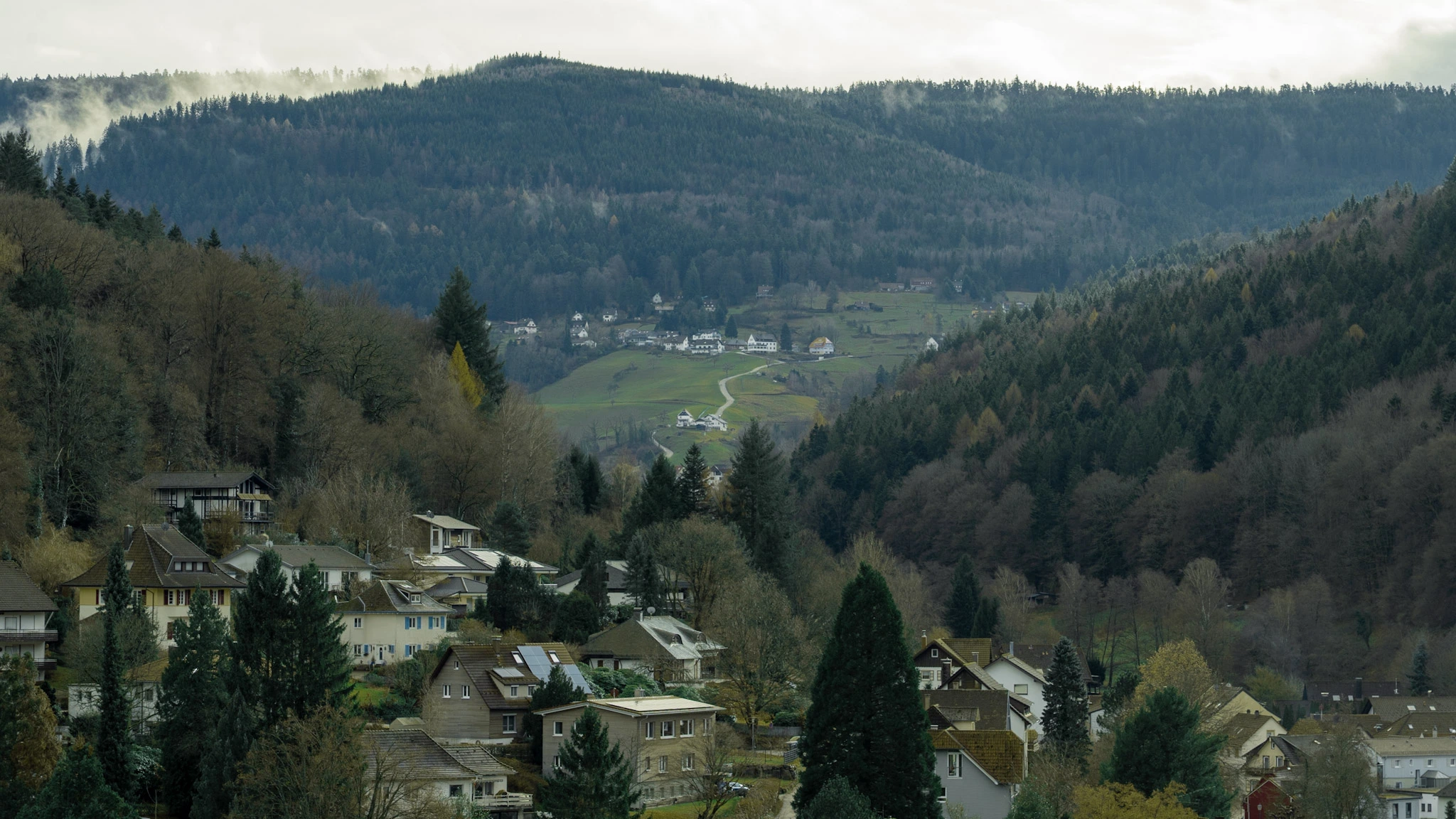
We spent time in both the Northern and Southern Black Forest, and the contrast was striking. The north feels denser and darker, with thick pine forests, winding roads, and historic spa towns tucked into deep valleys. It has a moodier, more enclosed atmosphere.
The south, often referred to as the “Highlands,” opens up into higher elevations with an almost Alpine character. It feels wilder and more rural, with open meadows, lakes, and long hiking routes that stretch across the landscape.
Why is it called the Black Forest?
You’re also probably as curious as I was about where the Black Forest got its name from as I was! The name dates back to Roman times, when the region was known as Silva Nigra, meaning “black forest.”
The Romans used this term because the dense canopy of fir and pine trees blocked much of the sunlight from reaching the forest floor, making the woods feel dark, impenetrable, and mysterious.
In German, the region is called der Schwarzwald, a name that still carries those same shadowy, fairytale associations today.
Why Visit the Black Forest?
Wondering why to visit the Black Forest? There are so many reasons why, and I really think that there is something for everyone!
Outdoor Activities
If you like being outdoors, the Black Forest delivers year-round. In warmer months, it is one of Germany’s best regions for hiking and cycling, with well-marked trails that range from easy valley walks to more demanding routes at higher elevations.
Lakes like Titisee and Schluchsee are popular for swimming, paddleboarding, and lakeside walks. Winter is more about cross-country skiing and snowshoeing rather than large alpine ski resorts.
The variety is what really stands out, with dense forest paths, open viewpoints, and alpine-style landscapes often found within the same day.
Black Forest Foods
The Black Forest has a strong food identity rooted in regional ingredients and traditional cooking.
Many dishes are based around pork, game, mushrooms, potatoes, and dairy, often served in countryside inns and family-run guesthouses.
The region is also known for its breads, smoked hams, and cherry products, thanks to the fruit trees that grow throughout the area. Black Forest cake does come from here, but it is only one part of a broader food culture that focuses on seasonal and locally sourced food.
Spa Towns
One of the most distinctive parts of the Black Forest is its number of spa towns.
Places like Baden Baden, along with smaller thermal villages, have attracted visitors since Roman times because of their mineral-rich waters.
Today, this shows up as historic bathhouses, modern spa complexes, and hotels designed around slower stays. Even without booking a full spa experience, these towns add a calmer and more refined side to the region that contrasts nicely with its forests and mountains.
Fairytale Villages
Many Black Forest villages are known for their half-timbered houses, steep roofs, and forested surroundings.
Towns such as Gengenbach, Triberg, and Schiltach are often associated with the fairytale image of the region, and visually they fit that reputation.
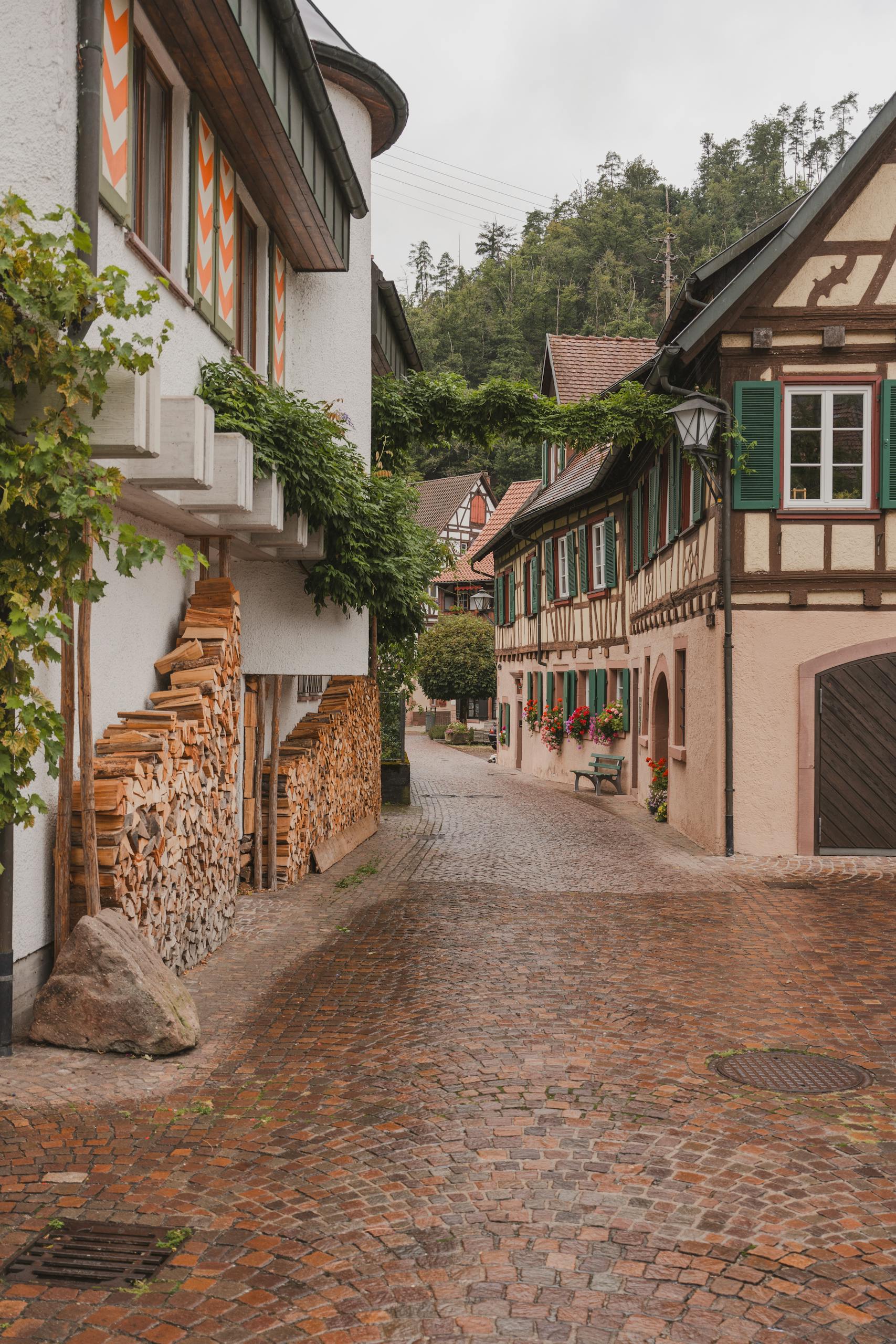
They are compact, walkable, and easy to include on a road trip or slow travel itinerary. Beyond appearances, these villages usually have small museums, bakeries, and local shops that give a clear sense of everyday life in the Black Forest.
When to Visit the Black Forest
Honestly, the Black Forest is suited for just about every season, in different ways. It really just depends on the vibe you’re after.
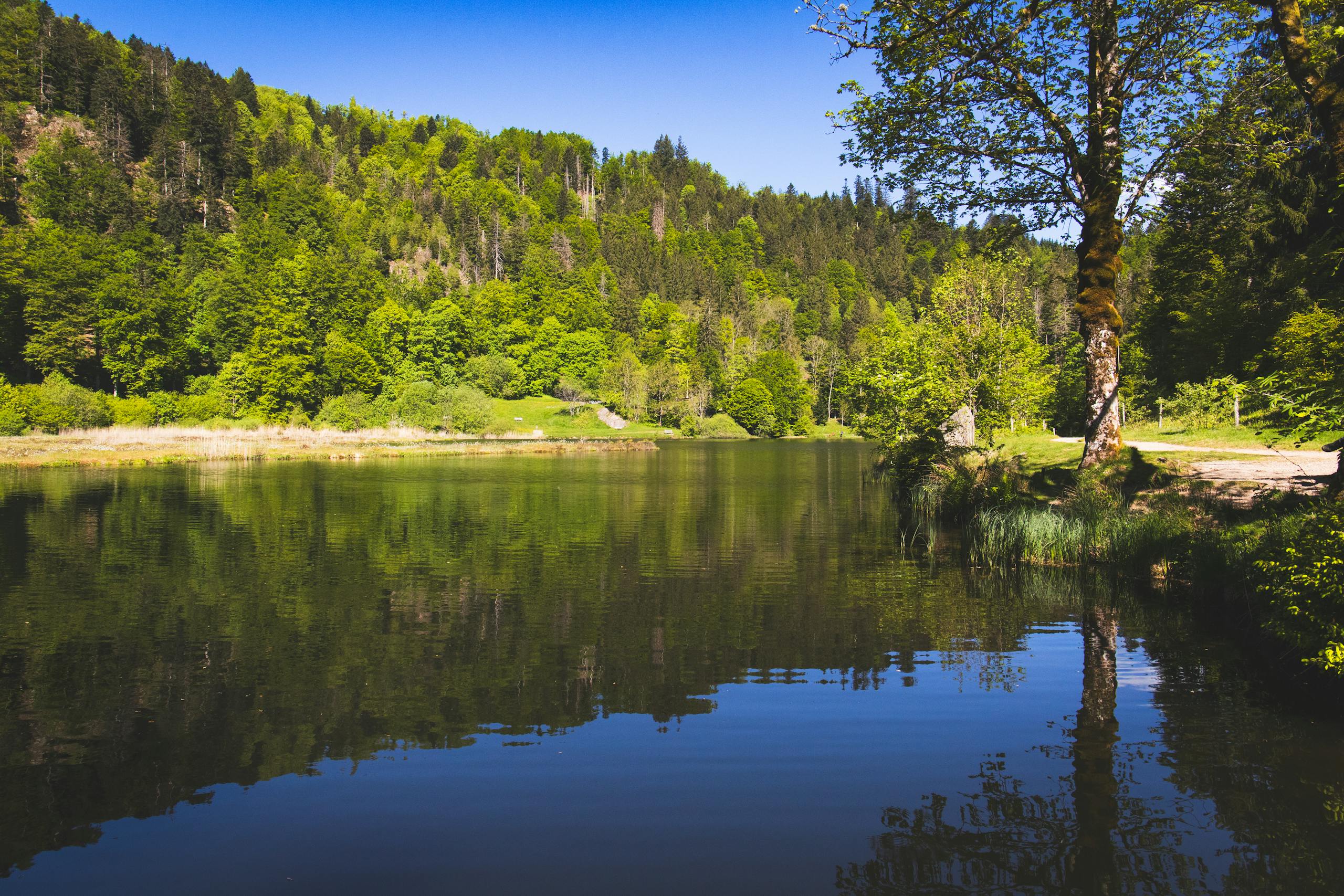
The Black Forest in Summer
Summer is ideal if you’re craving an outdoors-focused trip. This is peak season for hiking, cycling, and spending long days outside.
Trails are fully accessible, beer gardens are busy, and lakes like Titisee and Schluchsee are perfect for swimming and paddleboarding.
It has a relaxed holiday feel, especially in the southern part of the region, with cherry ice cream, lake swims, and long evenings outdoors.
The Black Forest in Autumn
Autumn is one of the most underrated times to visit. Forests shift into deep reds, oranges, and golds, hiking conditions are still excellent, and crowds begin to thin out.
It’s also a great season for food-focused travel, with game dishes, mushrooms, and seasonal menus appearing across the region.
The atmosphere feels quieter and more local, making it a good time for slow travel and scenic drives.
The Black Forest in Spring
This is when the region is brought back to life. Snow melts in the higher elevations, valleys turn green, and waterfalls are at their strongest. It’s a good shoulder season for hiking, spa stays, and village hopping without peak summer crowds.
While lake swimming is usually still too cold, spring is ideal if you want fresh landscapes, fewer tourists, and a balance between outdoor activity and relaxed sightseeing.
The Black Forest in Winter
This is when the region is quiet, atmospheric, and very different from the busy alpine ski regions. Rather than large downhill resorts, the focus is on snow-covered forest walks, cross-country skiing, thermal spas, and slow days in small towns.
This is also when the Black Forest at Christmas really shines. Christmas markets, decorated villages, and traditional inns create that cozy winter atmosphere the region is known for.
We visited during this season, and it felt calm, festive, and far more relaxed than larger Christmas market cities, making winter an ideal time to experience the Black Forest at Christmas without the crowds.
How to Get to and Around the Black Forest
Despite sounding like a pretty remote region, getting to the Black Forest as well as getting around the region is actually pretty easy and accessible. There are plenty of airports nearby, as well as train connections and even tourism board schemes allowing free public transportation for visitors to the region.
How to Get to the Black Forest
Closest Airport to the Black Forest
The closest and most convenient airport for visiting the Black Forest is EuroAirport Basel Mulhouse Freiburg.
It sits right on the borders of Switzerland, France, and Germany, and is ideal if you are visiting the southern or central Black Forest.
From the airport, you can reach towns like Freiburg, Titisee, and Badenweiler in around 45 to 60 minutes by car, making it one of the easiest entry points to the region. We visited the Black Forest during our time in Basel, and this was a perfect addition to our trip considering how close it is.
Another good alternative is Stuttgart Airport, which is better suited for the northern Black Forest. While these airports are slightly farther away, they often offer more flight options depending on where you are travelling from.
Getting to The Black Forest by Train
Thanks to its central location in Europe, the Black Forest is easy to reach by train from many major cities. Towns such as Freiburg im Breisgau, Baden-Baden, Karlsruhe, and Offenburg sit directly on Germany’s high-speed rail network.
These hubs are served by ICE, TGV, Intercity, EuroCity, and overnight City Night trains, making them straightforward entry points into the region.
If you are travelling from France, connections via the SNCF rail network are seamless, particularly from eastern France and Paris. There are even direct TGV services linking Paris with Baden-Baden and Karlsruhe. From the south, the Black Forest is well connected to Switzerland through Swiss Federal Railways, making it an easy addition to a Swiss itinerary.
How to Get Around the Black Forest
The Black Forest by Car
We drove to the Black Forest from Basel and were really glad we had a car. The region is spread out, and many of the places you will likely want to visit are not especially close together.
While public transport in the Black Forest is generally reliable, having a car gives you far more flexibility and saves a lot of time.
If you are working with a shorter itinerary, driving makes a big difference. It allows you to reach lakes, trailheads, smaller villages, and viewpoints without planning your day around train and bus schedules.
For us, having a car made the trip feel easier and more relaxed, especially when moving between different parts of the Black Forest.
Ready to rent a car for your Black Forest trip? For the past 5 years, we’ve trusted Discover Cars for our rentals.
Getting around The Black Forest by Train
Travelling around the Black Forest by train is very doable, especially if you are staying in one of the larger towns. The regional rail network connects places like Freiburg im Breisgau, Baden-Baden, Offenburg, and Donaueschingen, making it easy to move between main hubs without a car.
One big advantage of using public transport in the region is the KONUS Guest Card. If you are staying in most hotels, guesthouses, or holiday apartments in the Black Forest, you will receive this card as part of your stay.
It allows free travel on regional trains and buses throughout the Black Forest, which can significantly reduce transport costs and make train travel an even more appealing option.
That said, trains mainly serve towns and larger villages. Many scenic areas, lakes, trailheads, and smaller villages still require buses or careful planning. Connections are generally reliable, but travel can be slower and less flexible than driving, especially if you are short on time.
If you are staying longer or prefer a slower pace, getting around the Black Forest by train works well, particularly when paired with local buses and the KONUS Guest Card.
For shorter stays or more rural itineraries, trains are best used for longer transfers between towns rather than everyday exploration.
How Long in the Black Forest?
How long you should spend in the Black Forest really depends on what you want to see and do. If you plan to visit a few of the region’s charming towns and fit in a hike or two, a weekend in the Black Forest can work well.
If you want to properly explore the region, especially both the Northern and Southern Black Forest, you will need more time. You could easily spend a full week here and still feel like there is more to see.
We stayed for six days, which felt like a good amount of time, although there was not enough snow during our visit for winter activities.
With that in mind:
Two to three days in the Black Forest are ideal if you are visiting from a nearby area and want a short nature-focused break with good food and pretty towns.
Five to seven days in the Black Forest are perfect if you want to explore more widely or stay in one place and slow down, with time for hikes, spa visits, and relaxed days without rushing.

Where to Stay in the Black Forest
We found that the best places to stay in the Black Forest were smaller towns that have everything you need day to day, feel slightly remote and tucked into nature, yet are still close enough to drive to other areas we wanted to explore.
You will also notice that many towns in the region start with “Bad,” which in Germany usually indicates a historic thermal spa town, often centred around natural mineral waters and wellness traditions.
Northern Black Forest
In the Northern Black Forest, we stayed in Bad Herrenalb, and it turned out to be a great base. It has a calm, spa-town feel, is surrounded by forest, and is well-connected for exploring nearby areas. It felt quiet without being isolated, which we really appreciated.

That said, if we were to return to this part of the region, we would love to stay in Baden-Baden. It is undeniably charming, with elegant architecture, historic bathhouses, and a more refined atmosphere.
Baden-Baden also works well if you want easy access to restaurants, spas, and cultural sights while still being close to nature.
We stayed at Schwarzwald Panorama during our time in Bad Herrenalb and were really impressed by the stay, not just by what was included but also by how the hotel operates as a whole.
There is a big emphasis on sustainability and organic, local food, and the setting feels very true to the region. The hotel is surrounded by dense forest, and waking up to forest views right outside our window made the stay even better.
You can check out our full review of our time at Schwarzwald Panorama here.
Southern Black Forest
In the Southern Black Forest, we stayed just outside Titisee-Neustadt, in the small village of Saig near Lenzkirch. This area felt more open and rural, with easier access to lakes, hiking trails, and higher elevation viewpoints. Staying slightly outside a main town gave us that tucked into nature feeling while still being close to everything we wanted to see.
If you prefer a larger base with more energy, Freiburg im Breisgau is a great option. It is a lively university town with a beautiful old centre and one of the most striking backdrops in the region, sitting right at the edge of the Black Forest hills. Freiburg works especially well
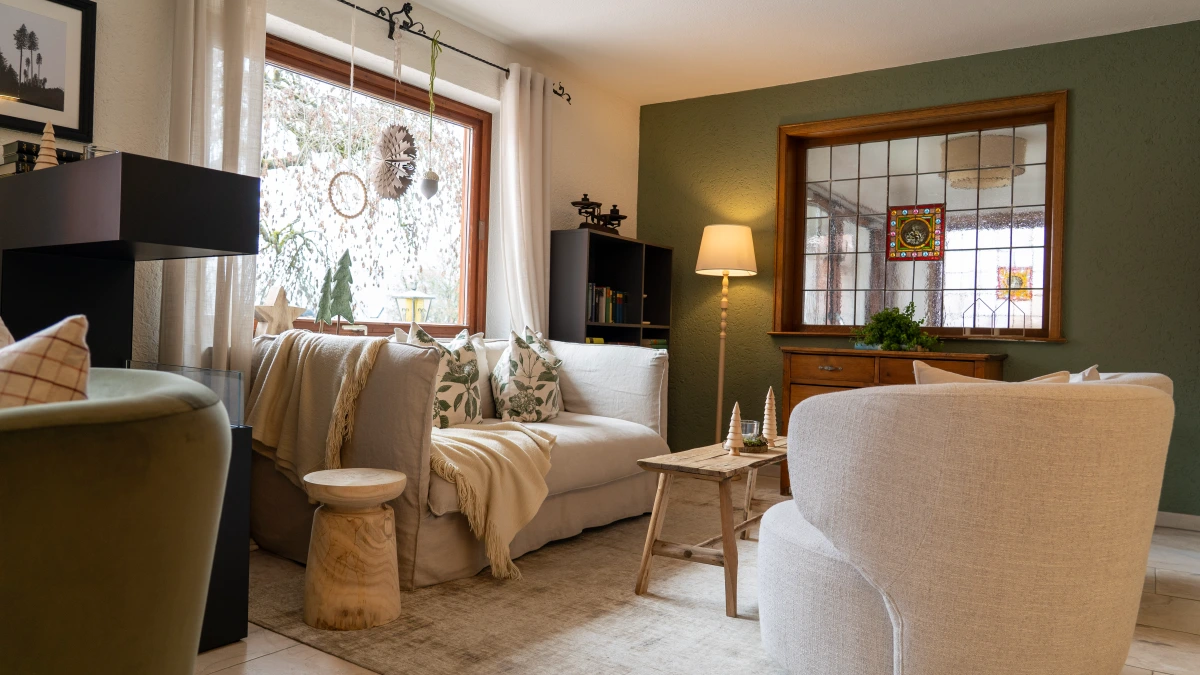
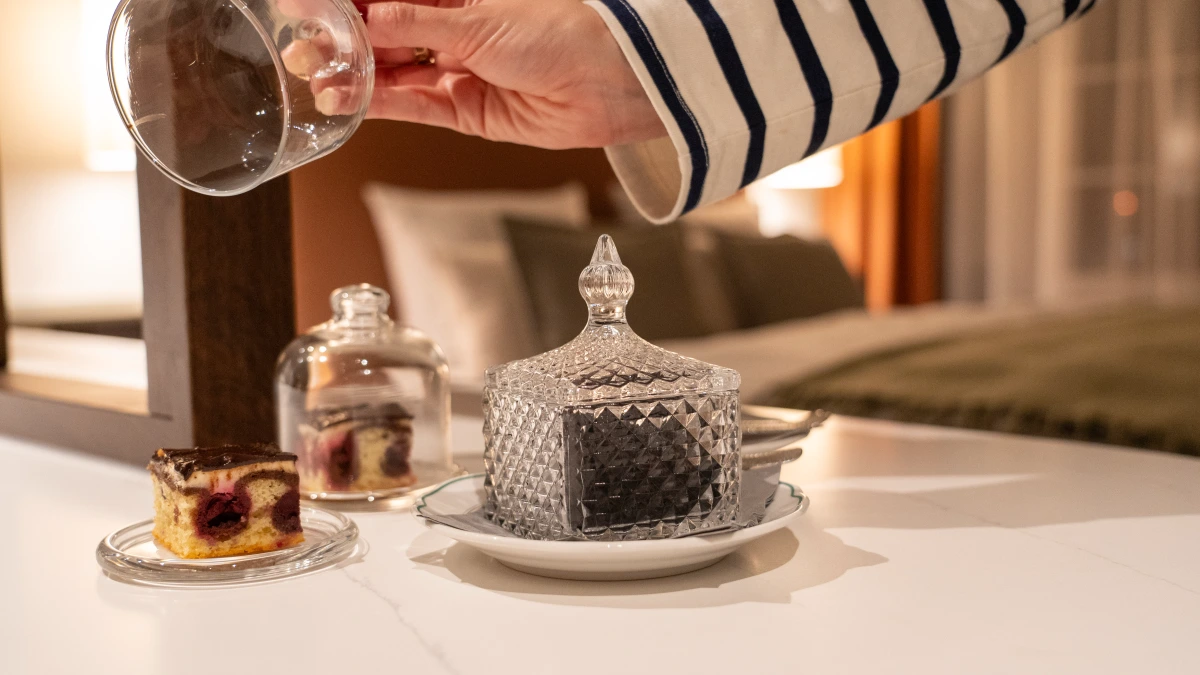
Our base in the Southern Black Forest was Boutique Hotel Ochsen in Saig, and it is honestly one of the best hotels I have stayed at in a long time. The historic building was rebranded and renovated in 2024, and they did such a good job. It feels like stepping into a cozy home, but elevated in the way a hotel should be.


For our full review of our stay at Boutique Hotel Ochsen, head over here.
Things to do in the Black Forest
Visit the Fairytale Towns
I’m a sucker for beautiful towns tucked in the middle of nature, and the Black Forest really delivered on this! If you’re looking for the best places to visit in the Black Forest that will likely steal your heart (and camera!), these four below are a great starting point.
Baden Baden
Probably one of the most popular towns in the Black Forest, and with good reason, Baden-Baden is so good they named it twice. Located in the northwest corner of the region near the French border, it was founded over 2,000 years ago as a Roman spa town, built around the idea of restoring wellbeing through thermal waters and fresh air.
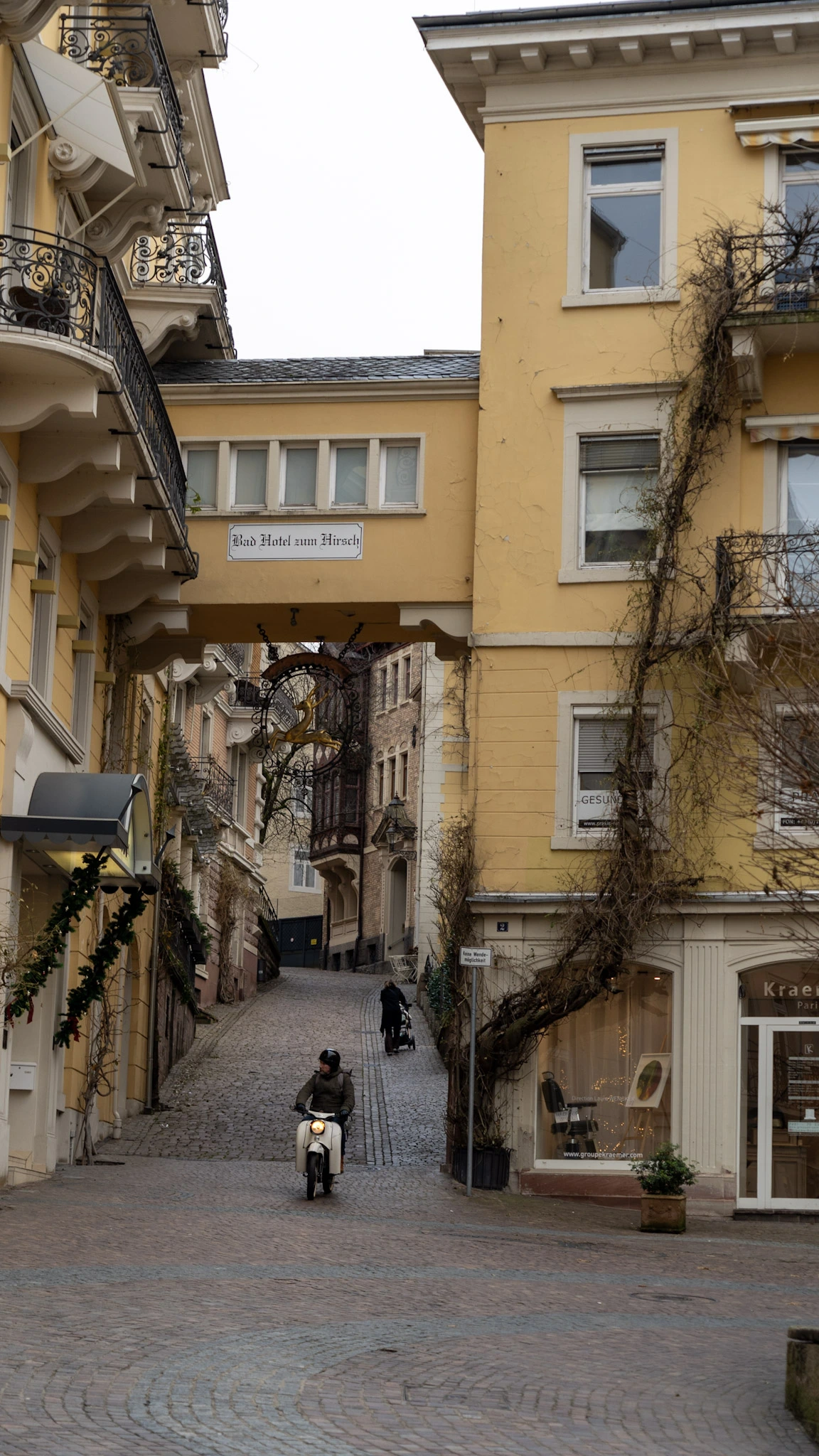

Today, Baden-Baden still centres around wellness, but with a more refined feel. Elegant architecture, tree-lined streets, and its position at the edge of the forest give it a quiet luxury atmosphere without feeling over the top.


We loved visiting Baden-Baden and have it high on our list for where to stay next time we’re in the Northern Black Forest, and maybe we’ll stay at a Baden Baden spa hotel!
The tradition of wellbeing continues through modern thermal baths that combine historic Outside of the spas, you can wander through small museums, head to viewpoints like Battertfelsen for forest views, or simply sit with a cappuccino in one of the town’s idyllic cafés.
Freiburg
If you enjoy a university town atmosphere, spending time in Freiburg im Breisgau is one of the best towns in the Black Forest.
Located in the southern part of the region, Freiburg sits right at the edge of the Black Forest Highlands and is one of the best places to visit in the Black Forest if you want a balance of culture, food, and easy access to nature.
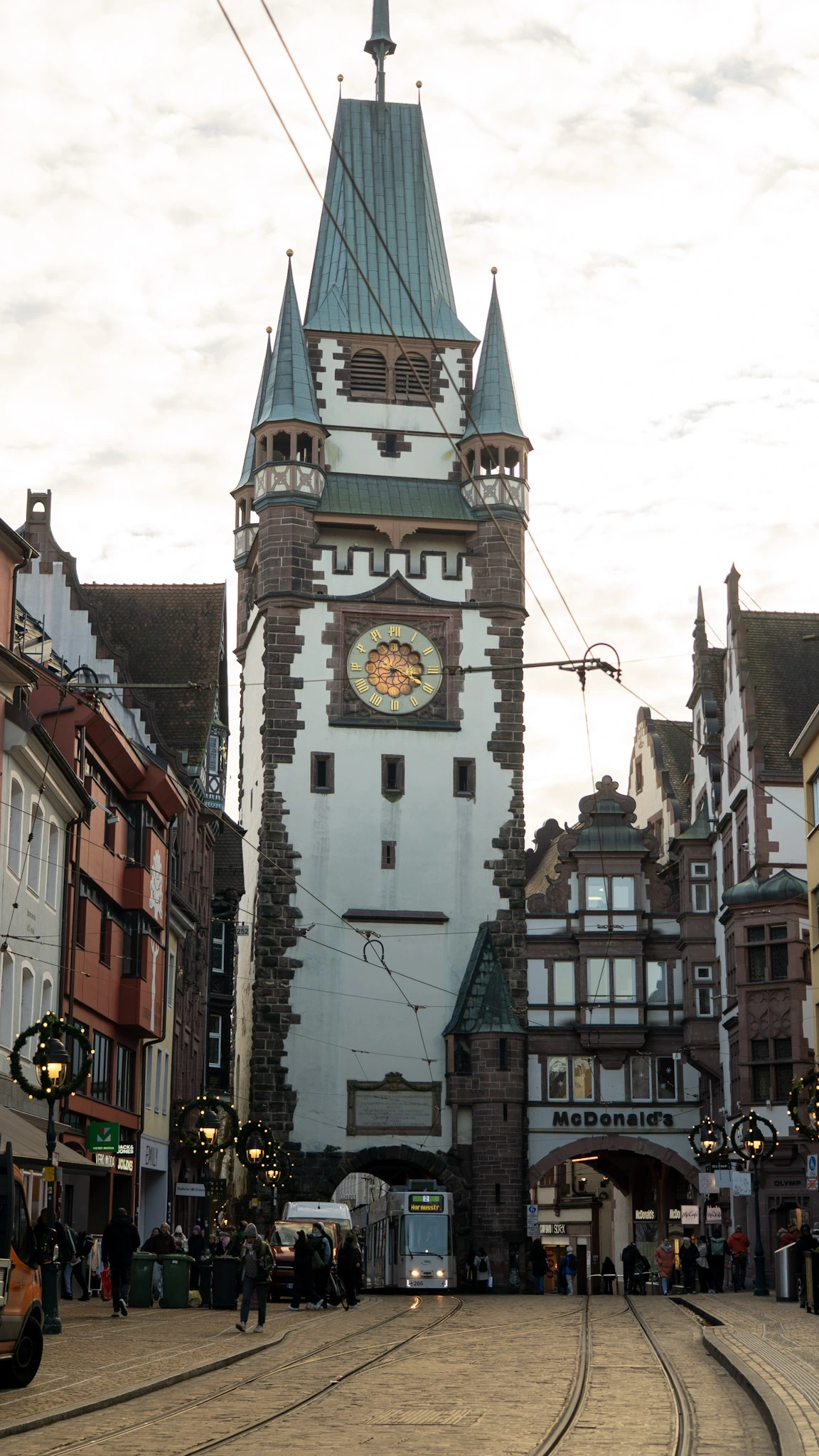
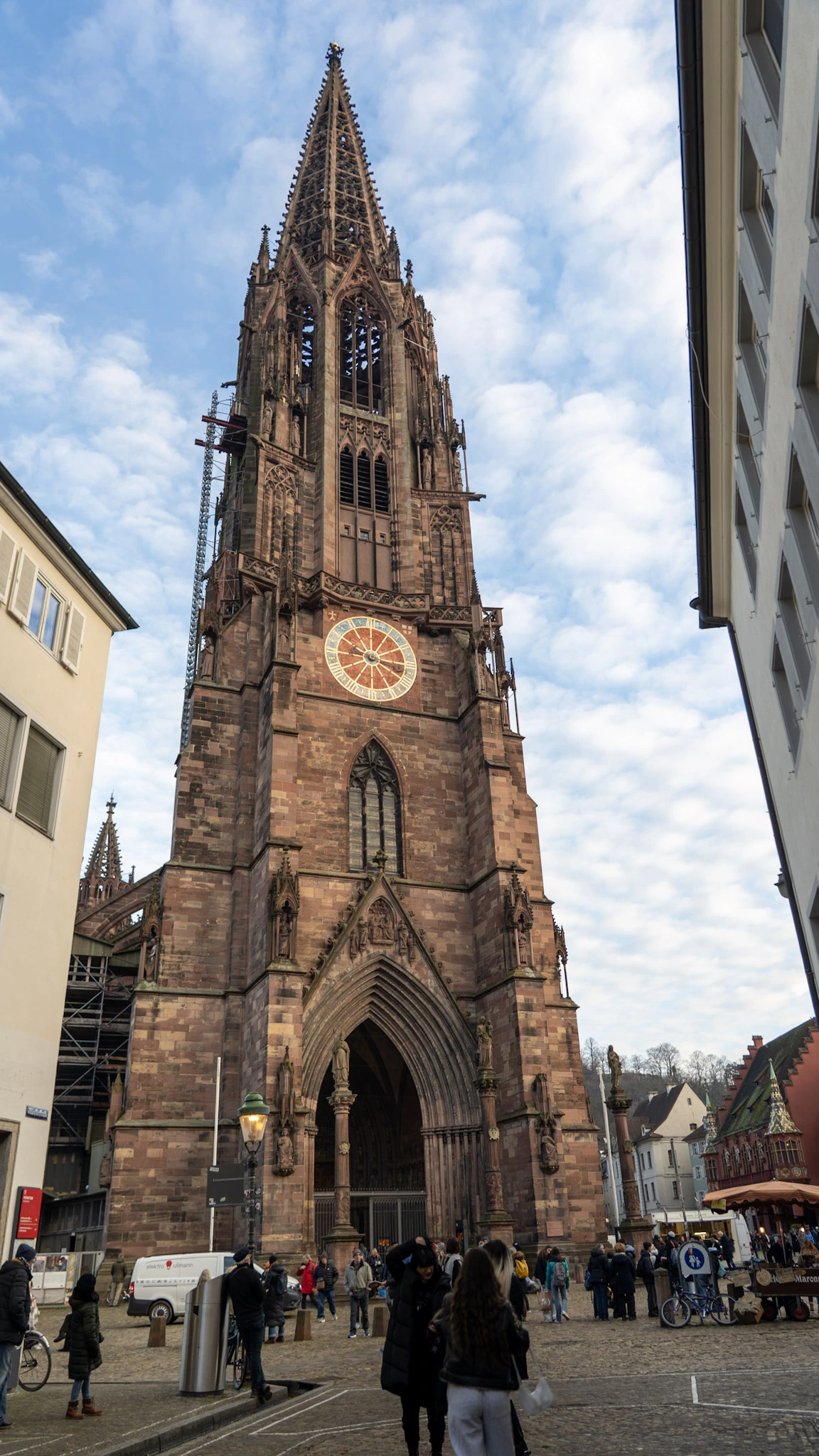
Freiburg is also an ideal Black Forest day trip from Basel, with the journey by car taking just under an hour. This makes it a popular choice if you are based in Switzerland and want to experience the Black Forest without committing to an overnight stay.
There are plenty of things to do in Freiburg, despite its relatively compact size. You can wander the old town, visit the cathedral, follow the small canals that run through the streets, and sit in one of the many cafés or wine bars around Münsterplatz.
Freiburg also surprised us with its food scene. The Freiburg sausage, in particular, is easily my favourite sausage I have had in Germany so far, especially when grabbed from the stand outside of the cathedral.


Titisee
Located in the Southern Black Forest, Titisee is one of the most well-known lake towns in the region. It sits at a higher elevation and feels more alpine than many other places in the Black Forest, which makes it especially appealing if you are planning to spend time outdoors.

Titisee is a great place to take a walk in the Black Forest, with well-marked trails that start near the lake and lead into surrounding forests and higher viewpoints. You can easily combine a hike with a lakeside walk, a boat rental, or a relaxed meal in town, making it a good base if nature is your main focus.
Calw
Calw is located in the Northern Black Forest and feels more storybook than scenic. The town is known for its half-timbered houses, narrow streets, and traditional layout, giving it a strong fairytale feel.
Calw works well as a short stop while exploring the northern part of the region. It is compact and easy to explore on foot, with small cafés, shops, and riverside walks that make it a pleasant break from forest drives and hiking days.

Spend Time at the Spa
The Black Forest is famously known for its thermal waters, spas, and spa hotels, so spending time at a Black Forest spa feels like a no-brainer.
This was actually our main reason for coming here before heading to Basel and its busy Christmas markets, and it ended up being the perfect reset. Slowing down in the spa, surrounded by forest, felt like the best possible way to relax.
Honestly, is there a better place to unwind than in nature?
Historic Thermal Baths
For historic thermal baths, the best place to head to is Baden Baden and spend time at the Friedrichsbad Spa. It’s a strikingly ornate complex following the Roman-Irish bathing ritual, known for its marble interiors and surrounding fresh air.
Good to know: Most German spas are nude, which felt a little uncomfortable for us at first as Americans. Once we got used to it, though, it really wasn’t a big deal. On Wednesdays and Saturdays, Friedrichsbad Spa offers designated bathing days when swimsuits are required.

Modern Spa Hotels
If you are ready to go all out and have the spa at your disposal whenever you want, choosing a spa hotel in the Black Forest is the way to go. There are plenty of options, with something to suit different budgets and travel styles. In my opinion, the best hotels in the Black Forest are spa hotels!
We loved our stays at Boutique Hotel Ochsen and Schwarzwald Panorama, especially the fact that we could spend full days moving between the sauna, steam room, and pools without ever needing to leave. Spa hotels here also tend to place a strong focus on food and overall comfort, which makes the entire stay feel both easy and enjoyable.

Get out in Nature
One of the biggest reasons to visit the Black Forest is simply how easy it is to get outside. Whether you are visiting in summer or winter, nature is always close and accessible, even if you are staying in a town.
Hiking in the Black Forest
Hiking is one of the main reasons people visit the Black Forest, and the trail network here is extensive and very well organised. The region is home to some of Germany’s most famous long-distance hiking routes, including the Westweg, which crosses the Black Forest from north to south, as well as the Mittelweg and the Schluchtensteig, which is known for its dramatic gorges and rivers in the southern part of the region.

You do not need to tackle a multi-day hike to enjoy it, though. Many sections of these routes can be walked as shorter day hikes, and countless local trails start directly from towns, lakes, and villages. Areas around Titisee, Schluchsee, and the southern Black Forest Highlands are especially good for well-marked, scenic hikes that are easy to fit into a relaxed Black Forest itinerary.
Winter Sports & Activities
The Black Forest is a great winter destination if you are drawn to slower, outdoorsy winter activities rather than big alpine resorts. Tobogganing, sledding, cross-country skiing, downhill skiing, and snowshoeing are all popular here, especially in the higher elevation areas of the southern Black Forest.
The ski areas are also well suited to beginners, with gentler slopes that feel far less intimidating than larger alpine resorts, making it a good place to try skiing for the first time.
There is something very satisfying about spending a day out in the snow and then heading back to your hotel for a hot chocolate, a warming plate of goulash or spaetzle, and maybe even a spa session.
The best areas for winter sports are around Feldberg, the highest peak in the Black Forest, which tends to have the most reliable snow. Nearby towns like Hinterzarten and Todtnau are also well known for cross-country skiing, sledding runs, and winter walking trails.
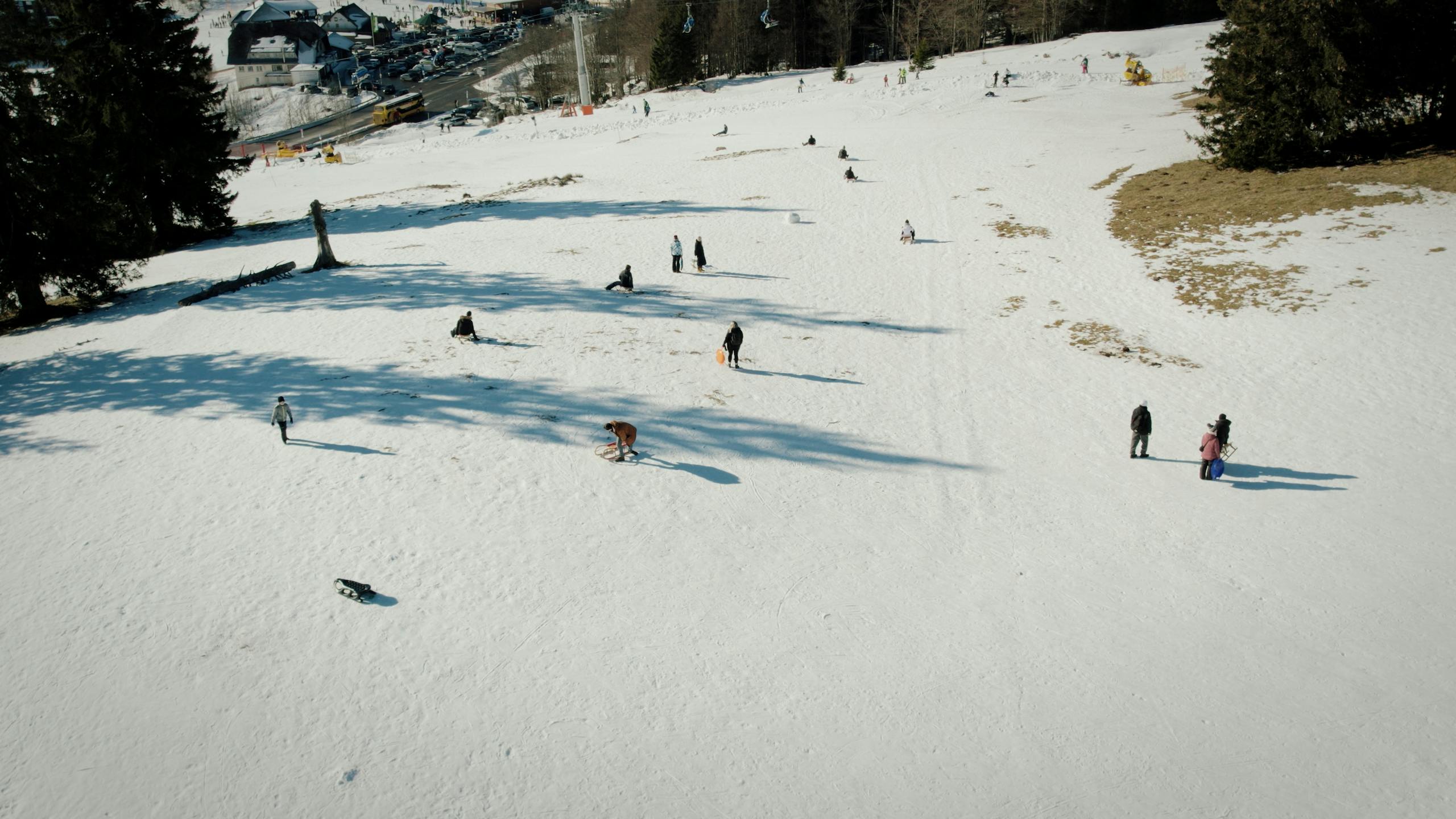
The winter sports season in the Black Forest usually runs from late December through early March. While snowfall can happen earlier or later, January and February are generally your best bet if winter activities are a priority during your visit.
Swimming in the Black Forest
Swimming is a big part of summer in the Black Forest, especially on warmer days after a hike.
Summer temperatures in the region usually sit in the mid to high 20s Celsius (mid to high 70s Fahrenheit), and during heatwaves it can climb into the low 30s Celsius (mid to high 80s Fahrenheit). On those days, lakes and outdoor swimming spots become especially appealing.
The Black Forest has several clear, swimmable lakes with designated swimming areas, platforms, and grassy spots for relaxing by the water.
Titisee is one of the most popular places to swim, with calm water and easy access from town. Nearby Schluchsee is larger and often quieter, offering more space for swimming, paddleboarding, and spending a full afternoon by the water.
Many towns also have outdoor swimming pools and lake-style lidos that open in summer, which are a good option if you prefer a more structured swimming area. Whether it is a quick dip or a longer lakeside afternoon, swimming is an easy and refreshing way to cool off in the Black Forest.
Try Traditional Black Forest Foods
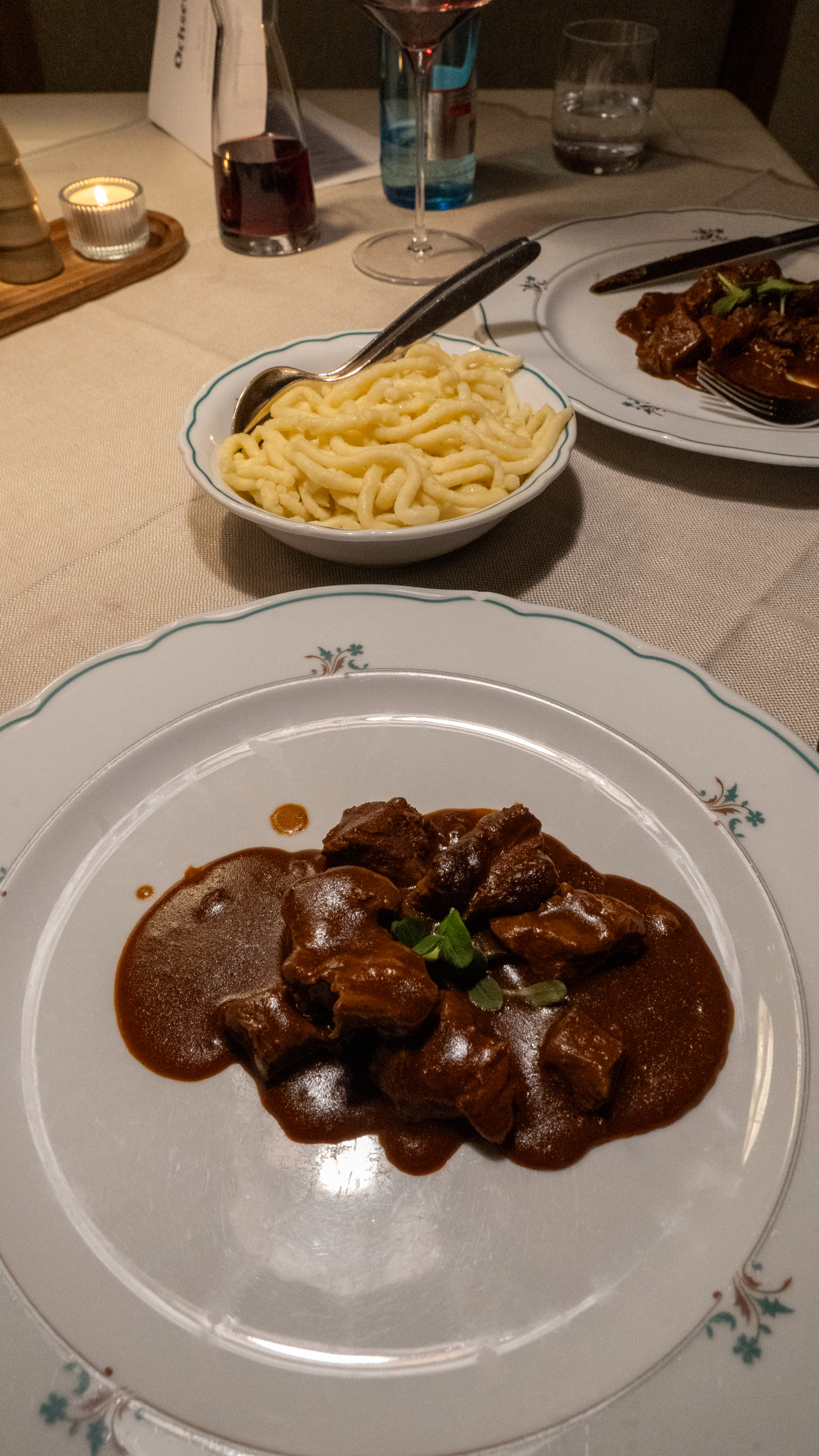
Traditional food in the Black Forest is pure comfort food, the kind of meals that feel especially good after a day outside. The region places a strong emphasis on local, organic, and high-quality ingredients, and you can really taste it in the food, whether you are eating at a countryside inn or a small family-run restaurant.
Cherries are a big part of the Black Forest’s food culture, and they are genuinely delicious here, especially when in season. Of course, that also means plenty ofBlack Forest cake, which lives up to the hype with its layers of chocolate, cream, cherries, and kirsch.
Game dishes are also common, and this was actually the first time Maria tried venison. She was genuinely impressed. Overall, eating in the Black Forest feels hearty, local, and deeply tied to the landscape, making food a big part of the experience rather than just something you fit in between activities.
The Black Forest at Christmas
We were so glad we visited the Black Forest at Christmas. Think snowy surroundings, comfort food, mulled wine, and, best of all, Christmas markets without the huge crowds you find in larger German cities. The Black Forest Christmas markets feel calmer and more local, with each town offering a slightly different atmosphere.
These are some of the best ones to visit:
Ravenna Gorge Christmas Market
The Ravenna Gorge Christmas Market is one of the most unique Christmas markets in the Black Forest. It is held in the Ravenna Gorge in the southern Black Forest, near Hinterzarten, with stalls set along the gorge beneath a dramatic railway viaduct. It’s such a unique setting, and looks gives off true Narnia vibes with the market tucked in the heart of the snowy forest!
We did not manage to visit as it is quite exclusive and tickets sell out quickly, often well in advance. Entry is limited to control numbers, which is part of what makes it so special.
Even so, it is high on our list for a future visit, as it looks completely different from the more traditional town square markets and feels far more immersive and atmospheric.

Tip: Make sure to be up to date for when tickets are released for the 2026 season here! Tickets typically go on sale in early October.
Freiburg Christmas Markets
The Christmas markets are one of the best things to do in Freiburg! They’re a great option if you want something festive but still relaxed.
Rather than one large market, Freiburg has several smaller markets spread throughout the old town, which makes it feel easy to wander without being overwhelmed.
You will find stalls around the cathedral and in nearby squares, selling classic Christmas market food, mulled wine, and handmade gifts.
What we liked most is that the markets feel very local and are easy to combine with sightseeing, café stops, and dinner in the city.
If you are doing a Black Forest day trip from Basel or staying nearby, Freiburg’s Christmas markets are an easy and enjoyable stop.
One Week Black Forest Itinerary
With a region as large as the Black Forest, planning a trip can feel overwhelming at first. To make it easier, this Black Forest itinerary shows how I would organize your time, based closely on how we planned our own Black Forest travel itinerary.
It covers both the Northern and Southern Black Forest, giving you a balanced way to see the region in one week without rushing.
Days 1-3 — Southern Black Forest
For the first three days of this Black Forest itinerary, I recommend focusing on the southern part of the region, often referred to as the Highlands. You can either stay in a smaller village like Saig, as we did, or base yourself in Freiburg if you prefer having more amenities and a livelier atmosphere while still being close to nature.
If you’re flying into Basel, this is the most convenient starting plan for your itinerary.
Day 1 – Titisee & Feldberg
Start your trip around Titisee, with a lakeside walk, a swim in warmer months, or a winter stroll if you are visiting in colder seasons. From here, head up toward Feldberg for views, light hiking, or winter activities, depending on the time of year.
Day 2 – Freiburg
Spend the day exploring Freiburg im Breisgau. Wander the old town, visit the cathedral, follow the small canals through the streets, and enjoy the food scene. This is a good day to slow down a little and enjoy a mix of culture and city life.
Day 3 – Hike Triberg Waterfalls
Head north to hike around the Triberg Waterfalls, one of the most famous natural sights in the region. The trails are easy to follow and can be adapted to different fitness levels, making this a solid half-day before moving on.
Days 4-7 — Northern Black Forest
For the second half of this Black Forest itinerary, I suggest shifting your base to the Northern Black Forest. Staying in a spa town like Baden-Baden is ideal if you want more restaurants and wellness options, while smaller towns such as Bad Herrenalb, where we stayed, offer a quieter and more tucked-away feel.
Day 4 – Baden Baden
Spend the day in Baden-Baden, focusing on spa time, strolling the elegant town, and enjoying the slower pace. This is a great reset day, especially if you book time at the thermal baths. If you’re visiting during the winter, we LOVED the Christmas markets here and wished we’d planned for more time.
Day 5 – Black Forest High Road
Drive along the Schwarzwaldhochstrasse, stopping at viewpoints, short walking trails, and lakes along the way. This route gives you a real sense of the northern landscape and is one of the most scenic drives in the region.
Day 6 – Calw & Surrounding Villages
Visit Calw and nearby villages for a fairytale town experience. This is a relaxed day for wandering half-timbered streets, cafés, and small shops without a packed schedule.
Day 7 – Spa Day or Forest Walks
End your trip with a slower day, either returning to a spa town like Bad Herrenalb or choosing an easy forest walk near where you are staying. It is a good way to wrap up the week without rushing before heading onward. You could also just plan for 6 days in the Black Forest and slash this final day.
We absolutely loved visiting the Black Forest and would love to return in warmer weather to experience a different side of it. Despite how well-known the region is, it still feels very local and not overrun by tourists, which makes it easy to truly enjoy this special part of Germany.