10 Tips for Renting a Car in Ireland in 2026
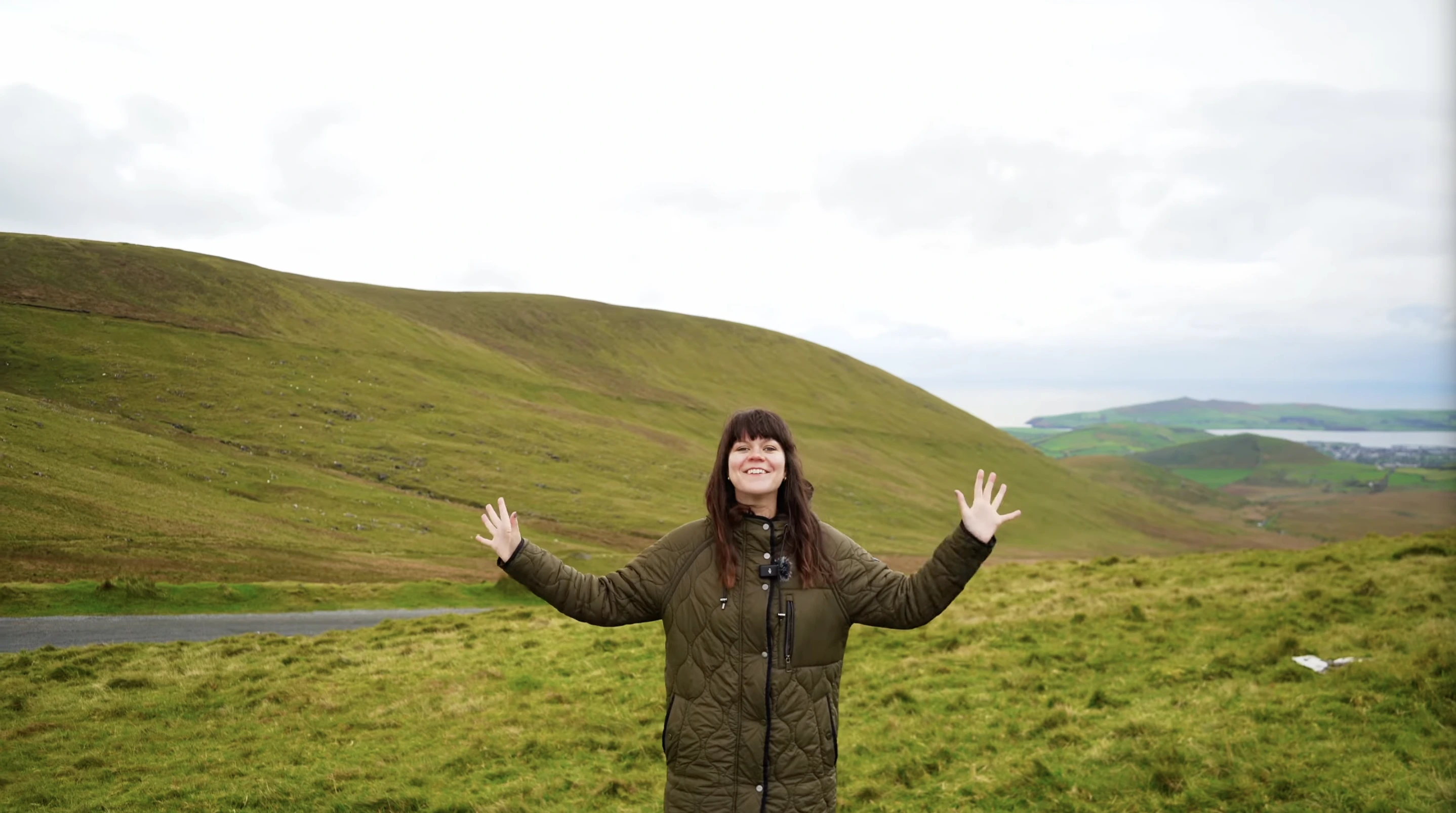
Our tips after three road trips
This article includes affiliate links. If you choose to book through them, you’re directly supporting the free content we create, and we’re so grateful for your support.
Ireland is one of those places Olivia and I keep going back to. We’ve visited three times, always in mid to late autumn, and rented a car on every trip.
Our first visit took us from Dublin to Galway. On the second, we explored the southwest, travelling from West Cork through parts of the Wild Atlantic Way, Killarney National Park, the Ring of Kerry and the Dingle Peninsula. It’s still one of our favourite trips we’ve ever taken. The third time, we based ourselves in the Burren and drove around the surrounding region.
Those trips have given us plenty of reasons to recommend exploring Ireland by car. They have also shown us why choosing your rental carefully matters, especially once you leave the main roads.
If you’re planning an Irish road trip, these are the things I’d check before booking, along with some practical advice for the places we’ve explored ourselves.
Table of Contents
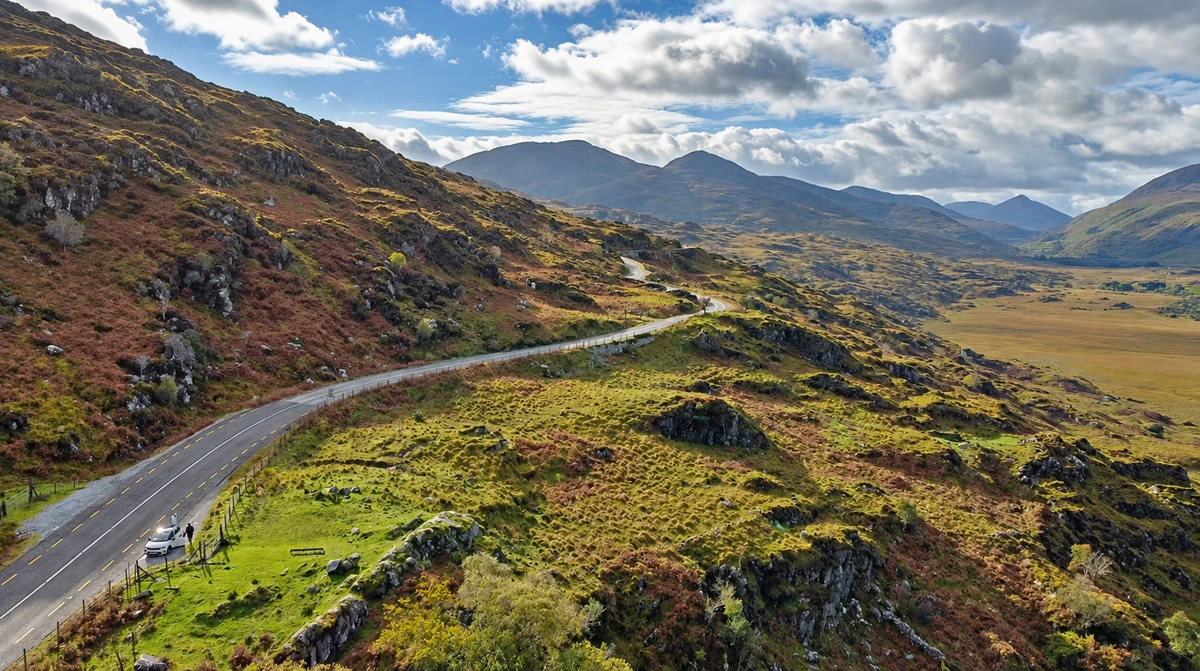
1. Decide when a car will make the biggest difference
For us, renting a car in Ireland has always been the best way to see the places we’re interested in.
You can travel between major cities by train or coach, but the coast, countryside and walking routes are a different story. Getting between several nature stops in one day can take much more planning, and some places have very limited connections.
Having a car made our southwest trip possible in the way we wanted to do it. We could connect different parts of the coast and spend time around Killarney and Dingle without building the whole itinerary around transport schedules.
If you’re spending your first few days entirely in Dublin, though, consider collecting the car when you’re ready to leave. You’ll save on rental days and city parking, and the car will be much more useful once you’re heading into the countryside.
2. Compare rentals before arriving at Dublin Airport
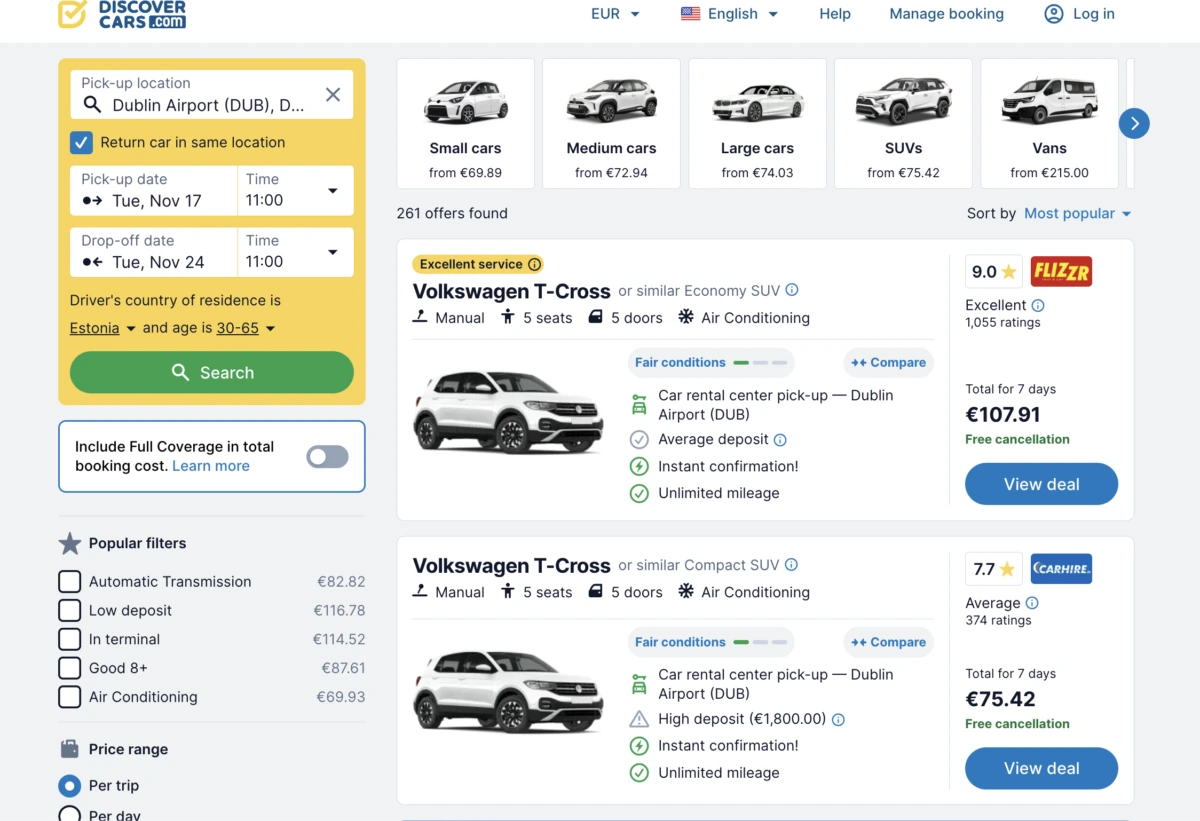
We usually rent from Dublin Airport, where we land, and we always use Discover Cars to compare the options. In fact, Discover Cars is the only platform I have used for the last five years.
It’s a comparison and booking platform that lets you compare car hire companies at your chosen location. I love how easy it is to check each company’s important details before booking. That’s especially useful because deposits, collection arrangements, and rental conditions vary from one provider to another.
Before booking, I would compare:
- The total rental price and any extra charges.
- The supplier’s reviews.
- The deposit and insurance excess.
- The fuel policy and mileage allowance.
- Whether you collect the car at the airport or from a nearby office.
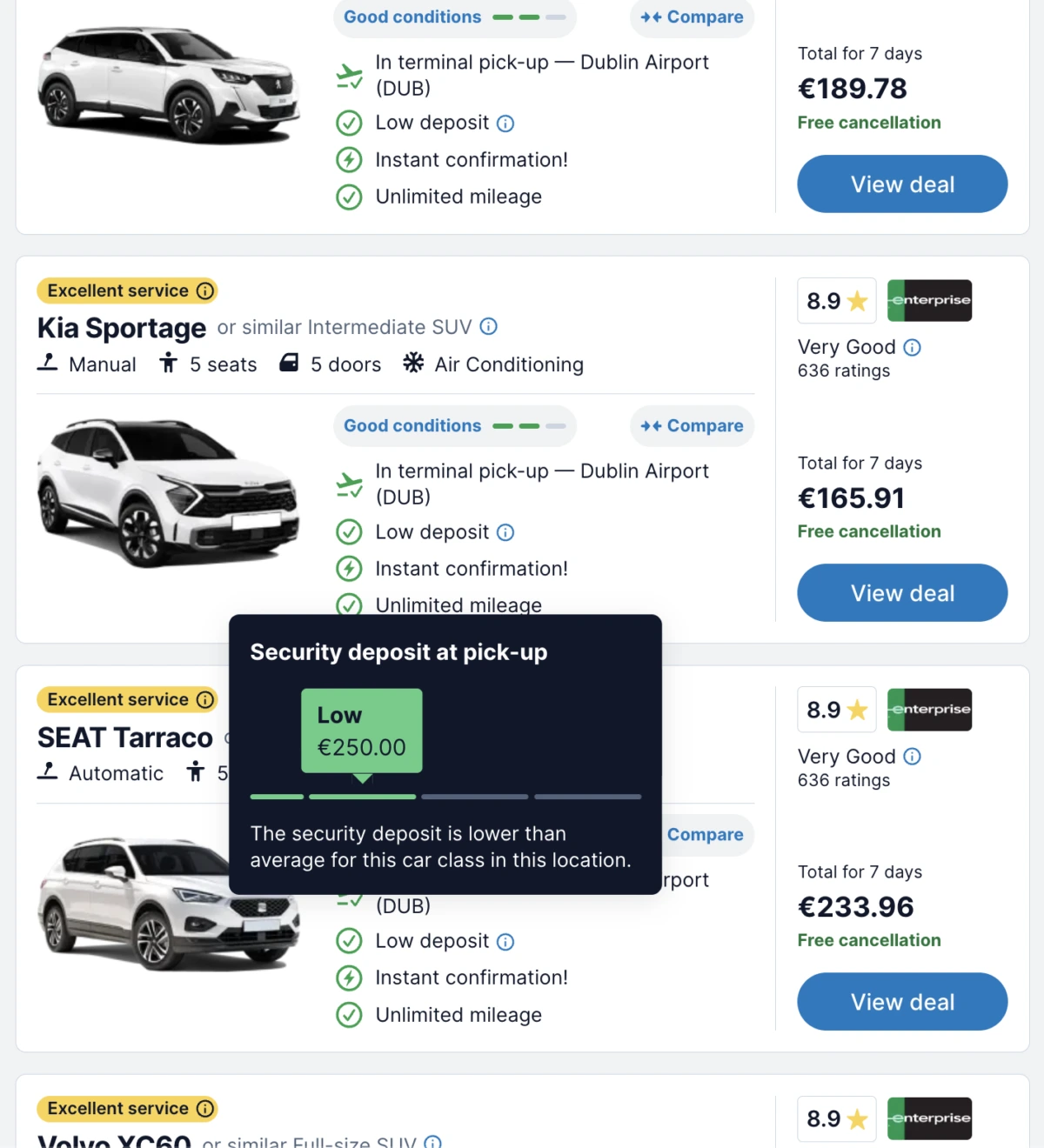

An airport search can include companies using shuttle transfers. Check the instructions and leave enough time for the transfer when returning the car.
Book early if you want a particular category or an automatic. Discover Cars currently allows free cancellation at least 48 hours before collection. Refunds are initially issued as Booking Credit; eligible refunds to your original payment method can be requested through the cancellation email. I had to cancel multiple times and never had an issue.
3. Choose a car that suits the smaller roads
A comfortable car with enough room for your luggage is worth having. For two people, I would start by looking at a compact hatchback.
Once you reach the smaller coastal roads, a manageable width becomes much more useful than extra space you don’t need. Stone walls, tight bends and limited passing room are all reasons to avoid automatically choosing the largest vehicle available.
Think about the transmission, too. If you’re comfortable driving a manual, compare the price with an automatic. If driving on the left will already take concentration, paying more for an automatic may make the trip easier, especially on the narrow countryside roads.
4. Read the deposit requirements before booking
The security deposit deserves as much attention as the rental price. This can make or break your trip; I’ve seen it happen many times to fellow travellers at the check-in counter.
Before booking, check both the deposit and the excess. These affect how much money you need available and what you could end up paying if the car is damaged.
The deposit is money the rental company holds as security when you collect the car. Usually, it temporarily blocks that amount on your credit card, so you can’t spend it during the rental. If you return the car without damage or outstanding charges, the hold is released, although your bank may take some time to make the credit available again. I always see mine released within 7 days.

The excess is the maximum amount you’re responsible for towards a damage claim covered by the rental’s basic protection. You might also see it called a “deductible”. If your excess is €2,700 and covered repairs cost €400, you would pay €400. If those repairs cost €4,000, your contribution would normally be limited to €2,700.
The deposit and excess can be different amounts. For example, a company might hold a €250 deposit but have a €2,700 excess. That means a damage bill could exceed the money already held on your card. Always check both figures.
Buying extra cover directly from the rental company can reduce your excess, sometimes to zero. Depending on the package, it may also reduce or remove the deposit. However, some companies still require a smaller deposit for fuel or other charges, so check exactly what their package includes.
Discover Cars’ Full Coverage works differently. You still leave the supplier’s deposit, and your excess with the rental company stays the same. If you’re charged for covered damage, you pay the rental company first, then submit the documents to Discover Cars to claim back eligible costs under its coverage terms. This can be a cheaper insurance option, but you need enough available credit for the deposit and the ability to pay any charges before receiving reimbursement.
The price you pay for extra cover is an additional rental cost; it isn’t returned at the end of your trip. Compare the rental price plus your chosen cover, and separately check how much money needs to be available for the deposit.
It’s also worth checking if your credit card company offers car rental coverage. I always use my Chase Sapphire for the deposit for this reason. If the car is damaged, the rental company can deduct the charges from the deposit held on your card. You then submit a claim to your credit card’s insurance provider. Once approved, you’re paid back by check, a statement credit, or a transfer to your bank account.
5. Compare insurance before reaching the rental desk
Insurance can change the total cost of renting a car quite dramatically, so I would sort out what you want before arriving.
First, check what’s already included. Look for Collision Damage Waiver, usually shortened to CDW, along with theft protection and third-party liability cover. CDW is normally why your excess is only €2,700 for a €40,000 car.
How Discover Cars Full Coverage works
You can add optional Full Coverage through Discover Cars when booking. This is a good idea if your credit card does not provide car rental insurance.
This is separate reimbursement protection. You still leave the supplier’s required deposit. If the supplier charges you for a covered incident, you pay first, keep the paperwork, and submit a claim to Discover Cars for eligible costs, within the product’s limits and terms. Their current guidance says to submit the claim within 90 days of returning the car.
That makes having access to the deposit and potential upfront charges an important part of deciding whether this option suits you.


Why compare it with the supplier’s cover
Cost is a good reason to compare the two options. I’ve seen Discover Cars protection cost up to four times less than cover sold at the rental desk. The only downside is having to leave a deposit. If you have enough credit for the deposit on your credit card, it’s a no-brainer to choose Discover Cars’ protection rather than the supplier’s.
Discover Cars‘ Full Coverage includes eligible damage to parts such as tyres, wheels and windows. It has exclusions too, including most interior damage and special cleaning charges. Third-party liability is separate.
6. Photograph the car before setting off
Before leaving the collection area, take clear photos and a slow video of the car.
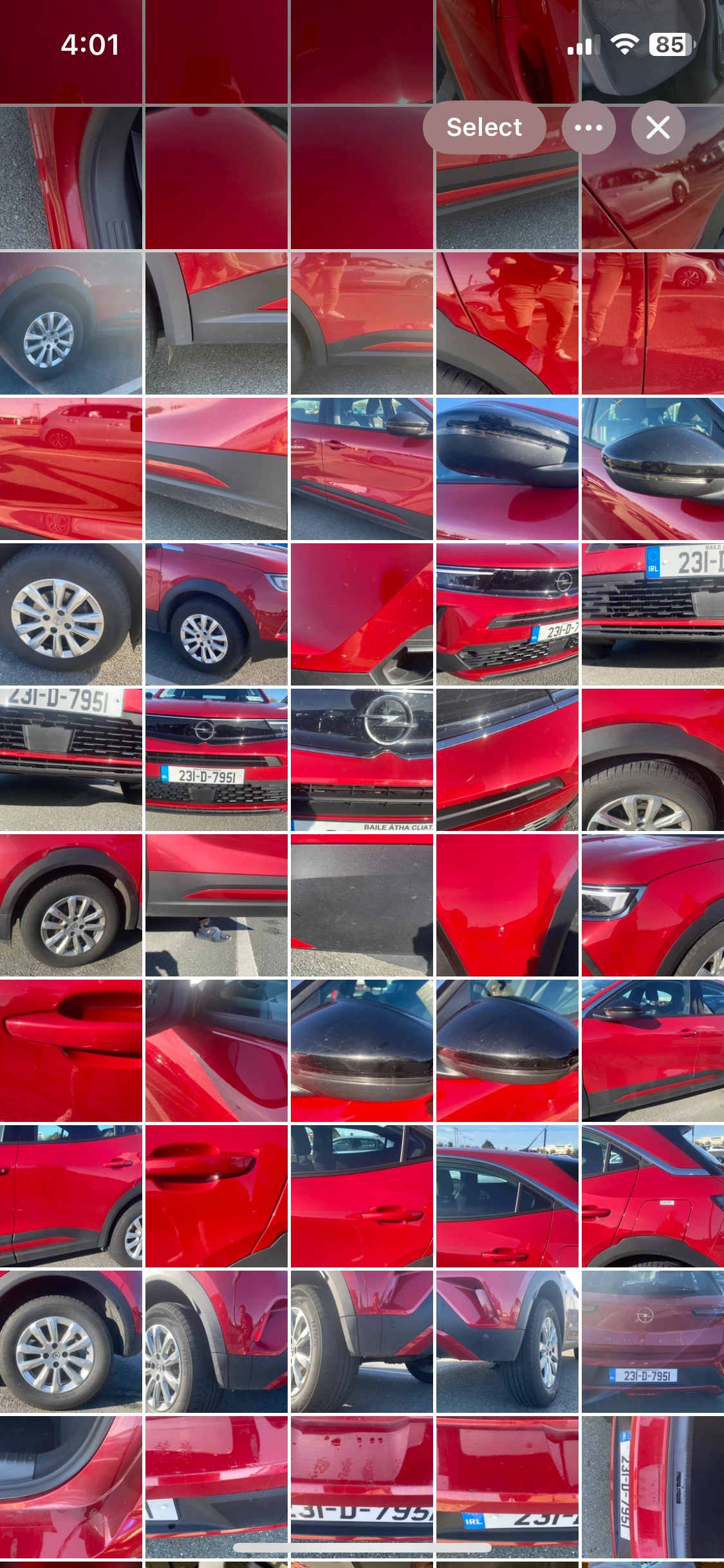
I always end up leaving with 20-plus pictures of the interior and exterior combined. The pictures have saved me multiple times from having to pay for damage that was already there before, but for some reason was not marked on the supplier’s paperwork.
Include the wheels, windscreen, mirrors, body panels, and interior, plus the dashboard showing the fuel level and mileage. Ask for existing damage to be recorded on the condition report, and keep your own copies.
Do the same when returning the car. It’s a few minutes of effort that can make a later question about a scratch much easier to resolve.
For an autumn trip, check the lights, wipers and demister before leaving, too. Knowing how everything works is much easier while you’re still parked.
7. Allow more time on the scenic roads
Ireland drives on the left, and in the Republic, road distances and speed limits are shown in kilometres. At roundabouts, give way to traffic already circulating from your right.
The main routes and the smaller coastal lanes can feel very different. On narrow roads, slow down early, use suitable passing places and give yourself room around bends. Avoid squeezing onto a soft verge to get past another vehicle, as you can get stuck in the mud. We had that happen to our rental in the Scottish Highlands, and it took over an hour to get the vehicle sorted.
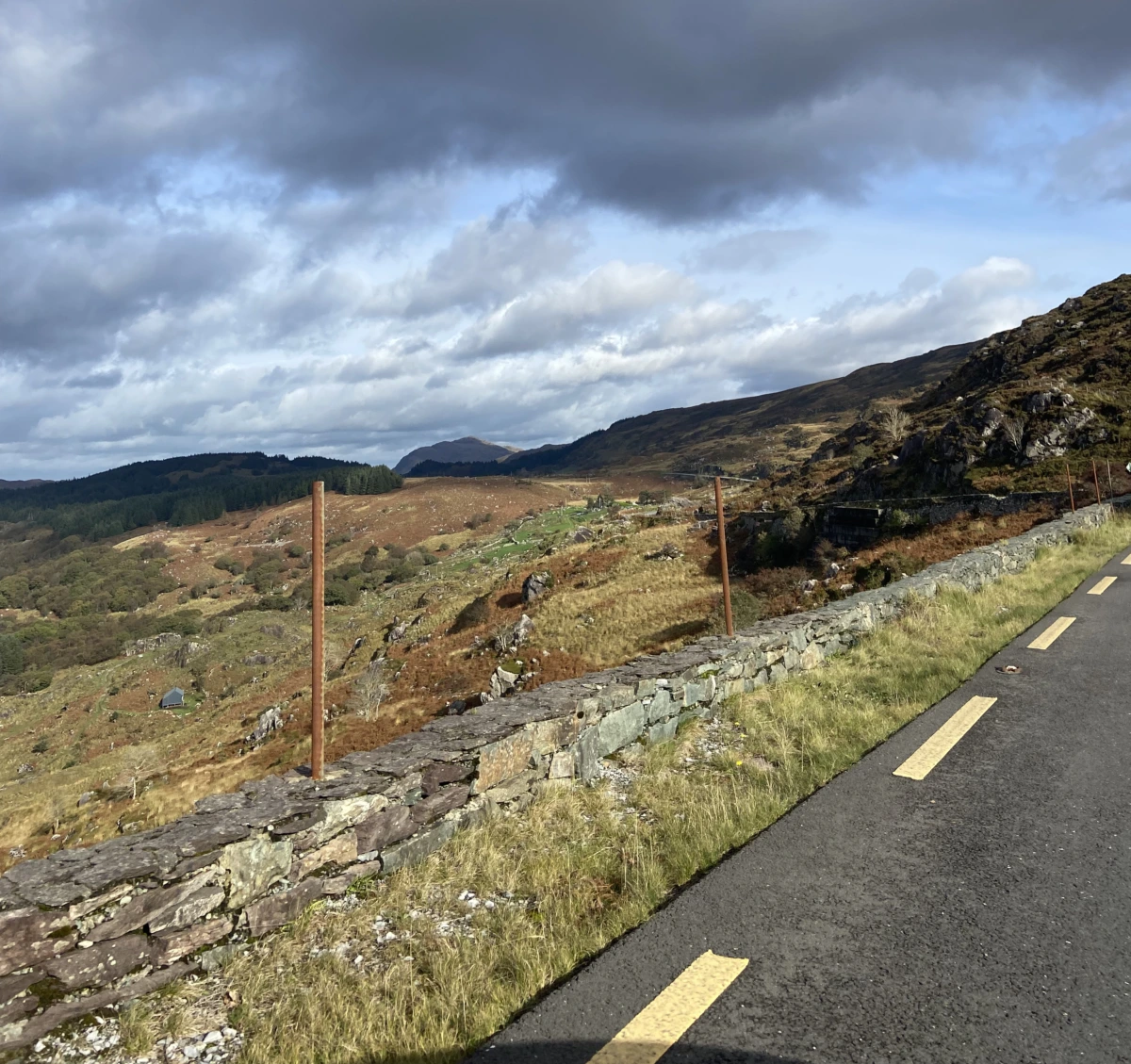
For a trip in 2026, be aware that the default limit on many rural local roads dropped from 80 km/h to 60 km/h in February 2025. This was a very welcome change, as 80 km/h felt very fast for those tight rural roads, and a little scary, if I’m being honest. The Road Safety Authority explains the signs and changes here. Follow the signs on the road you’re using and choose a speed that suits visibility and conditions.
Allow time for parking and stops as well as driving. A scenic route is much more enjoyable when reaching the next place isn’t a race.
8. Plan around the places you want to explore
Dublin to Galway
Our first Ireland trip took us from Dublin to Galway. This is where planning your parking becomes useful.
If your accommodation includes a space, check whether you can leave the car there and explore on foot. Otherwise, research a central car park before arriving, including its overnight rates and access hours.
Q-Park Hynes Yard and Q-Park Eyre Square are two options to compare. Both are on Merchants Road, with access to the city centre on foot.
Save the actual entrance in your navigation app. It’s much easier than arriving in central Galway and then working out where you can leave the car.
West Cork and the Ring of Kerry
Our southwest trip is one we still talk about. We collected the car in Dublin, headed down to West Cork and explored parts of the Wild Atlantic Way before continuing around Kerry and the Dingle Peninsula.
The Wild Atlantic Way is a coastal touring route, so expect a mixture of roads as you follow it. West Cork’s indented coastline and Kerry’s mountain scenery are good reasons to leave space in your itinerary for the drive itself.
We also visited Killarney National Park, where lakes and woodland give you a different setting from the exposed coast. Plan where you’ll park for a walk using the national park’s visitor information.
For the Ring of Kerry, give yourself time to stop and get out of the car. Trying to fit a long coastal circuit and several substantial walks into the same day can quickly become rushed, particularly in late autumn.
The Dingle Peninsula and Conor Pass
Conor Pass was one of the spectacular parts of that trip. The mountain slopes and lakes make it a place I would absolutely include if the weather and driving conditions are suitable.
The road is narrow and winding, with sections where vehicles use passing places. Vehicle restrictions apply, so check the signs and your vehicle’s suitability before continuing. Discover Kerry’s route guidance is useful when planning.
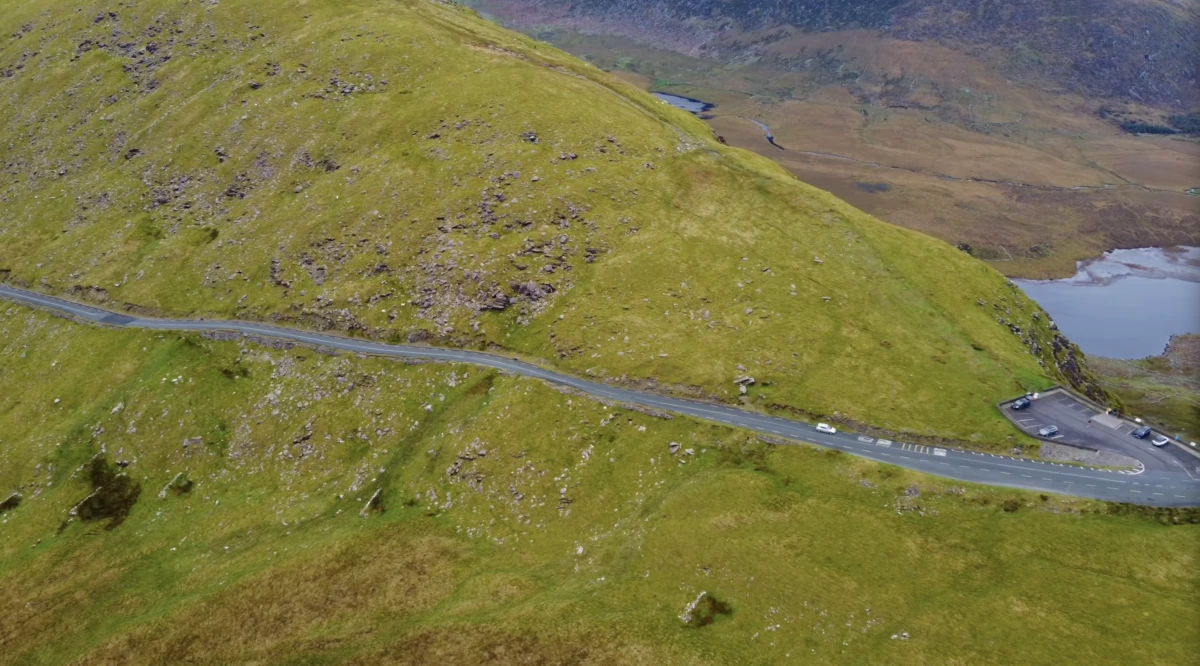
Use the designated viewing area to enjoy the scenery. If visibility is poor or you’re uncomfortable with the road, choose another approach to Dingle and return when conditions are better.
This is exactly the kind of place where I’d be glad to have a car I felt comfortable manoeuvring.
Exploring the Burren
On our third trip, we stayed in the Burren and used the car to explore the region from one base.
The pale limestone makes the landscape feel completely different from the green fields people often associate with Ireland. Having our own transport worked well for spending time around the area without changing accommodation every day.
The wider Burren and Burren National Park are different things, so plan the parking for the particular place you want to visit.
For the national park, the current visitor guidance recommends starting in Corofin. A free shuttle normally operates from May to September; outside that season, check the park’s access and parking advice. The main trailhead has no designated car park, and narrow roads and gateways need to remain clear.
You can read more about the region in our guide to visiting the Burren.
9. Give autumn road trips a little breathing room
All three of our Ireland trips have been in autumn, and it’s a time of year we love there.
The practical trade-off is shorter daylight. Plan the more demanding scenic roads earlier in the day, particularly if you’ll be driving somewhere unfamiliar. Check the weather before heading towards exposed coastal areas or a mountain pass. We’ve run into unexpected snow at some of the higher elevations, but luckily the road was clear.
I would also avoid planning a long drive immediately after a tiring flight. Which is what we did. Collecting the car in Dublin is convenient, but the southwest is still a substantial journey. Especially as some of the accommodations can be really remote. I remember arriving at 9 PM on the outskirts of Schull, looking for our Airbnb on a dirt road with no lights; we missed the driveway turn, and as a result, I had to back up in complete darkness, which was a very stress-inducing experience. Never again!
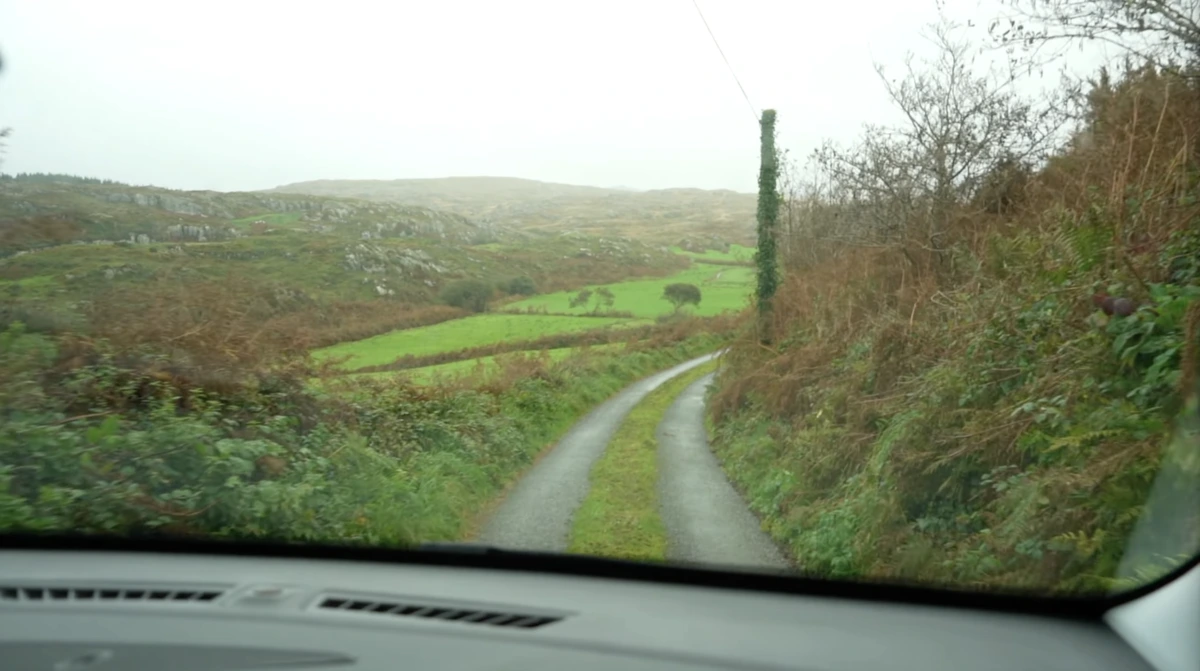
For rural accommodation, save the exact address and arrival instructions before setting off. Download offline maps as well, and check what time you need to arrive. Those small preparations can make the last stretch of a day’s driving much easier.
10. Ask about tolls and fuel before leaving the airport
If your route uses the M50 around Dublin, ask the rental company how it handles the barrier-free toll.


The toll point is between Junctions 6 and 7. Some suppliers handle payment and bill you afterwards; others leave payment to you. If it’s your responsibility, eFlow says you must pay by 8 pm the following day. Confirm the arrangement so you avoid a missed payment or paying twice. Any time we used these tolls, we went online within the hour and paid the toll by using the license plate number.
For fuel, look for a full-to-full policy and confirm whether the car takes petrol or diesel. Return it with the required fuel level and keep the receipt. A supplier’s refuelling charge can make an otherwise good rental much more expensive. Do not pre-buy the fuel, as it usually comes out €20-€30 more than you would have paid at the pump.
Also leave time for the return inspection and any shuttle back to the terminal. Returning the car is part of the airport journey.
If you’re extending your trip into Northern Ireland, get the rental company’s permission in advance and check any cross-border charges. Road signs and speed limits there use miles rather than kilometres.
After three trips to Ireland, we’d rent a car again without hesitation. It’s made exploring places like West Cork, the Dingle Peninsula and the Burren so much easier. If you’re planning your own road trip, compare your options on Discover Cars, check what’s included, and leave yourself plenty of time to enjoy the scenery along the way.


